
利用RAD测序技术开发新型微卫星标记用于红毛丹种质多样性评估
Development of novel microsatellite markers using RAD sequencing technology for diversity assessment of rambutan () germplasm.
作者信息
Ab Razak Shahril, Mad Radzuan Salehudin, Mohamed Norkhairi, Nor Azman Nor Helwa Ezzah, Abd Majid Alny Marlynni, Ismail Siti Norhayati, Mohd Yusof Muhammad Fairuz, Sarip Johari, Nasir Khairun Hisam
机构信息
Biotechnology & Nanotechnology Research Centre, MARDI Headquarters, 43400, Serdang, Selangor, Malaysia.
Horticulture Research Centre, MARDI Sintok, 06050, Bukit Kayu Hitam, Kedah, Malaysia.
出版信息
Heliyon. 2020 Sep 28;6(9):e05077. doi: 10.1016/j.heliyon.2020.e05077. eCollection 2020 Sep.
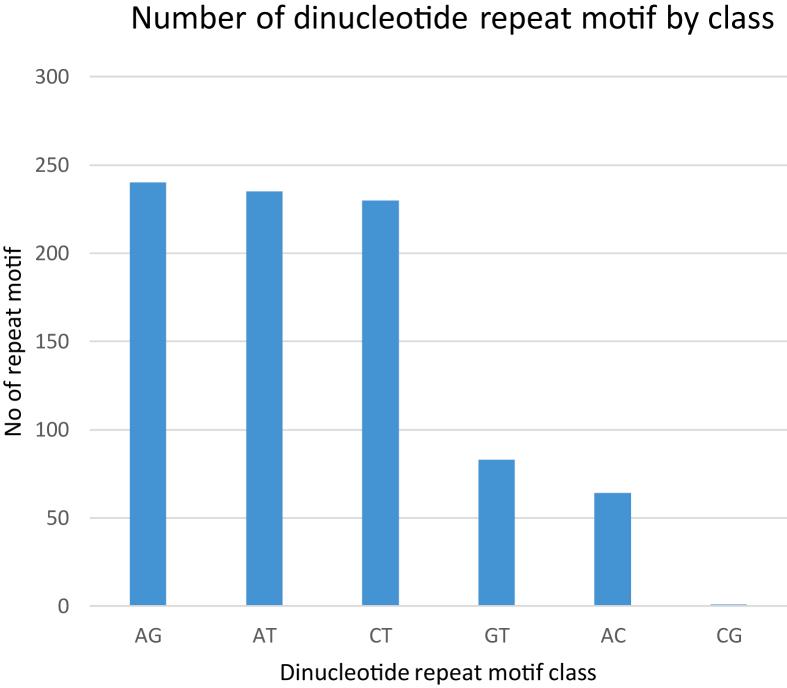
The trend of microsatellite marker discovery and development revolved as a result of the advancement of next generation sequencing (NGS) technology as it has developed numerous microsatellites within a short period of time at a low cost. This study generated microsatellite markers using RAD sequencing technologies for the understudied . A total of 1403 microsatellite markers were successfully designed, which consisted of 853 di-, 525 tri-, 17 tetra-, 5 penta-, and 3 hexanucleotide microsatellite markers. Subsequently, selection of 39 microsatellites was made for the evaluation of genetic diversity of the selected 22 rambutan varieties. Twelve microsatellites, which exhibited high call rates across the samples, were used to assess the diversity of the aforementioned rambutan varieties. The analysis of 12 microsatellites revealed the presence of 72 alleles and six alleles per locus in average. Furthermore, the polymorphic information content (PIC) value ranged from 0.326 (NlaSSR20) to 0.832 (NlaSSR32), which included an average of 0.629 per locus, while the generated Neighbour Joining dendrogram showed two major clusters. The pairwise genetic distance of shared alleles exhibited a range of values from 0.046 (R134↔R170) to 0.818 (R5↔R170), which suggested highest dissimilarity detected between R5 and R170. Notably, these research findings would useful for varietal identification, proper management and conservation of the genetic resources, and exploitation and utilization in future breeding programs.
由于下一代测序(NGS)技术的进步,微卫星标记的发现和开发趋势发生了转变,因为它能在短时间内以低成本开发出大量微卫星。本研究使用RAD测序技术为研究较少的[具体对象未提及]生成微卫星标记。总共成功设计了1403个微卫星标记,其中包括853个二核苷酸、525个三核苷酸、17个四核苷酸、5个五核苷酸和3个六核苷酸微卫星标记。随后,选择了39个微卫星来评估所选22个红毛丹品种的遗传多样性。使用12个在所有样本中显示出高检出率的微卫星来评估上述红毛丹品种的多样性。对12个微卫星的分析显示共存在72个等位基因,平均每个位点有6个等位基因。此外,多态信息含量(PIC)值范围从0.326(NlaSSR20)到0.832(NlaSSR32),平均每个位点为0.629,而生成的邻接树状图显示出两个主要聚类。共享等位基因的成对遗传距离值范围从0.046(R134与R170)到0.818(R5与R170),这表明在R5和R170之间检测到的差异最大。值得注意的是,这些研究结果将有助于品种鉴定、遗传资源的妥善管理和保护,以及未来育种计划中的开发和利用。



 Zotero 插件