Standaert Baudouin, Strens Danielle, Pereira Priya, Benninghoff Bernd, Raes Marc
HEBO, BV, Antwerp, Belgium.
Realidad Bvba, Grimbergen, Belgium.
Infect Dis Ther. 2020 Dec;9(4):967-980. doi: 10.1007/s40121-020-00345-y. Epub 2020 Oct 6.
The rotavirus (RV) vaccine Belgium Impact Study (RotaBIS) evaluated the vaccine effect on RV-related hospital care in children up to 5 years old over a period of 13 years. Different forces were identified that influence the reduction in hospital care. Our analysis aims to report on the current RotaBIS dataset and explore through model simulation whether, how, and when the results could have been improved.
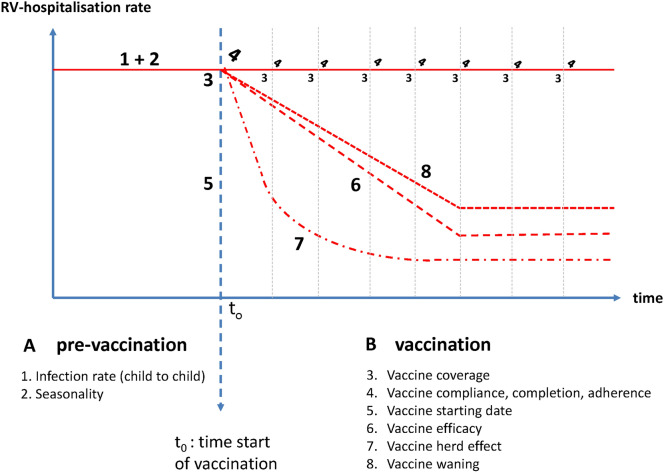
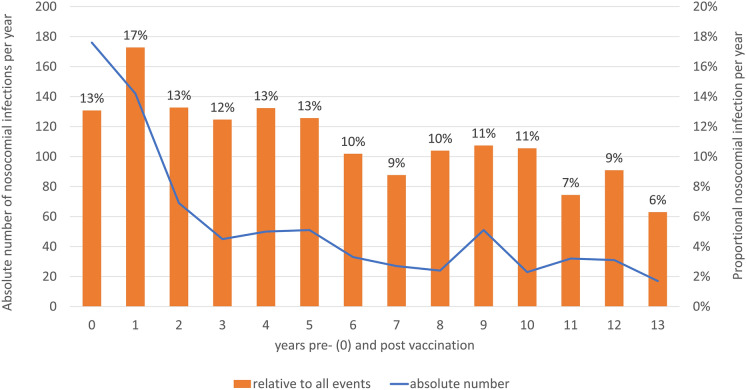
As performed in previous assessments, this analysis evaluated RV-related events per year, per age group, RV nosocomial infections, hospitalization duration, and herd effect. It subsequently identified results that were surprising or unexpected. To know whether those data could have been improved through specific interventions, we developed a model with the forces acting on the disease transmission and the vaccine effect on RV-related hospital care. Scenario analysis of the forces should explain the current findings and identify ways to optimize the results.
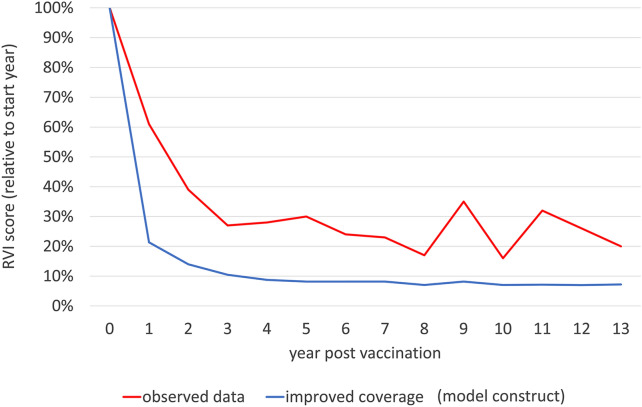
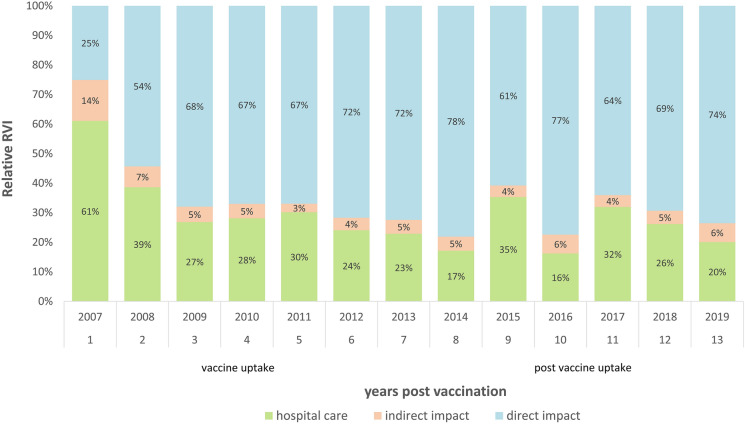
The RotaBIS data show that annual RV-related hospital cases (n = 1345 pre-vaccination) dropped by 70% (95% confidence interval [CI] 66-74%) by year 5 (n = 395) after vaccine introduction, and by 84% (95% CI 79-89%) by year 10 (n = 217). The herd effect during the first year was limited to 14% extra gain. During the last 5 years, small disease increases were seen biennially. The simulation model indicates that higher vaccine coverage of the major transmitters during the peak season of the first year of vaccination could have reduced RV-related hospital care by nearly 90% at 5 and 10 years after vaccine introduction owing to a higher herd effect. The smaller peaks observed in recent years would have been dramatically reduced.
The current RotaBIS data show a maintained reduction, around 76%, in RV hospitalization cases. Simulations show that these results could have been improved to an important extent with a more optimal initiation of the vaccination program.
ClinicalTrials.gov identifier, NCT01563146 and NCT01563159.
轮状病毒(RV)疫苗比利时影响研究(RotaBIS)评估了13年间疫苗对5岁以下儿童RV相关住院治疗的效果。确定了影响住院治疗减少的不同因素。我们的分析旨在报告当前的RotaBIS数据集,并通过模型模拟探讨结果是否、如何以及何时能够得到改善。
与之前的评估一样,本分析评估了每年、各年龄组的RV相关事件、RV医院感染、住院时长和群体效应。随后确定了令人惊讶或意想不到的结果。为了解这些数据是否可以通过特定干预得到改善,我们建立了一个模型,其中包含影响疾病传播的因素以及疫苗对RV相关住院治疗的效果。对这些因素进行情景分析应能解释当前的研究结果,并确定优化结果的方法。
RotaBIS数据显示,引入疫苗后第5年(n = 395),每年RV相关住院病例(疫苗接种前n = 1345)下降了70%(95%置信区间[CI] 66 - 74%),到第10年(n = 217)下降了84%(95% CI 79 - 89%)。第一年的群体效应仅限于额外增加14%。在最后5年中,每两年出现一次疾病小幅增加。模拟模型表明,在接种疫苗的第一年高峰期,主要传播者的疫苗接种覆盖率更高,由于群体效应更高,在引入疫苗后的5年和10年可能会使RV相关住院治疗减少近90%。近年来观察到的较小峰值将大幅降低。
当前的RotaBIS数据显示,RV住院病例持续减少,降幅约为76%。模拟表明,通过更优化地启动疫苗接种计划,这些结果在很大程度上可以得到改善。
ClinicalTrials.gov标识符,NCT01563146和NCT01563159。