Department of General Surgery and Laboratory of General Surgery, Xinhua Hospital Affiliated to Shanghai Jiao Tong University School of Medicine, 1665 Kongjiang Road, 200092, Shanghai, China.
Shanghai Key Laboratory of Biliary Tract Disease Research, 1665 Kongjiang Road, 200092, Shanghai, China.
Signal Transduct Target Ther. 2020 Oct 7;5(1):230. doi: 10.1038/s41392-020-00324-2.
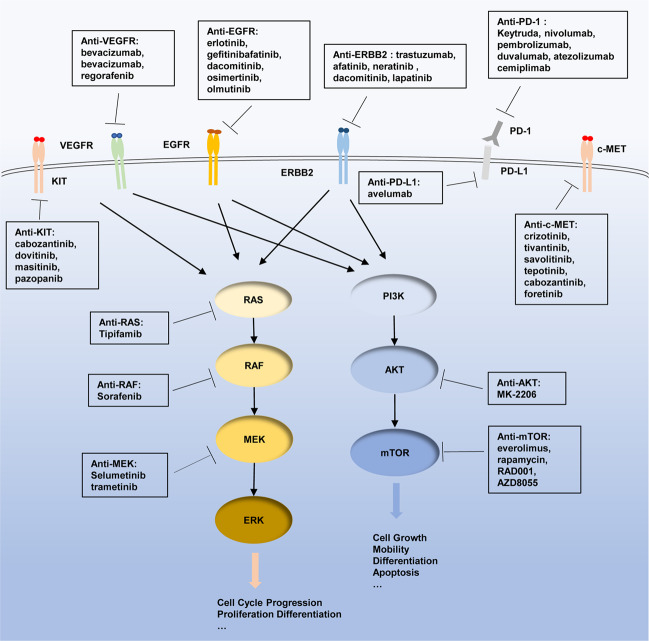
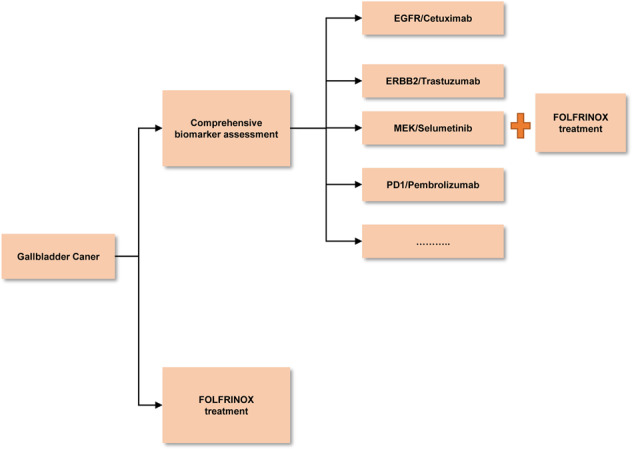
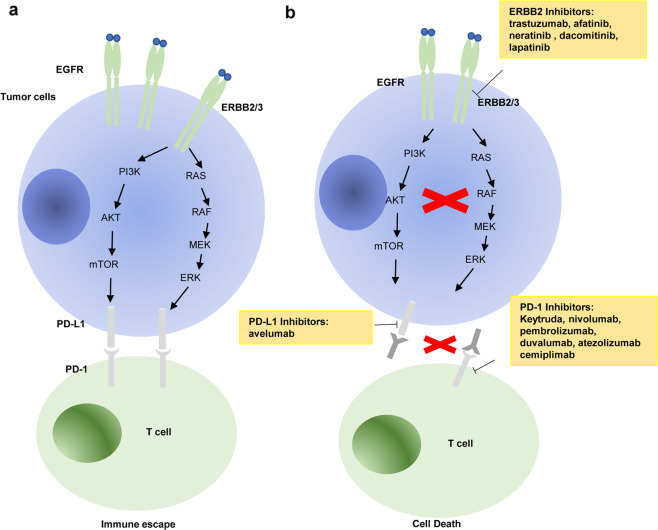
Gallbladder cancer (GBC) is rare, but is the most malignant type of biliary tract tumor. Unfortunately, only a small population of cancer patients is acceptable for the surgical resection, the current effective regimen; thus, the high mortality rate has been static for decades. To substantially circumvent the stagnant scenario, a number of therapeutic approaches owing to the creation of advanced technologic measures (e.g., next-generation sequencing, transcriptomics, proteomics) have been intensively innovated, which include targeted therapy, immunotherapy, and nanoparticle-based delivery systems. In the current review, we primarily focus on the targeted therapy capable of specifically inhibiting individual key molecules that govern aberrant signaling cascades in GBC. Global clinical trials of targeted therapy in GBC are updated and may offer great value for novel pathologic and therapeutic insights of this deadly disease, ultimately improving the efficacy of treatment.
胆囊癌(GBC)较为罕见,但却是最恶性的胆道肿瘤类型。遗憾的是,仅有一小部分癌症患者可接受手术切除这一当前有效的治疗方案;因此,该病的高死亡率数十年来一直保持不变。为了从根本上避免这种停滞不前的局面,由于先进技术措施的出现(例如,下一代测序、转录组学、蛋白质组学),许多治疗方法得到了大力创新,其中包括靶向治疗、免疫疗法和基于纳米颗粒的递药系统。在本综述中,我们主要关注能够特异性抑制控制 GBC 中异常信号级联的单个关键分子的靶向治疗。GBC 靶向治疗的全球临床试验正在更新,这可能为这种致命疾病的新病理和治疗见解提供巨大价值,最终提高治疗效果。