Lu San, Wang Rongsheng, Lu Quanming, Angelopoulos V, Nakamura R, Artemyev A V, Pritchett P L, Liu T Z, Zhang X-J, Baumjohann W, Gonzalez W, Rager A C, Torbert R B, Giles B L, Gershman D J, Russell C T, Strangeway R J, Qi Y, Ergun R E, Lindqvist P-A, Burch J L, Wang Shui
Department of Earth, Planetary, and Space Sciences and Institute of Geophysics and Planetary Physics, University of California, Los Angeles, CA, USA.
CAS Key Laboratory of Geospace Environment, Department of Geophysics and Planetary Science, University of Science and Technology of China, Hefei, Anhui, China.
Nat Commun. 2020 Oct 7;11(1):5049. doi: 10.1038/s41467-020-18787-w.
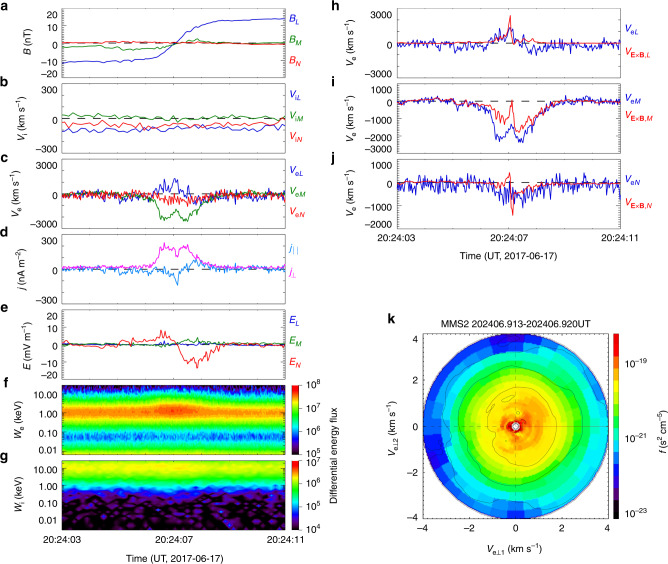
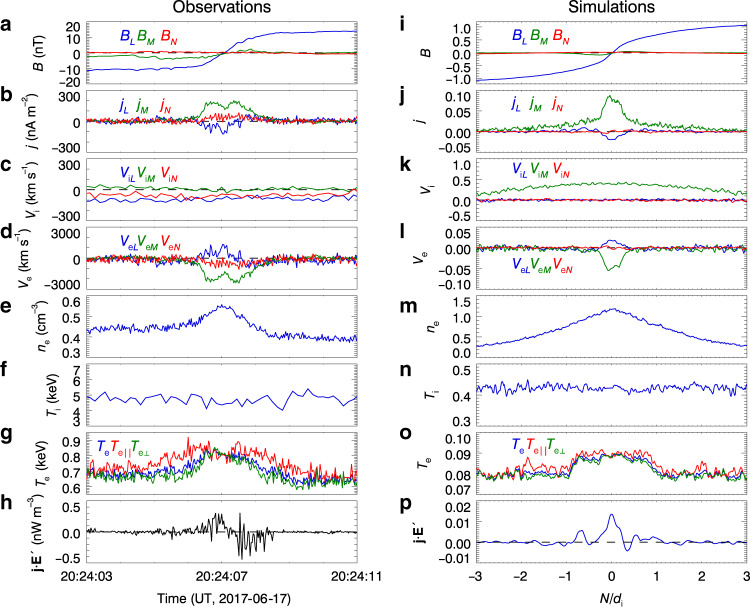
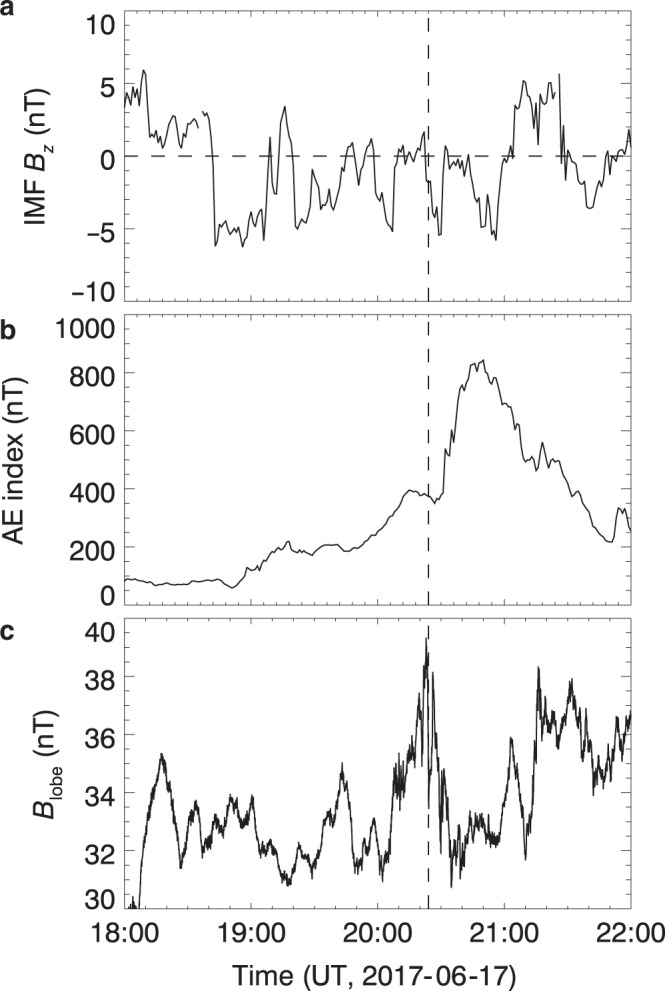
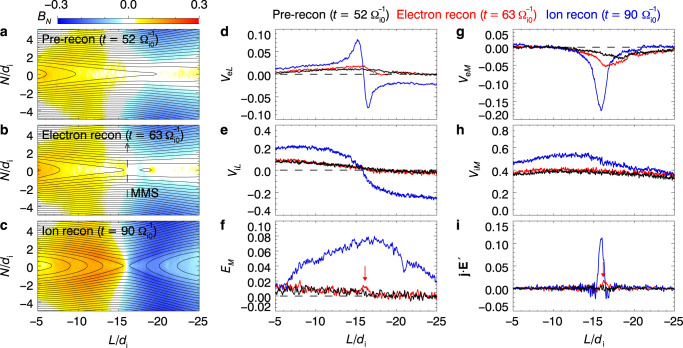
Magnetotail reconnection plays a crucial role in explosive energy conversion in geospace. Because of the lack of in-situ spacecraft observations, the onset mechanism of magnetotail reconnection, however, has been controversial for decades. The key question is whether magnetotail reconnection is externally driven to occur first on electron scales or spontaneously arising from an unstable configuration on ion scales. Here, we show, using spacecraft observations and particle-in-cell (PIC) simulations, that magnetotail reconnection starts from electron reconnection in the presence of a strong external driver. Our PIC simulations show that this electron reconnection then develops into ion reconnection. These results provide direct evidence for magnetotail reconnection onset caused by electron kinetics with a strong external driver.
磁尾重联在地球空间的爆发性能量转换中起着关键作用。然而,由于缺乏航天器的原位观测,磁尾重联的起始机制在几十年来一直存在争议。关键问题在于磁尾重联是首先由外部驱动在电子尺度上发生,还是由离子尺度上的不稳定构型自发产生。在此,我们利用航天器观测和粒子模拟(PIC)表明,在存在强外部驱动的情况下,磁尾重联始于电子重联。我们的PIC模拟表明,这种电子重联随后发展为离子重联。这些结果为强外部驱动下由电子动力学引起的磁尾重联起始提供了直接证据。