Department of Dermatology, University of California San Francisco, San Francisco, CA, USA.
Helen Diller Family Comprehensive Cancer Center, University of California San Francisco, San Francisco, CA, USA.
Nature. 2020 Oct;586(7830):600-605. doi: 10.1038/s41586-020-2785-8. Epub 2020 Oct 7.
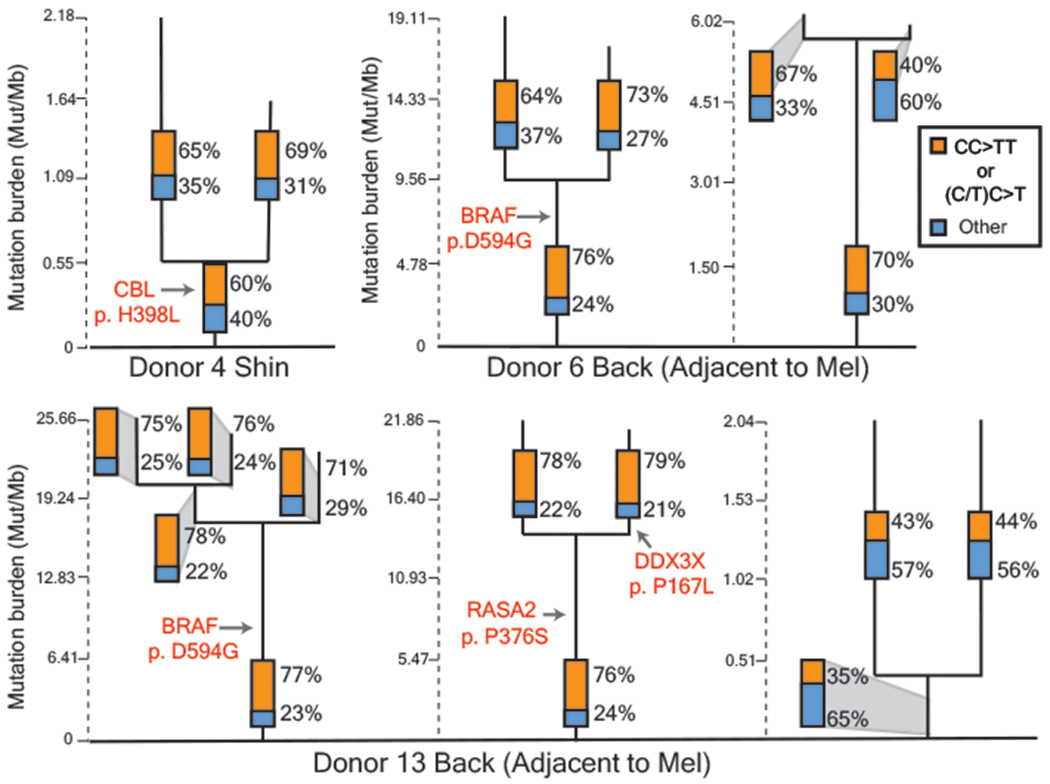
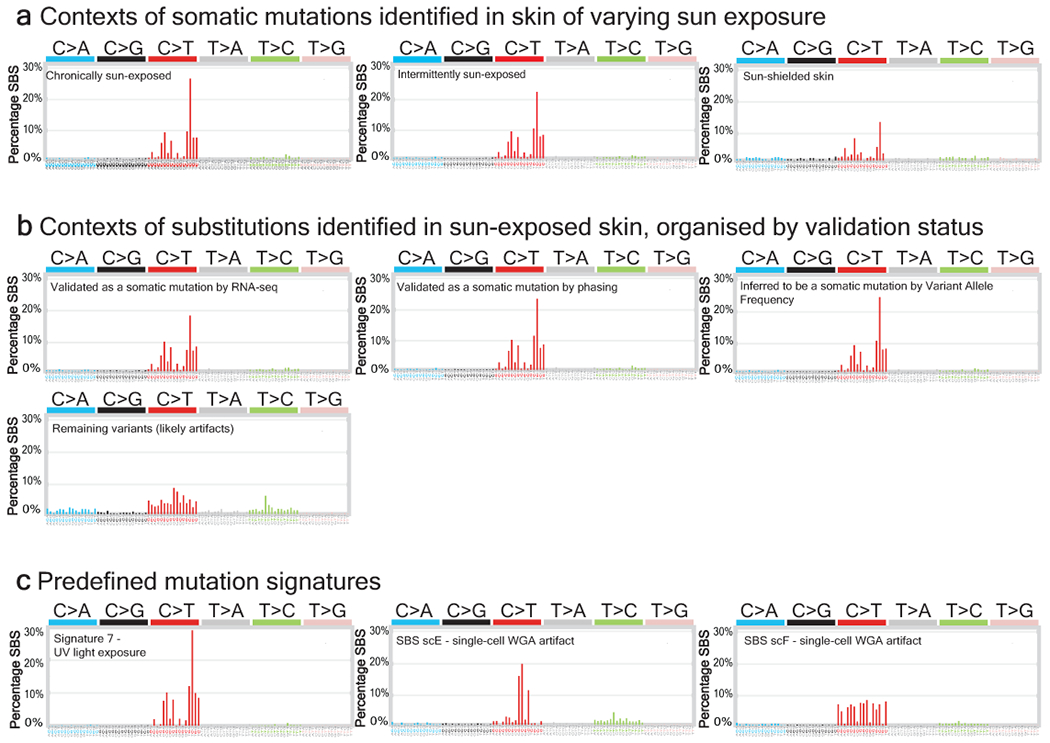
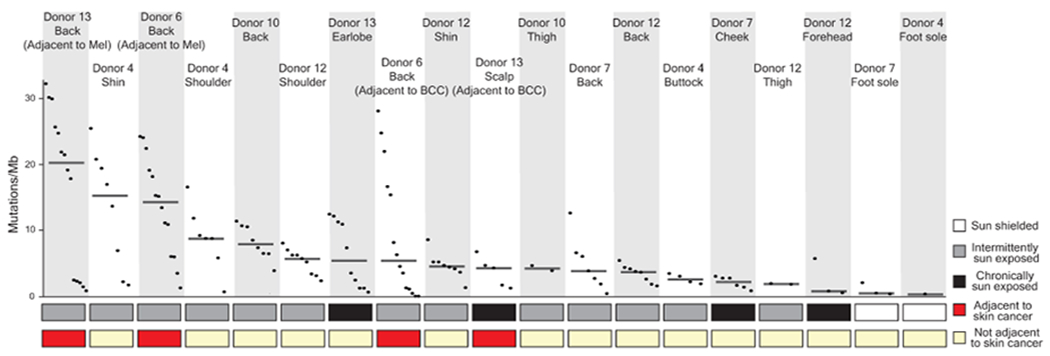
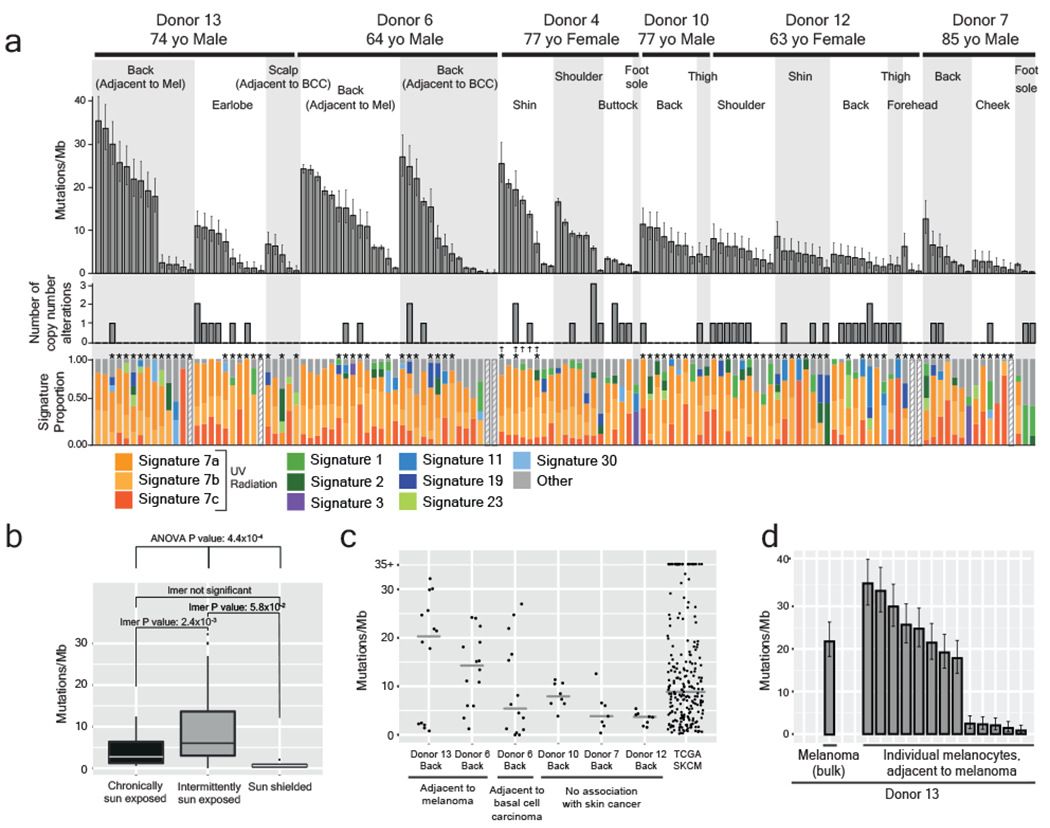
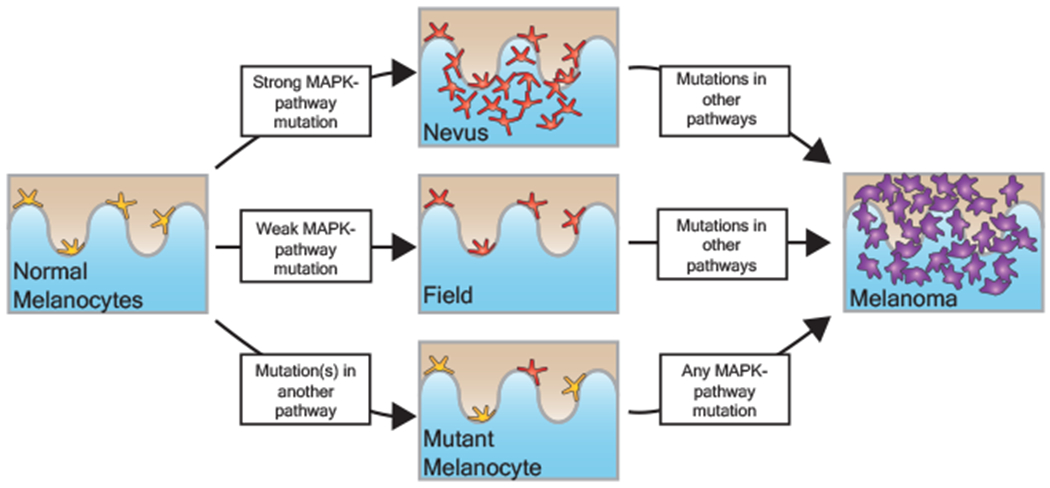
Every cell in the human body has a unique set of somatic mutations, but it remains difficult to comprehensively genotype an individual cell. Here we describe ways to overcome this obstacle in the context of normal human skin, thus offering a glimpse into the genomic landscapes of individual melanocytes from human skin. As expected, sun-shielded melanocytes had fewer mutations than sun-exposed melanocytes. However, melanocytes from chronically sun-exposed skin (for example, the face) had a lower mutation burden than melanocytes from intermittently sun-exposed skin (for example, the back). Melanocytes located adjacent to a skin cancer had higher mutation burdens than melanocytes from donors without skin cancer, implying that the mutation burden of normal skin can be used to measure cumulative sun damage and risk of skin cancer. Moreover, melanocytes from healthy skin commonly contained pathogenic mutations, although these mutations tended to be weakly oncogenic, probably explaining why they did not give rise to discernible lesions. Phylogenetic analyses identified groups of related melanocytes, suggesting that melanocytes spread throughout skin as fields of clonally related cells that are invisible to the naked eye. Overall, our results uncover the genomic landscapes of individual melanocytes, providing key insights into the causes and origins of melanoma.
人体的每个细胞都有一套独特的体细胞突变,但全面分析单个细胞的基因组仍然具有挑战性。在这里,我们描述了在正常人类皮肤背景下克服这一障碍的方法,从而让人们一窥人类皮肤单个黑素细胞的基因组景观。不出所料,遮阳黑素细胞的突变少于暴露于阳光的黑素细胞。然而,与间歇性暴露于阳光的皮肤(例如背部)相比,来自长期暴露于阳光的皮肤(例如脸部)的黑素细胞的突变负担较低。与没有皮肤癌的供体相比,位于皮肤癌附近的黑素细胞的突变负担更高,这意味着正常皮肤的突变负担可用于衡量累积的阳光损伤和皮肤癌风险。此外,健康皮肤中的黑素细胞通常含有致病性突变,尽管这些突变往往具有较弱的致癌性,这可能解释了为什么它们没有导致明显的病变。系统发育分析确定了相关黑素细胞的群组,表明黑素细胞作为肉眼看不见的克隆相关细胞的克隆相关细胞场散布在整个皮肤中。总的来说,我们的研究结果揭示了单个黑素细胞的基因组景观,为黑色素瘤的原因和起源提供了重要的见解。