Department of Oncology, Tongji Hospital, Tongji Medical College, Huazhong University of Science and Technology, 1095 Jiefang Avenue, Wuhan, 430030, Hubei, China.
Gastric Cancer. 2021 Mar;24(2):352-367. doi: 10.1007/s10120-020-01126-9. Epub 2020 Oct 8.
Recently, progress has been made in the development of targeted therapies for human epidermal growth factor receptor 2 (HER2)-positive gastric cancer (GC). However, drug resistance has severely limited the efficacy of anti-HER2 therapies. Pyrotinib is a novel pan-HER inhibitor. Although it is effective in HER2-positive GC treatment, its efficacy in combination with apatinib and associated resistance mechanisms in HER2-positive GC remains unclear.
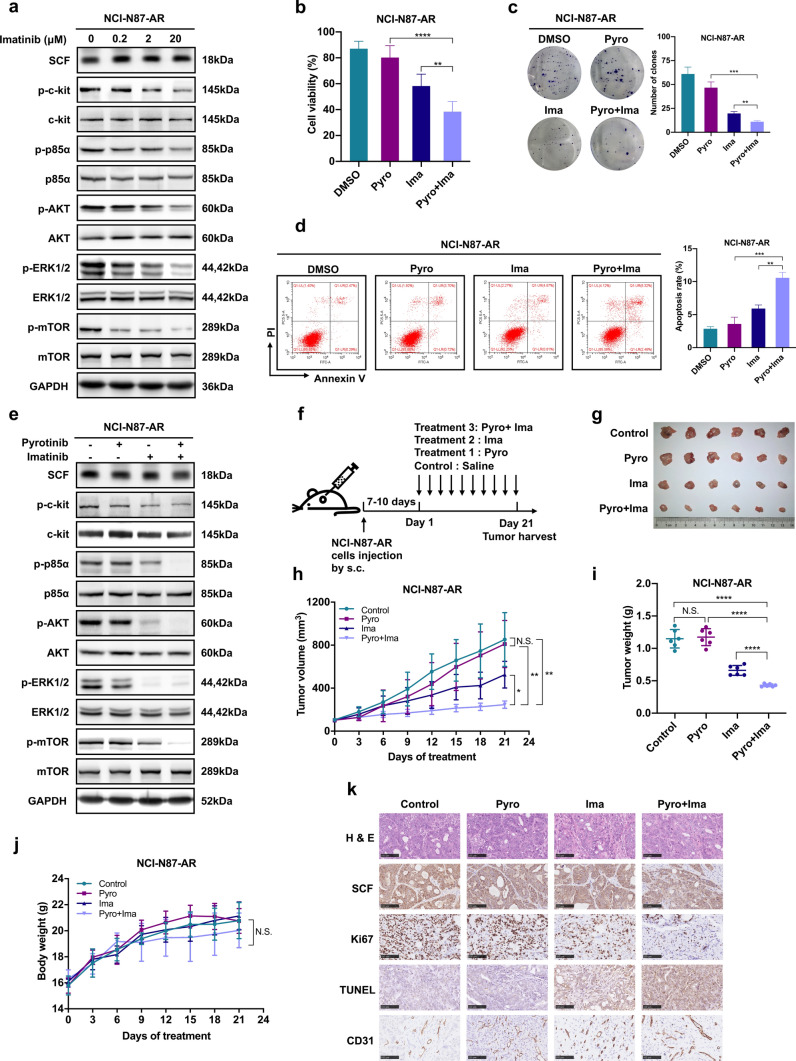
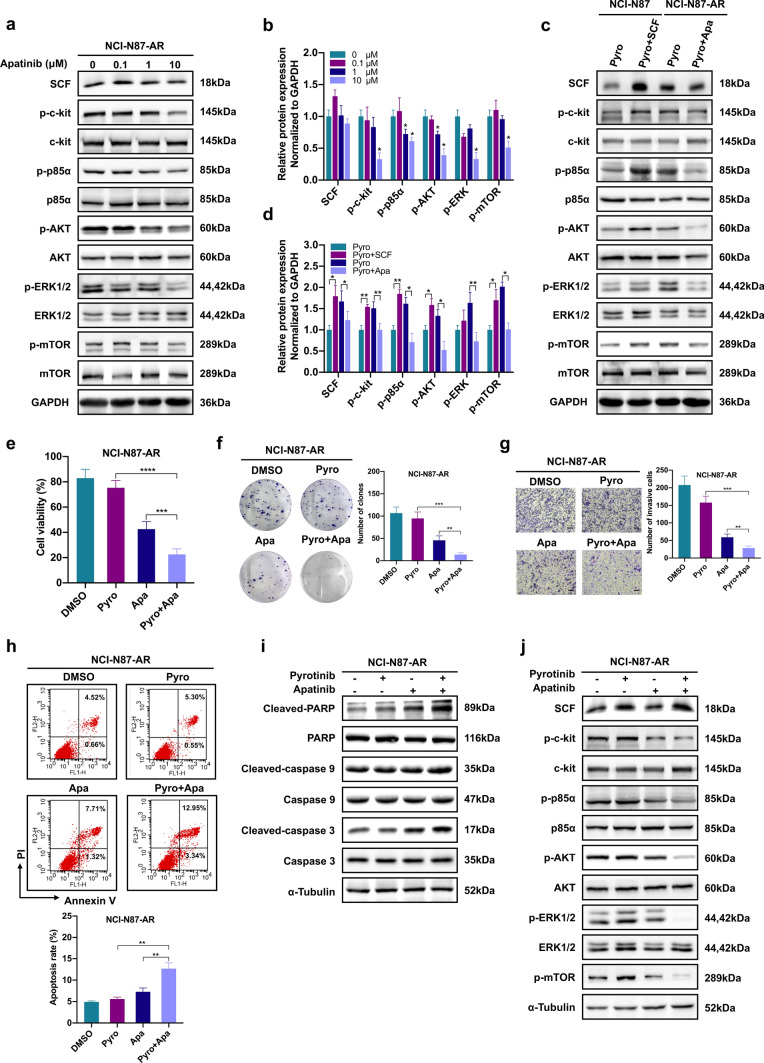
In this study, the combination effects of pyrotinib and apatinib were examined in two pyrotinib-sensitive GC cells and xenografts. The RNA sequencing was used to determine the underlying mechanisms of acquired pyrotinib resistance. The role of imatinib and apatinib in reversing pyrotinib resistance was tested in pyrotinib-resistant cells and xenografts.
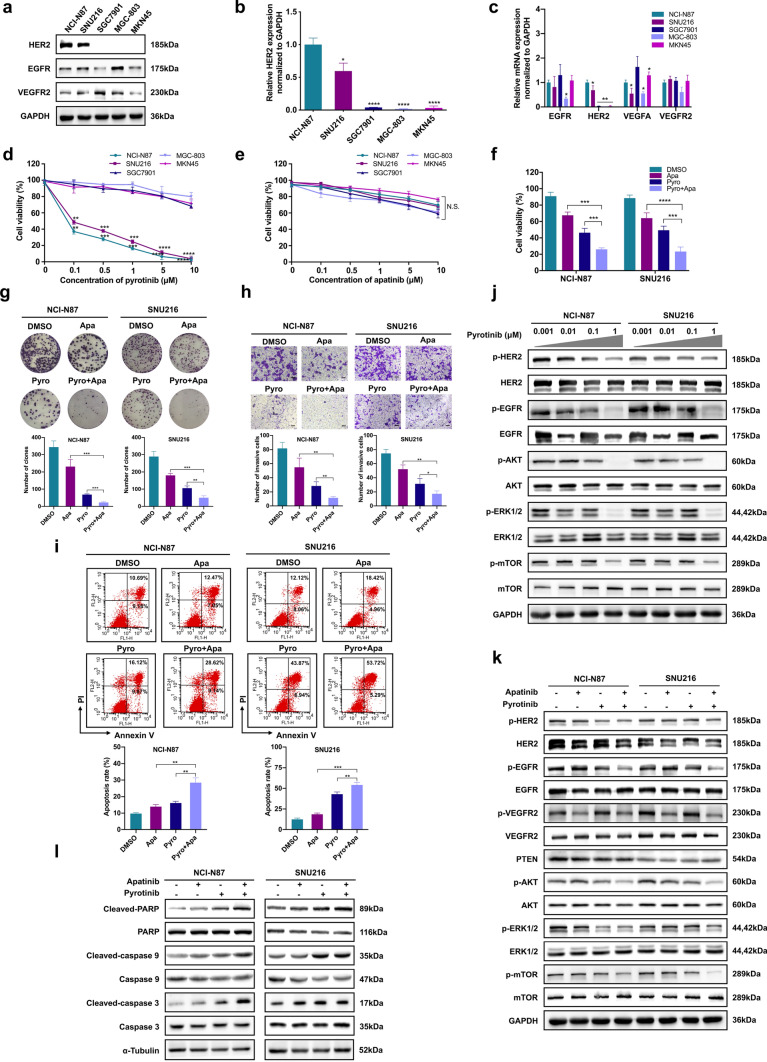
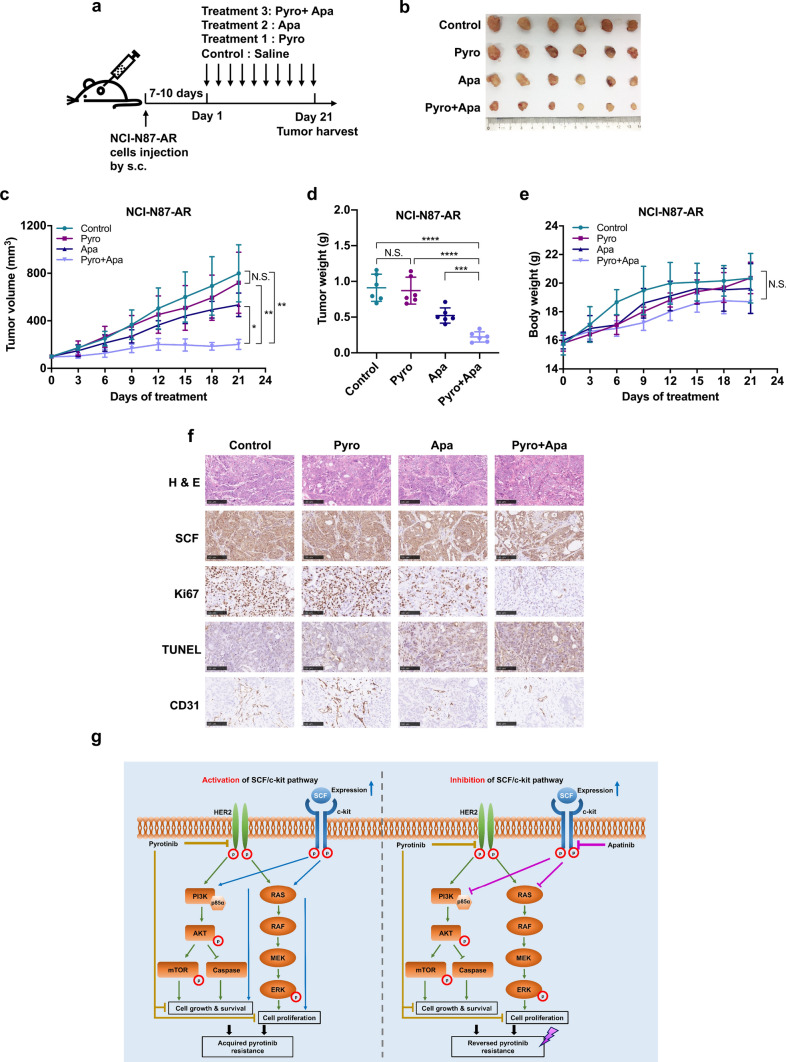
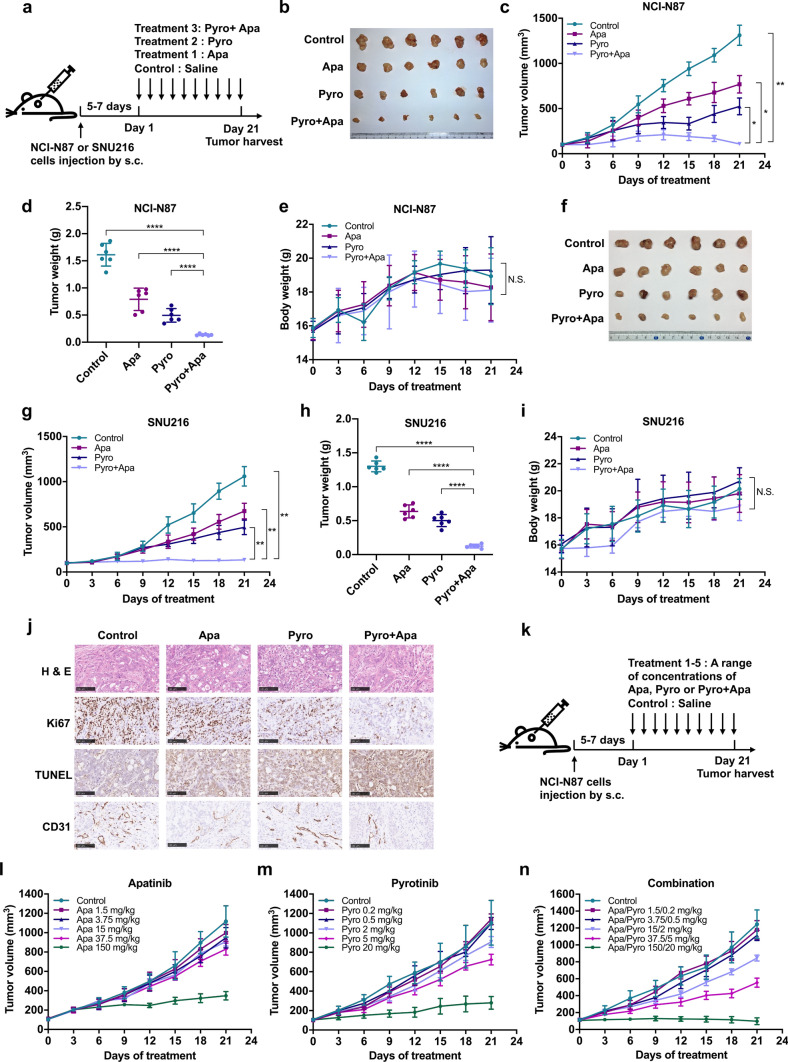
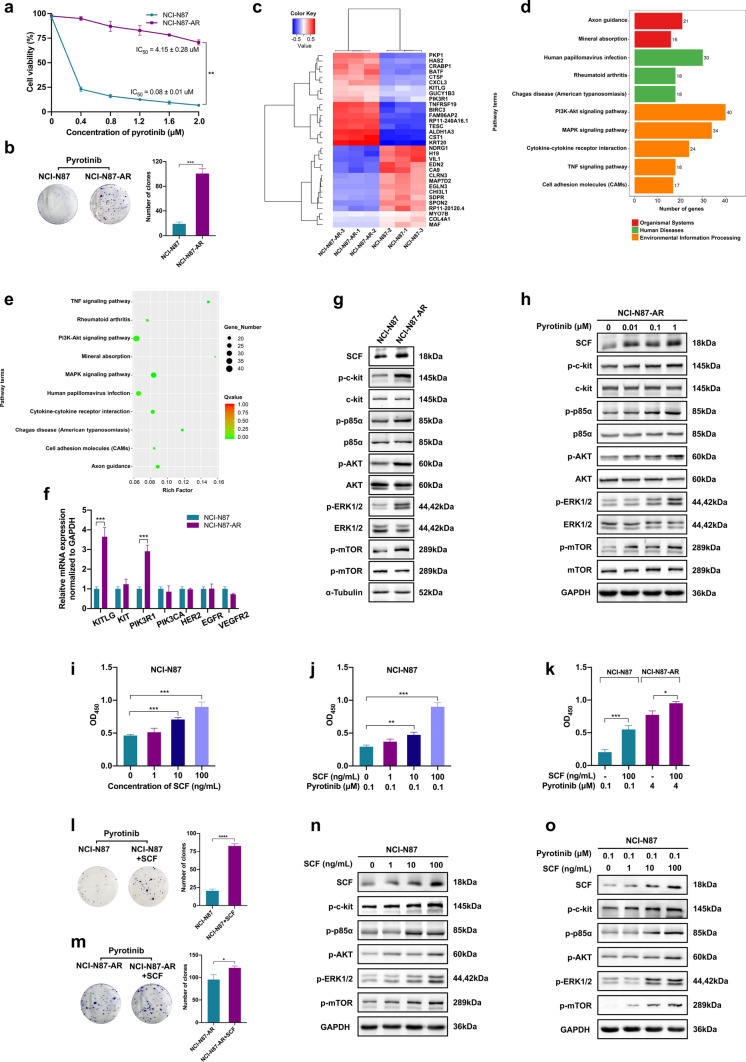
Here, we reported that a combination of pyrotinib and apatinib exhibits synergistic effect in HER2-positive NCI-N87 xenografts, and showed enhanced antitumor efficacy in HER2-positive GC, both in vitro and in vivo. Moreover, up-regulation of the stem cell factor (SCF) levels, and the PI3K/AKT and MAPK pathways was associated with acquired pyrotinib resistance in HER2-positive GC. Mechanistically, we demonstrated that the activation of the SCF/c-kit signaling and its downstream PI3K/AKT and MAPK pathways mediated pyrotinib resistance by promoting cell survival and proliferation. Imatinib and apatinib augmented the sensitivity of pyrotinib-resistant cells and xenografts to pyrotinib, by blocking SCF/c-kit signaling.
These results highlight the effectiveness of pyrotinib combined with apatinib in HER2-positive GC and acquired pyrotinib resistance, thus providing a theoretical basis for new treatment methods.
近年来,针对人表皮生长因子受体 2(HER2)阳性胃癌(GC)的靶向治疗取得了进展。然而,药物耐药性严重限制了抗 HER2 治疗的疗效。吡咯替尼是一种新型的泛 HER 抑制剂。虽然它在 HER2 阳性 GC 治疗中有效,但它与阿帕替尼联合应用的疗效及其在 HER2 阳性 GC 中的耐药机制尚不清楚。
本研究在两种吡咯替尼敏感的 GC 细胞和异种移植瘤中检测了吡咯替尼和阿帕替尼的联合作用。采用 RNA 测序技术确定获得性吡咯替尼耐药的潜在机制。在吡咯替尼耐药细胞和异种移植瘤中检测了伊马替尼和阿帕替尼在逆转吡咯替尼耐药中的作用。
本研究报道,吡咯替尼和阿帕替尼联合应用在 HER2 阳性 NCI-N87 异种移植瘤中具有协同作用,在体外和体内均增强了 HER2 阳性 GC 的抗肿瘤疗效。此外,上调干细胞因子(SCF)水平以及 PI3K/AKT 和 MAPK 通路与 HER2 阳性 GC 中获得性吡咯替尼耐药有关。在机制上,我们证明了 SCF/c-kit 信号及其下游的 PI3K/AKT 和 MAPK 通路的激活通过促进细胞存活和增殖介导了吡咯替尼耐药。伊马替尼和阿帕替尼通过阻断 SCF/c-kit 信号增强了吡咯替尼耐药细胞和异种移植瘤对吡咯替尼的敏感性。
这些结果强调了吡咯替尼联合阿帕替尼在 HER2 阳性 GC 中的有效性及其对获得性吡咯替尼耐药的影响,为新的治疗方法提供了理论依据。