Niemczura Alexandra C, Grimsley Jasmine M, Kim Chae, Alkhawaga Ahmad, Poth Austin, Carvalho Alyssa, Wenstrup Jeffrey J
Department of Anatomy and Neurobiology, Northeast Ohio Medical University, Rootstown, OH, United States.
School of Biomedical Sciences, Kent State University, Kent, OH, United States.
Front Behav Neurosci. 2020 Sep 1;14:155. doi: 10.3389/fnbeh.2020.00155. eCollection 2020.
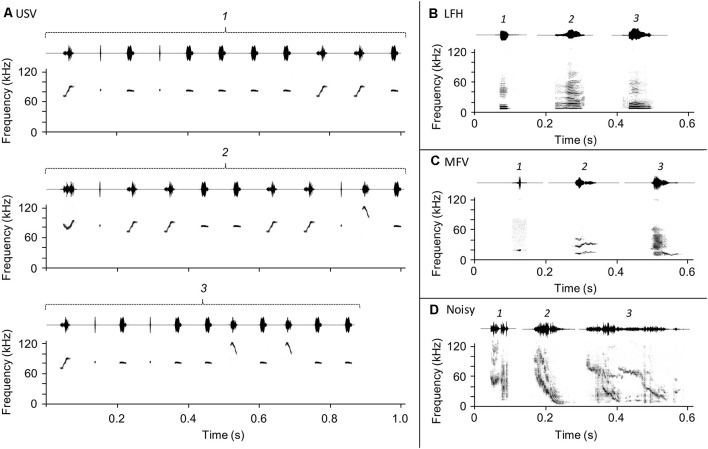
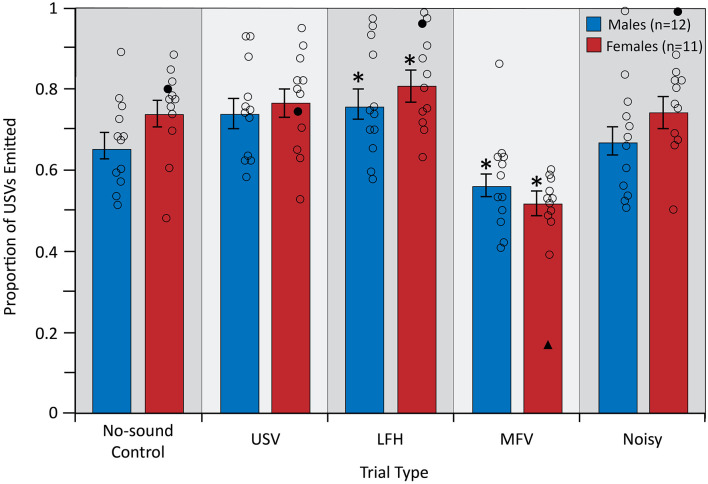
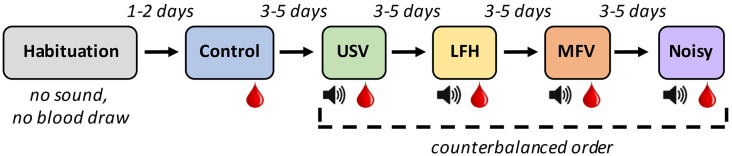
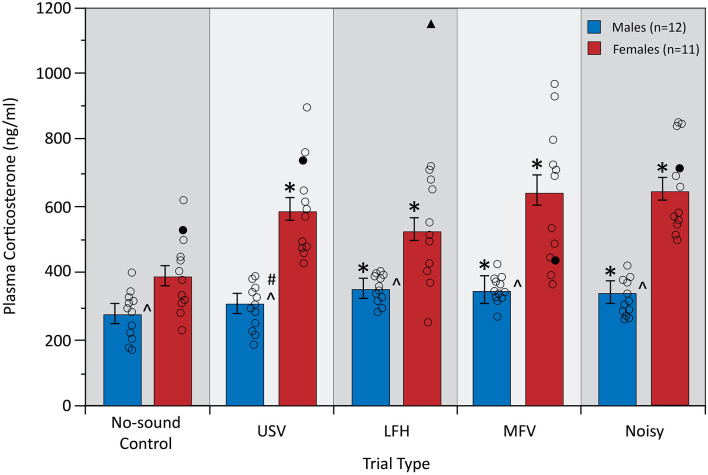
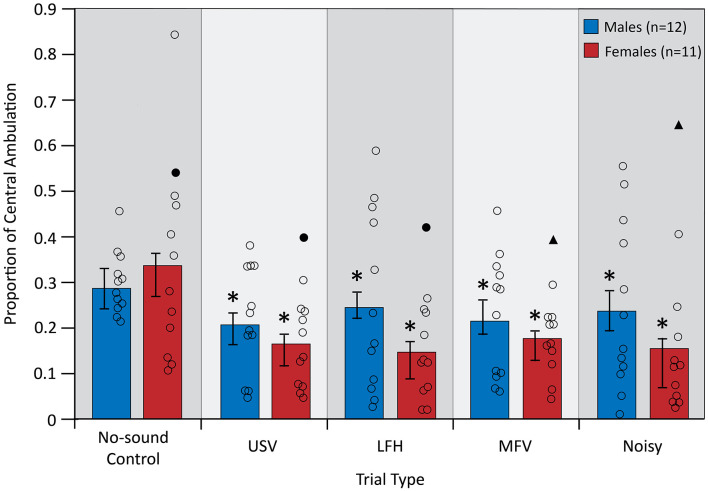
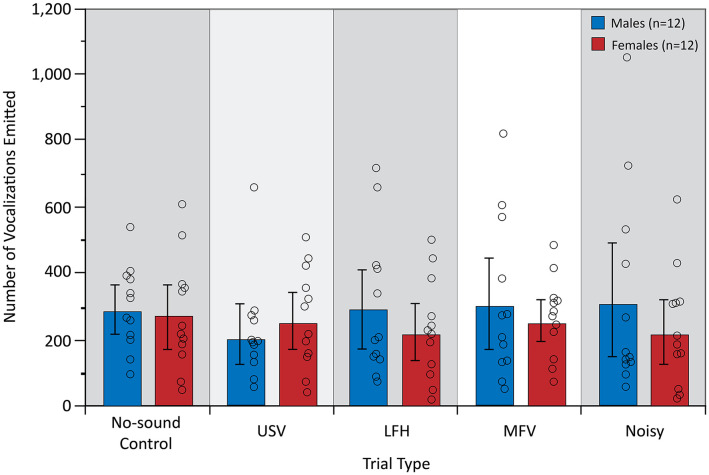
In mice, the caller's production of social vocalizations has been extensively studied but the effect of these vocalizations on the listener is less understood, with playback studies to date utilizing one vocalization category or listeners of one sex. This study examines how several categories of mouse vocalizations affect listeners of both sexes to better understand the communicative functions of these vocal categories. We examined physiological and behavioral responses of male and female CBA/CaJ mice to playback of four social vocalization categories: ultrasonic vocalizations (USVs), low-frequency harmonic calls, mid-frequency vocalizations, and noisy calls. Based on the conditions under which these calls are emitted, we hypothesized that playback of these vocal categories would have differential effects on the listeners. In females, playback of all four vocalization categories increased stress hormone levels (corticosterone), but only the non-USV categories increased corticosterone in males. The magnitude of corticosterone increase in non-USV trials was greater in females than in males. In open field tests, all four vocal categories decreased central ambulation in males and females, indicating an increase in anxiety-related behavior. Further, we found that the proportions of USVs emitted by subjects, but not their overall calling rates, were affected by playback of some vocal categories, suggesting that vocalization categories have different communication content. These results show that, even in the absence of behavioral and acoustic contextual features, each vocal category evokes physiological and behavioral responses in mice, with some differences in responses as a function of the listener's sex and playback signal. These findings suggest that at least some of the vocal categories have distinct communicative functions.
在小鼠中,对发出社交叫声的一方已进行了广泛研究,但这些叫声对收听者的影响却鲜为人知,迄今为止的回放研究仅使用了一类叫声或单一性别的收听者。本研究考察了几类小鼠叫声如何影响两性收听者,以更好地理解这些叫声类别的交流功能。我们检测了雄性和雌性CBA/CaJ小鼠对四类社交叫声回放的生理和行为反应:超声波叫声(USV)、低频谐波叫声、中频叫声和嘈杂叫声。基于这些叫声发出的条件,我们推测这些叫声类别对收听者会产生不同影响。在雌性小鼠中,所有四类叫声的回放都会增加应激激素水平(皮质酮),但在雄性小鼠中,只有非超声波叫声类别会增加皮质酮水平。在非超声波叫声试验中,雌性小鼠皮质酮增加的幅度大于雄性小鼠。在旷场试验中,所有四类叫声都会减少雄性和雌性小鼠在中央区域的走动,表明与焦虑相关的行为有所增加。此外,我们发现,受试小鼠发出的超声波叫声比例,而非其总体鸣叫率,会受到某些叫声类别的回放影响,这表明不同叫声类别具有不同的交流内容。这些结果表明,即使在没有行为和声学背景特征的情况下,每类叫声都会在小鼠中引发生理和行为反应,并且根据收听者的性别和回放信号,反应存在一些差异。这些发现表明,至少某些叫声类别具有独特的交流功能。