Department of Obstetrics and Gynecology, Wake Forest School of Medicine, Section for Maternal-Fetal Medicine, Winston-Salem, NC, USA.
Department of Obstetrics & Gynecology, Drexel University College of Medicine, Philadelphia, USA.
J Perinat Med. 2020 Oct 12;49(3):299-309. doi: 10.1515/jpm-2020-0025. Print 2021 Mar 26.
To assess deviations in longitudinally measured cytokines with preterm birth (PTB).
Prospective longitudinal study targeting 80 subjects. Phlebotomy specimens for broad panel of cytokine analysis were obtained at three time (T) intervals: first trimester (T1: 8-14 weeks' gestation), second trimester (T2: 18-22 weeks' gestation), and third trimester (T3: 28-32 weeks' gestation). Important demographics and outcomes were tracked. Data were stratified and the target groups were analyzed as follows: "Uncomplicated" (delivered ≥37 weeks) or "Preterm Birth" (<37 weeks). Generalized Linear Modeling determined rate of change T1-T3 by outcome.
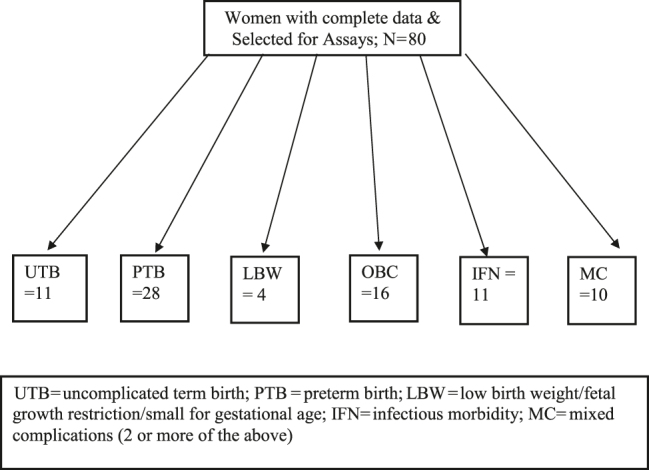
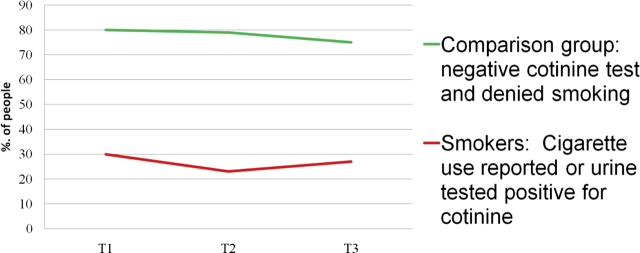
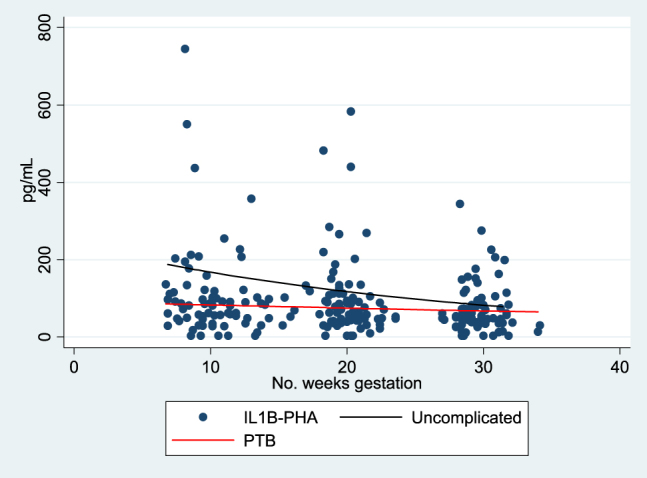
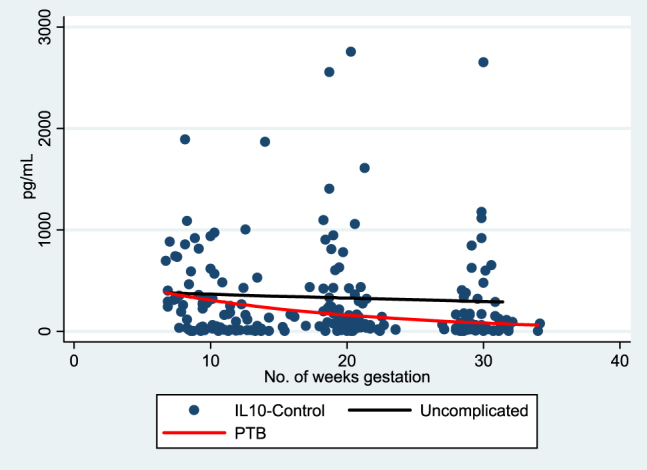
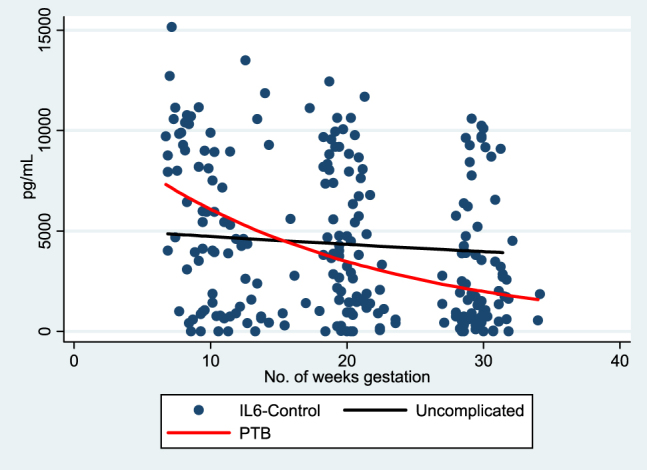
Complete data replete with phlebotomy at all three visits were obtained on 80 women. Birth outcomes were as follows: 11 Uncomplicated Term Birth (UTB), 28 PTB, 4 low birth weight (LBW), 16 OB complications (OBC), 11 current infections (IFN), and 10 mixed complications (MC=2 or more of the above). 28 PTB were compared to 11 uncomplicated term deliveries. In both groups, T helper type 1 (TH1) cytokine (IL-1β), pleiotrophic pro-inflammatory cytokine (IL-6), and counter-regulatory cytokine (IL-10) responses decreased over gestation, but rates of change in IL-1β, IL-6, and IL-10 were significantly different. Stratification of women by smoking status additionally demonstrated significant variance in immune status over the course of pregnancy.
Women delivering PTB demonstrated significant differences in cytokine trajectory over pregnancy; these data further validate key role played by immune regulation in directing pregnancy outcome. Likewise, smoking impacts longitudinal trajectory of cytokines over pregnancy.
评估与早产相关的细胞因子的纵向变化。
本研究为前瞻性纵向研究,共纳入 80 名受试者。在三个时间点(T)采集用于广泛细胞因子分析的血样标本:孕早期(T1:妊娠 8-14 周)、孕中期(T2:妊娠 18-22 周)和孕晚期(T3:妊娠 28-32 周)。跟踪重要的人口统计学和结局数据。对数据进行分层,按以下目标组进行分析:“无并发症”(≥37 周分娩)或“早产”(<37 周分娩)。广义线性模型确定了按结局划分的 T1-T3 变化率。
80 名女性均完成了所有三次就诊的完整血样采集。分娩结局如下:11 例无并发症足月分娩(UTB)、28 例早产、4 例低出生体重(LBW)、16 例产科并发症(OBC)、11 例现患感染(IFN)和 10 例混合并发症(MC=两种或以上并发症)。将 28 例早产与 11 例无并发症足月分娩进行比较。在两组中,辅助性 T 细胞 1 型(TH1)细胞因子(IL-1β)、多效性促炎细胞因子(IL-6)和负调节细胞因子(IL-10)反应随妊娠而下降,但 IL-1β、IL-6 和 IL-10 的变化率差异显著。按吸烟状况对女性进行分层,进一步表明在妊娠过程中免疫状态存在显著差异。
早产妇女在妊娠期间细胞因子轨迹存在显著差异;这些数据进一步证实了免疫调节在指导妊娠结局中的关键作用。同样,吸烟会影响妊娠期间细胞因子的纵向轨迹。