Institute for Drug Safety Sciences, University of North Carolina at Chapel Hill, Chapel Hill, North Carolina, United States of America.
Division of Pharmacotherapy and Experimental Therapeutics, Eshelman School of Pharmacy, University of North Carolina at Chapel Hill, Chapel Hill, North Carolina, United States of America.
PLoS One. 2020 Oct 9;15(10):e0240562. doi: 10.1371/journal.pone.0240562. eCollection 2020.
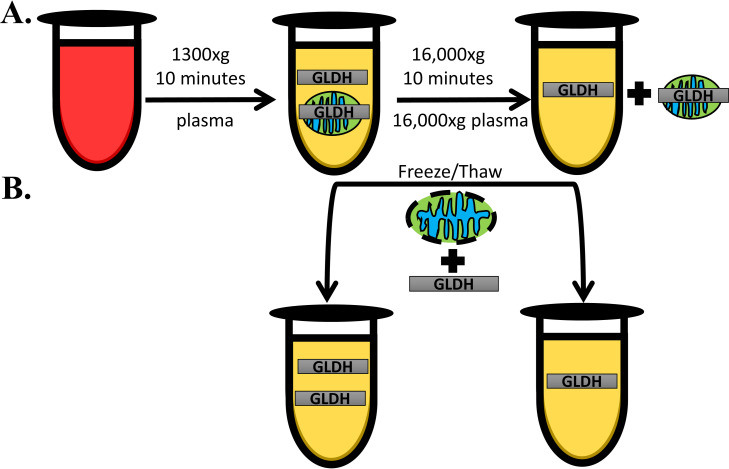
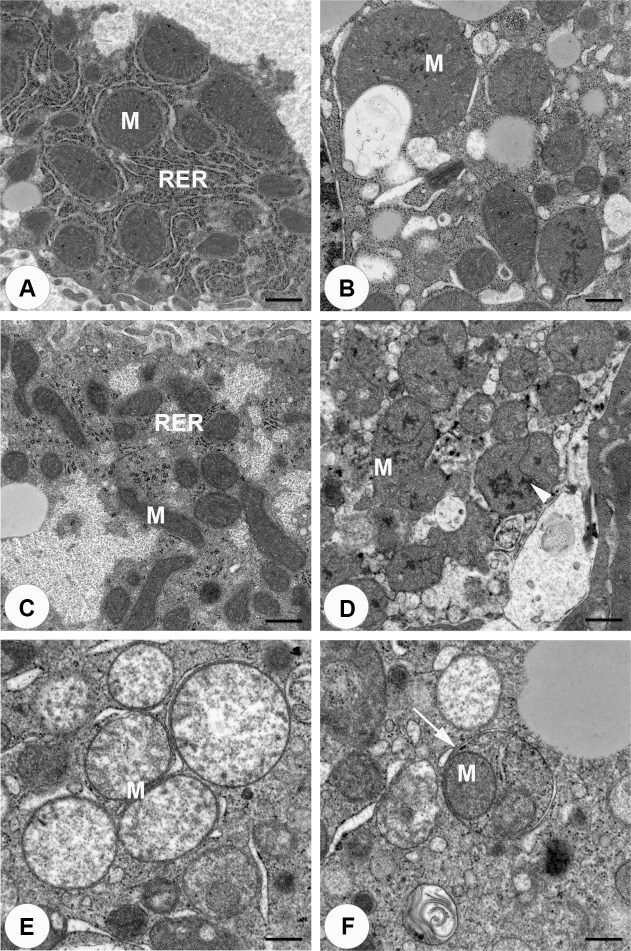
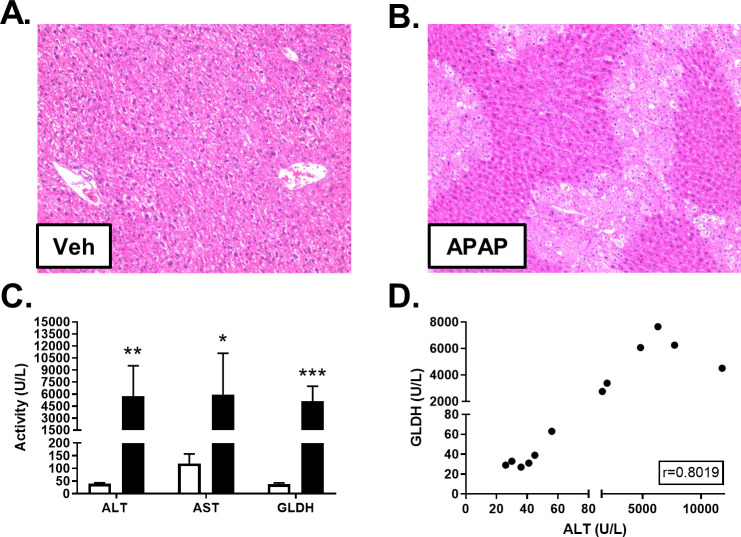
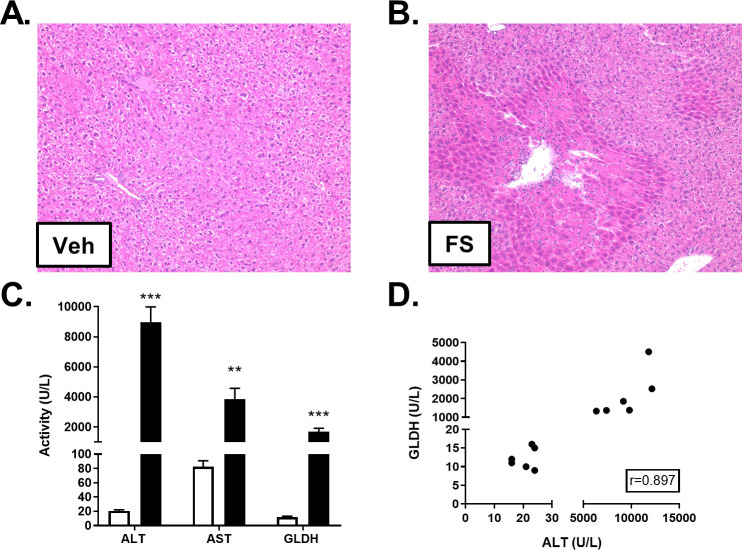
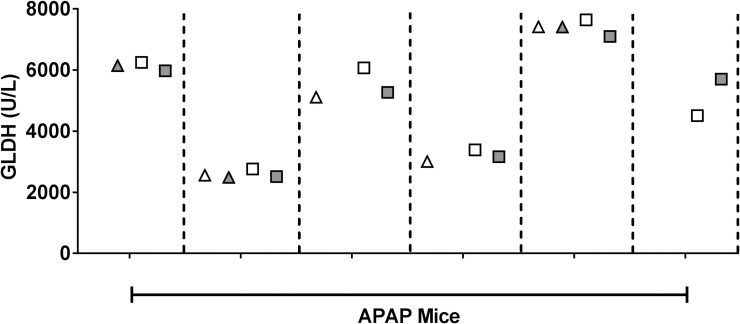
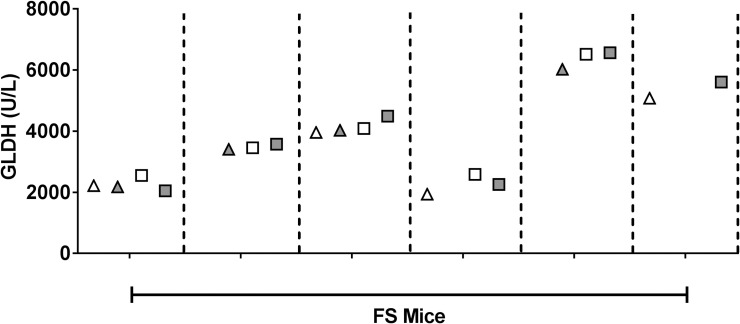
Glutamate dehydrogenase (GLDH) is a liver-specific biomarker of hepatocellular damage currently undergoing qualification as a drug development tool. Since GLDH is located within the mitochondrial matrix, it has been hypothesized that it might also be useful in assessing mitotoxicity as an initiating event during drug-induced liver injury. According to this hypothesis, hepatocyte death that does not involve primary mitochondrial injury would result in release of intact mitochondria into circulation that could be removed by high speed centrifugation and result in lower GLDH activity measured in spun serum vs un-spun serum. A single prior study in mice has provided some support for this hypothesis. We sought to repeat and extend the findings of this study. Accordingly, mice were treated with the known mitochondrial toxicant, acetaminophen (APAP), or with furosemide (FS), a toxicant believed to cause hepatocyte death through mechanisms not involving mitotoxicity as initiating event. We measured GLDH levels in fresh plasma before and after high speed centrifugation to remove intact mitochondria. We found that both APAP and FS treatments caused substantial hepatocellular necrosis that correlated with plasma alanine aminotransferase (ALT) and GLDH elevations. The plasma GLDH activity in both the APAP- and FS- treated mice was not affected by high-speed centrifugation. Interestingly, the ratio of GLDH:ALT was 5-fold lower during FS compared to APAP hepatotoxicity. Electron microscopy confirmed that both APAP- and FS-treatments had resulted in mitochondrial injury. Mitochondria within vesicles were only observed in the FS-treated mice raising the possibility that mitophagy might account for reduced release of GLDH in the FS-treated mice. Although our results show that plasma GLDH is not clinically useful for evaluating mitotoxicity, the GLDH:ALT ratio as a measure of mitophagy needs to be further studied.
谷氨酸脱氢酶(GLDH)是一种肝特异性生物标志物,目前正在被鉴定为药物开发工具,用于评估肝损伤。由于 GLDH 位于线粒体基质中,因此有人假设它也可能有助于评估药物诱导肝损伤的起始事件——线粒体毒性。根据这一假设,不涉及原发性线粒体损伤的肝细胞死亡将导致完整的线粒体释放到循环中,这些线粒体可以通过高速离心去除,从而导致离心后的血清中 GLDH 活性降低,而未离心的血清中 GLDH 活性升高。一项先前在小鼠中进行的研究为这一假设提供了一些支持。我们试图重复并扩展这项研究的结果。为此,我们用已知的线粒体毒性药物对乙酰氨基酚(APAP)或呋塞米(FS)处理小鼠,后者被认为通过不涉及线粒体毒性作为起始事件的机制导致肝细胞死亡。我们测量了高速离心前后新鲜血浆中的 GLDH 水平,以去除完整的线粒体。结果发现,APAP 和 FS 处理都导致了大量的肝细胞坏死,与血浆丙氨酸氨基转移酶(ALT)和 GLDH 升高相关。APAP 和 FS 处理的小鼠血浆 GLDH 活性不受高速离心的影响。有趣的是,与 APAP 肝毒性相比,FS 处理的小鼠 GLDH:ALT 比值低 5 倍。电子显微镜证实,APAP 和 FS 处理均导致了线粒体损伤。仅在 FS 处理的小鼠中观察到囊泡内的线粒体,这提示自噬可能是 FS 处理的小鼠中 GLDH 释放减少的原因。虽然我们的结果表明,血浆 GLDH 对评估线粒体毒性在临床上没有用处,但 GLDH:ALT 比值作为自噬的衡量标准需要进一步研究。