Health and Physical Education Department, Prince Sultan University, Riyadh 12435, Saudi Arabia.
Faculty of Health, Catholic University in Ružomberok, 03401 Ružomberok, Slovakia.
Int J Environ Res Public Health. 2020 Oct 6;17(19):7302. doi: 10.3390/ijerph17197302.
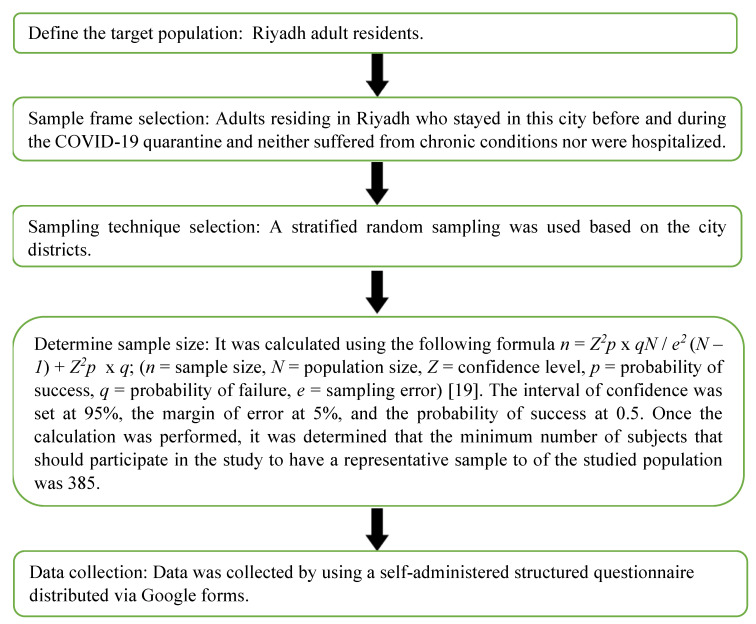
This study aimed to estimate the effect of the coronavirus disease 2019 (COVID-19) quarantine on low back pain (LBP) intensity, prevalence, and associated risk factors among adults in Riyadh (Saudi Arabia). A total of 463 adults (259 males and 204 females) aged between 18 and 64 years and residing in Riyadh (Saudi Arabia) participated in this cross-sectional study. A self-administered structured questionnaire composed of 20 questions regarding demographic characteristics, work- and academic-related aspects, physical activity (PA), daily habits and tasks, and pain-related aspects was used. The LBP point prevalence before the quarantine was 38.8%, and 43.8% after the quarantine. The LBP intensity significantly increased during the quarantine. The low back was also the most common musculoskeletal pain area. Furthermore, during the quarantine, a significantly higher LBP intensity was reported by those individuals who (a) were aged between 35 and 49 years old, (b) had a body mass index equal to or exceeding 30, (c) underwent higher levels of stress, (d) did not comply with the ergonomic recommendations, (e) were sitting for long periods, (f) did not practice enough physical activity (PA), and (g) underwent teleworking or distance learning. No significant differences were found between genders. The COVID-19 quarantine resulted in a significant increase in LBP intensity, point prevalence, and most associated risk factors.
这项研究旨在估计 2019 年冠状病毒病(COVID-19)隔离对利雅得(沙特阿拉伯)成年人腰痛(LBP)强度、患病率和相关危险因素的影响。共有 463 名年龄在 18 至 64 岁之间、居住在利雅得(沙特阿拉伯)的成年人参加了这项横断面研究。使用了一份由 20 个问题组成的自我管理的结构化问卷,涉及人口统计学特征、工作和学术相关方面、身体活动(PA)、日常习惯和任务以及与疼痛相关的方面。隔离前的 LBP 点患病率为 38.8%,隔离后为 43.8%。隔离期间,LBP 强度显著增加。腰部也是最常见的肌肉骨骼疼痛区域。此外,在隔离期间,(a)年龄在 35 至 49 岁之间、(b)体重指数等于或超过 30、(c)压力水平较高、(d)不遵守人体工程学建议、(e)长时间坐着、(f)没有进行足够的身体活动(PA)以及(g)进行远程办公或远程学习的人报告的 LBP 强度更高。性别之间没有发现显著差异。COVID-19 隔离导致 LBP 强度、点患病率和大多数相关危险因素显著增加。