Remer Eric, Badarni Mai, Hikri Elad, Dayan Avraham, Levi Lirit, Popovtzer Aron, Iraqi Muhammed, Porgador Angel, Joshua Ben-Zion, Bachar Gideon, Elkabets Moshe, Scaltriti Maurizio, Mizrachi Aviram
Department of Otolaryngology-Head and Neck Surgery, Meir Medical Center, Kfar Saba 4428164, Israel.
Sackler Faculty of Medicine, Tel Aviv University, Tel Aviv 6997801, Israel.
J Clin Med. 2020 Oct 7;9(10):3214. doi: 10.3390/jcm9103214.
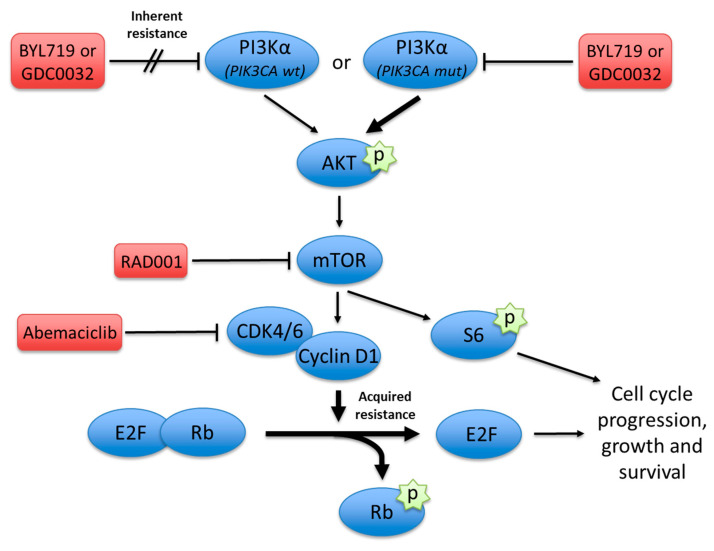
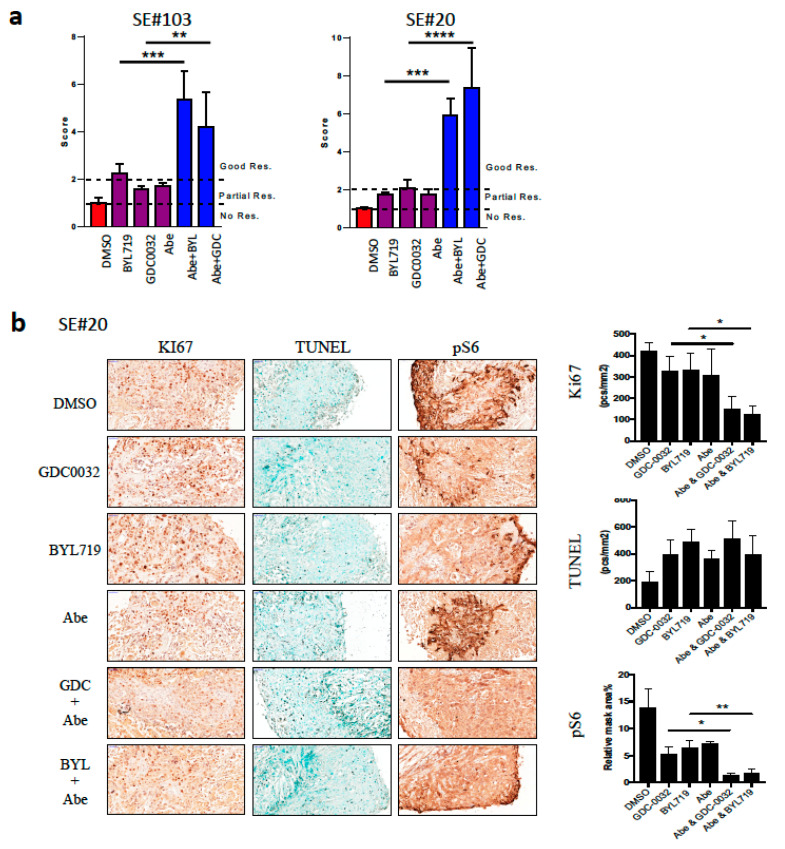
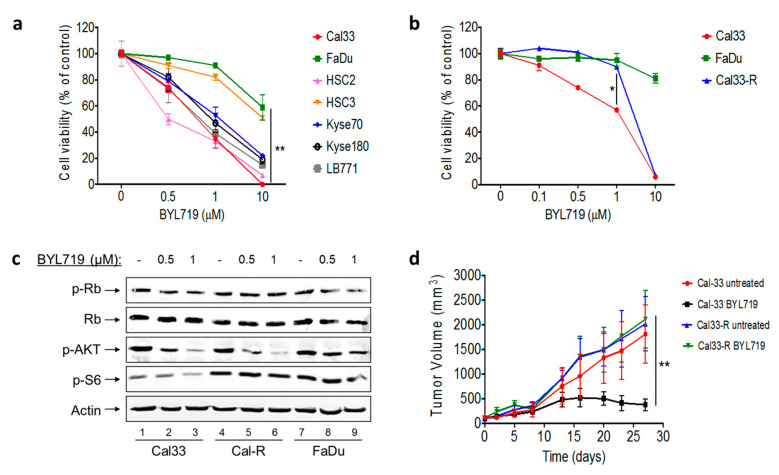
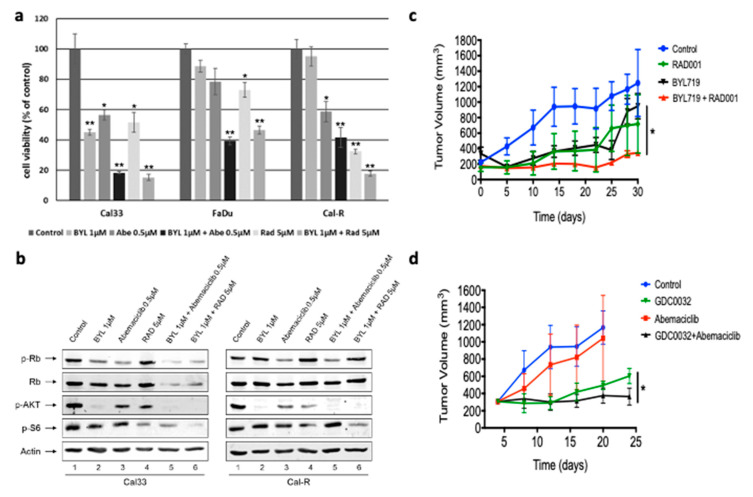
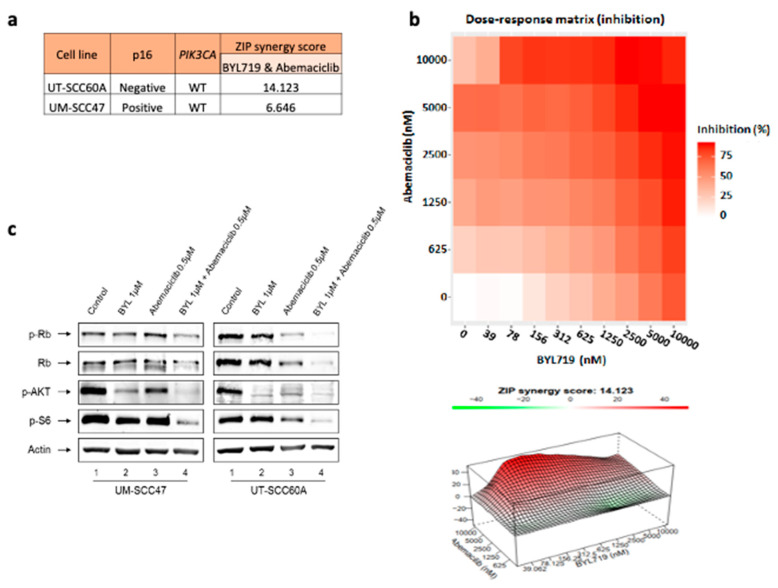
Activating alterations in , the gene coding for the catalytic subunit of phosphoinositide-3-kinase (PI3K), are prevalent in head and neck squamous cell carcinoma (HNSCC) and thought to be one of the main drivers of these tumors. However, early clinical trials on PI3K inhibitors (PI3Ki) have been disappointing due to the limited durability of the activity of these drugs. To investigate the resistance mechanisms to PI3Ki and attempt to overcome them, we conducted a molecular-based study using both HNSCC cell lines and patient-derived xenografts (PDXs). We sought to simulate and dissect the molecular pathways that come into play in PIK3CA-altered HNSCC treated with isoform-specific PI3Ki (BYL719, GDC0032). In vitro assays of cell viability and protein expression indicate that activation of the mTOR and cyclin D1 pathways is associated with resistance to PI3Ki. Specifically, in BYL719-resistant cells, BYL719 treatment did not induce pS6 and pRB inhibition as detected in BYL719-sensitive cells. By combining PI3Ki with either mammalian target of rapamycin complex 1 (mTORC1) or cyclin D1 kinase (CDK) 4/6 specific inhibitors (RAD001 and abemaciclib, respectively), we were able to overcome the acquired resistance. Furthermore, we found that PI3Ki and CDK 4/6 inhibitors have a synergistic anti-tumor effect when combined in human papillomavirus (HPV)-negative/PIK3CA-WT tumors. These findings provide a rationale for combining PI3Ki and CDK 4/6 inhibitors to enhance anti-tumor efficacy in HNSCC patients.
磷脂酰肌醇-3-激酶(PI3K)催化亚基的编码基因 中的激活改变在头颈部鳞状细胞癌(HNSCC)中很常见,被认为是这些肿瘤的主要驱动因素之一。然而,由于这些药物活性的持续时间有限,PI3K抑制剂(PI3Ki)的早期临床试验结果令人失望。为了研究对PI3Ki的耐药机制并试图克服它们,我们使用HNSCC细胞系和患者来源的异种移植模型(PDXs)进行了一项基于分子的研究。我们试图模拟和剖析在用亚型特异性PI3Ki(BYL719、GDC0032)治疗的PIK3CA改变的HNSCC中发挥作用的分子途径。细胞活力和蛋白质表达的体外试验表明,mTOR和细胞周期蛋白D1途径的激活与对PI3Ki的耐药性有关。具体而言,在对BYL719耐药的细胞中,BYL719处理并未像在对BYL719敏感的细胞中那样诱导pS6和pRB的抑制。通过将PI3Ki与雷帕霉素复合物1(mTORC1)或细胞周期蛋白D1激酶(CDK)4/6特异性抑制剂(分别为RAD001和阿贝西利)联合使用,我们能够克服获得性耐药。此外,我们发现PI3Ki和CDK 4/6抑制剂在人乳头瘤病毒(HPV)阴性/PIK3CA野生型肿瘤中联合使用时具有协同抗肿瘤作用。这些发现为联合使用PI3Ki和CDK 4/6抑制剂以提高HNSCC患者的抗肿瘤疗效提供了理论依据。