Marano Alessandra, Giuffrida Maria Carmela, Peluso Chiara, Testa Valentina, Bosio Paolo, Borghi Felice
Department of Surgery, General and Oncologic Surgery Unit, Santa Croce e Carle Hospital, Via M. Coppino 26, 12100 Cuneo, Italy.
Department of Surgery, General and Oncologic Surgery Unit, Santa Croce e Carle Hospital, Via M. Coppino 26, 12100 Cuneo, Italy.
Int J Surg Case Rep. 2020;77S(Suppl):S57-S60. doi: 10.1016/j.ijscr.2020.09.025. Epub 2020 Sep 24.
Tailgut cysts (TGC) are rare congenital retrorectal lesions deriving from vestiges of the hindgut. The risk of malignant transformation is relatively high. Thus early diagnosis and a complete removal of the mass are of paramount importance. We present a case of successful robotic exeresis of a large TGC adenocarcinoma.
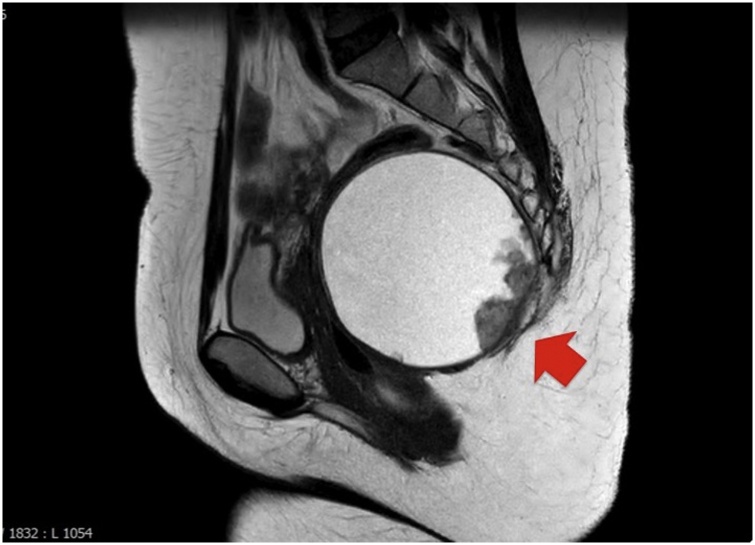
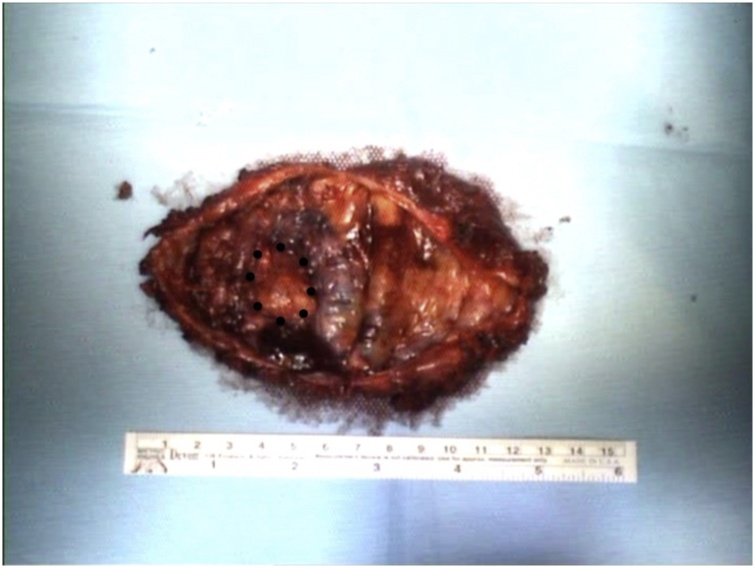
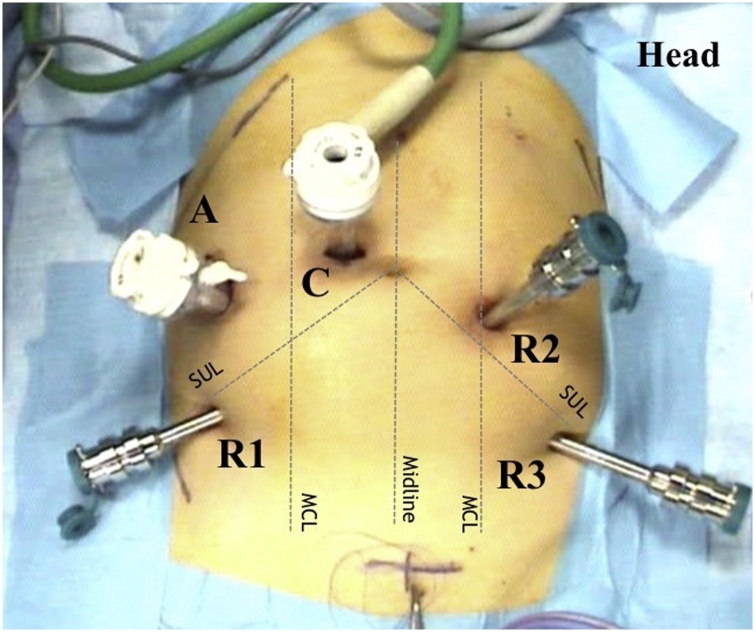
A healthy 35-year-old woman was found to have a retrorectal TGC with suspected malignant transformation. The patient underwent complete robotic resection of the mass and pathology confirmed a TGC adenocarcinoma. The patient's post-operative course was unremarkable. At 24 months, the patient has not experienced any recurrence nor complained functional disorders.
The current case highlights the importance of TGC as a differential diagnosis of presacral masses, underscoring that malignant transformation can occur and may result in mortality and morbidity if radical surgery is not performed. Diagnosing TGC adenocarcinoma can be challenging because of its relatively low incidence. Biopsy is not recommended while magnetic resonance imaging (MRI) is indispensable in the evaluation of this lesion as the presence of intracystic vegetations could indicate a malignant transformation. Surgery is the mainstay of treatment and minimally invasive techniques have the potential to minimize morbidity and enhance recovery. Amongst these, the robotic approach can make the dissection of large lesions easier, reducing their manipulation and preventing nerve injuries.
Robot-assisted resection of a TGC adenocarcinoma is safe and feasible. This approach can be particularly useful in the pelvis providing acceptable functional and oncological outcomes.
尾肠囊肿(TGC)是一种罕见的先天性直肠后病变,起源于后肠遗迹。其恶变风险相对较高。因此,早期诊断和完整切除肿块至关重要。我们报告一例成功通过机器人手术切除巨大TGC腺癌的病例。
一名35岁健康女性被发现患有直肠后TGC,怀疑有恶变。患者接受了肿块的完整机器人切除术,病理证实为TGC腺癌。患者术后恢复过程顺利。术后24个月,患者未出现任何复发,也未诉功能障碍。
本例突出了TGC作为骶前肿块鉴别诊断的重要性,强调其可发生恶变,若不进行根治性手术可能导致死亡率和发病率增加。由于TGC腺癌发病率相对较低,诊断具有挑战性。不建议进行活检,而磁共振成像(MRI)在评估该病变时不可或缺,因为囊内赘生物的存在可能提示恶变。手术是主要治疗方法,微创技术有可能将发病率降至最低并促进恢复。其中,机器人手术方法可使大病变的解剖更容易,减少操作并防止神经损伤。
机器人辅助切除TGC腺癌安全可行。这种方法在盆腔手术中可能特别有用,可提供可接受的功能和肿瘤学结果。