Levkovsky Anna, Dardik Rima, Barazany Daniel, Steinberg David M, Kirichenko Mark Dan, Apter Sara, Peleg Edna, Silverberg Daniel, Grossman Ehud, Salomon Ophira
Thrombosis Unit Sheba Medical Center, Coagulation Institute, 52621 Tel Hashomer, Israel.
Sackler Faculty of Medicine, Tel Aviv University, Tel Aviv, Israel.
Thromb J. 2020 Oct 6;18:24. doi: 10.1186/s12959-020-00237-8. eCollection 2020.
Air travel thrombosis continues to be a controversial topic. Exposure to hypoxia and hypobaric conditions during air travel is assumed a risk factor. The aim of this study is to explore changes in parameters of coagulation, fibrinolysis and blood flow in a rat model of exposure to hypobaric conditions that imitate commercial and combat flights.
Sixty Sprague-Dawley male rats, aged 10 weeks, were divided into 5 groups according to the type and duration of exposure to hypobaric conditions. The exposure conditions were 609 m and 7620 m for 2 and 12 h duration. Blood count, thrombin- antithrombin complex, D-dimer, interleukin-1 and interleukin-6 were analyzed. All rats went through flight angiography MRI at day 13-post exposure.
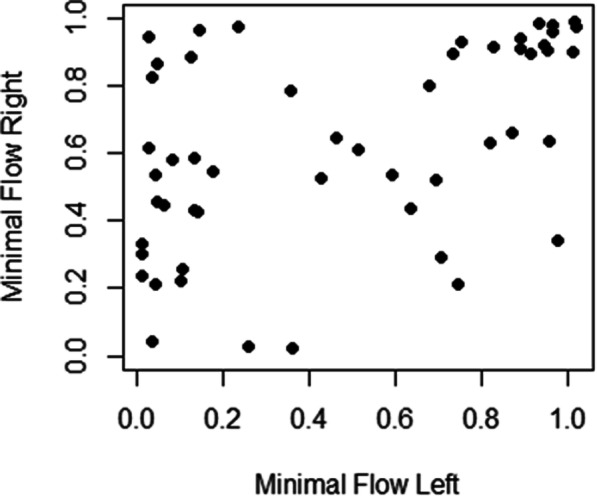
No effect of the various exposure conditions was observed on coagulation, fibrinolytic system, IL-1 or IL-6. MRI angiography showed blood flow reduction in lower limb to less than 30% in 50% of the rats. The reduction in blood flow was more pronounced in the left vessel than in the right vessel ( = 0.006, Wilcoxon signed rank test). The extent of occlusion differed across exposure groups in the right, but not the left vessel ( = 0.002, = 0.150, respectively, Kruskal-Wallis test). However, these differences did not correlate with the exposure conditions.
In the present rat model, no clear correlation between various hypobaric conditions and activation of coagulation was observed. The reduction in blood flow in the lower limb also occurred in the control group and was not related to the type of exposure.
航空旅行血栓形成仍然是一个有争议的话题。航空旅行期间暴露于低氧和低压环境被认为是一个危险因素。本研究的目的是在模拟商业和军事飞行的低压环境暴露大鼠模型中,探索凝血、纤维蛋白溶解和血流参数的变化。
60只10周龄的雄性斯普拉格-道利大鼠根据低压环境暴露的类型和持续时间分为5组。暴露条件为海拔609米和7620米,持续2小时和12小时。分析血常规、凝血酶-抗凝血酶复合物、D-二聚体、白细胞介素-1和白细胞介素-6。所有大鼠在暴露后第13天进行飞行血管造影磁共振成像。
未观察到各种暴露条件对凝血、纤维蛋白溶解系统、白细胞介素-1或白细胞介素-6有影响。磁共振血管造影显示,50%的大鼠下肢血流减少至低于30%。左血管的血流减少比右血管更明显(Wilcoxon符号秩检验,P = 0.006)。右血管的闭塞程度在不同暴露组之间存在差异,但左血管没有(分别为Kruskal-Wallis检验,P = 0.002,P = 0.150)。然而,这些差异与暴露条件无关。
在本大鼠模型中,未观察到各种低压条件与凝血激活之间存在明确的相关性。对照组也出现了下肢血流减少,且与暴露类型无关。