Dunn Amy R, Hadad Niran, Neuner Sarah M, Zhang Ji-Gang, Philip Vivek M, Dumitrescu Logan, Hohman Timothy J, Herskowitz Jeremy H, O'Connell Kristen M S, Kaczorowski Catherine C
The Jackson Laboratory, Bar Harbor, ME, United States.
Department of Anatomy and Neurobiology, The University of Tennessee Health Science Center, Memphis, TN, United States.
Front Cell Dev Biol. 2020 Sep 11;8:562662. doi: 10.3389/fcell.2020.562662. eCollection 2020.
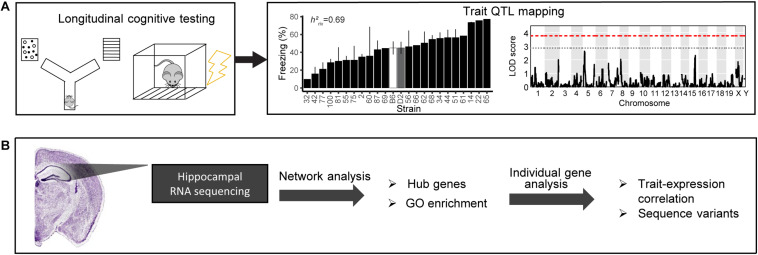
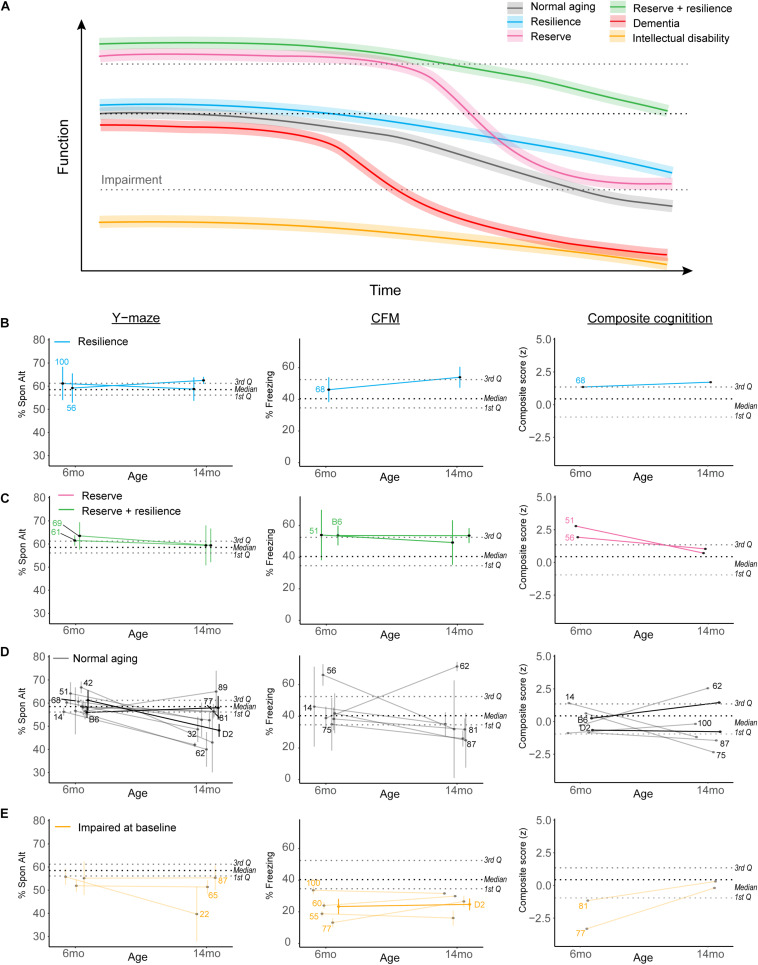
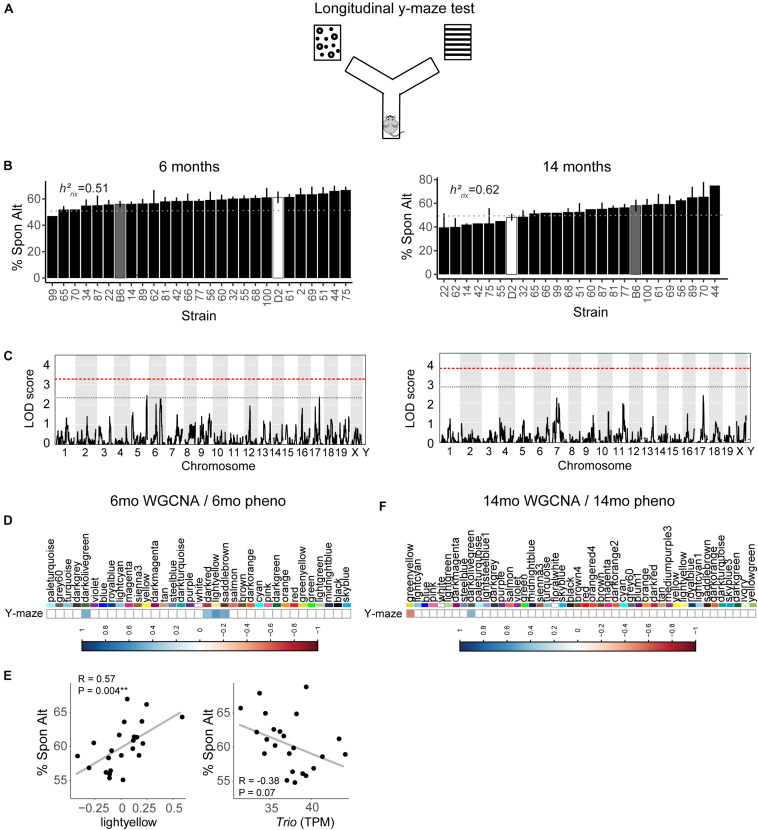
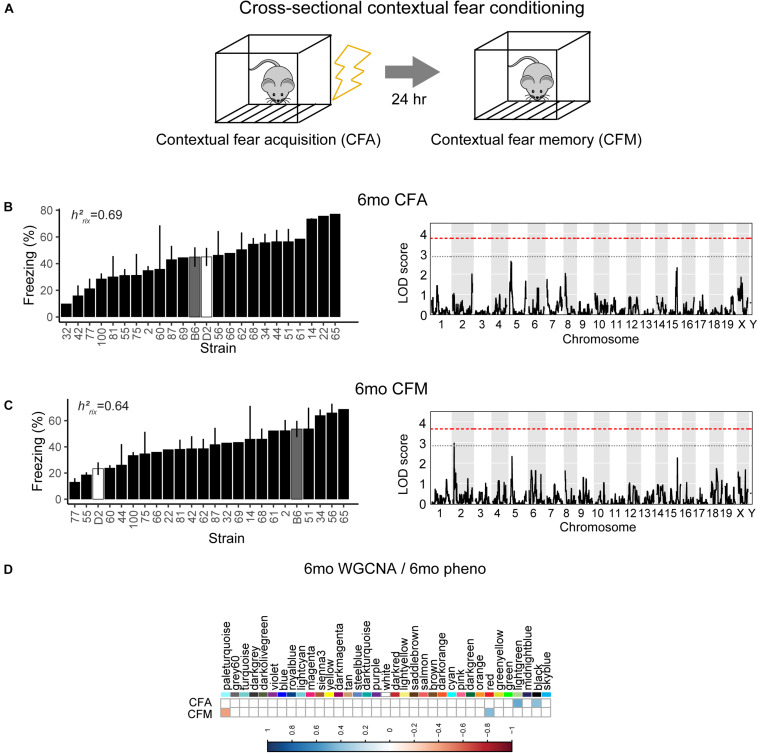
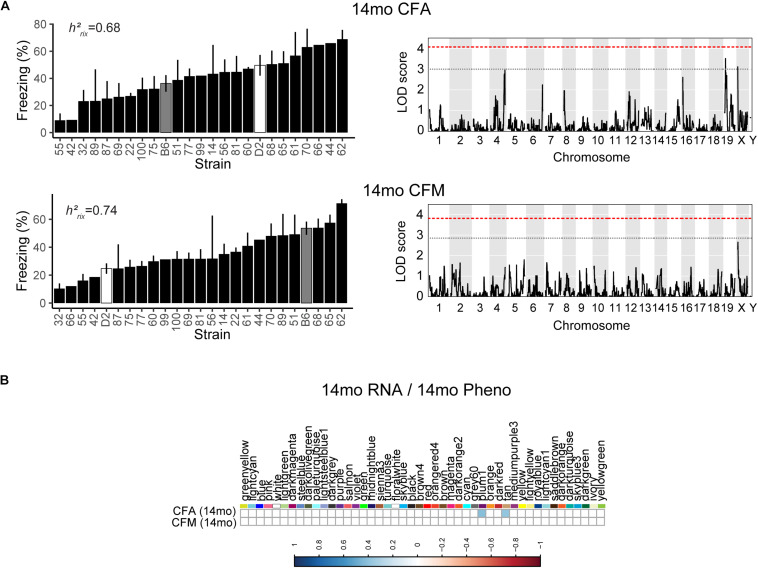
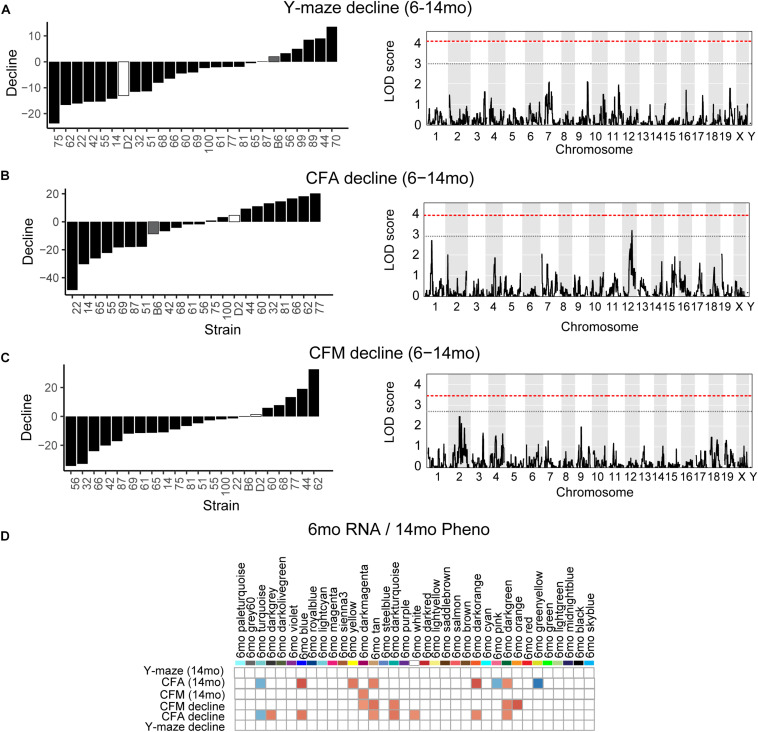
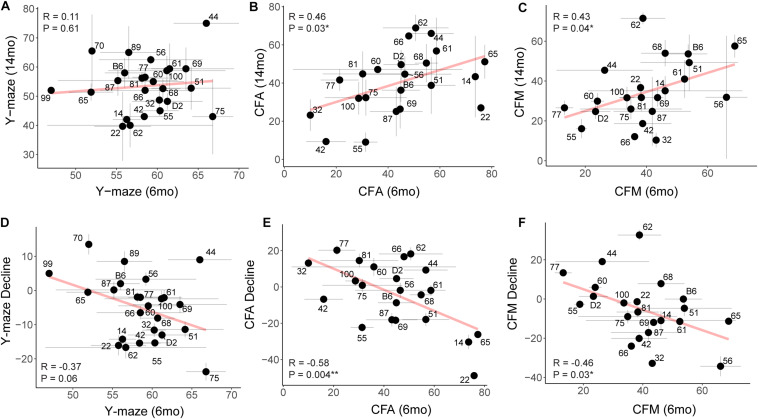
Developing strategies to maintain cognitive health is critical to quality of life during aging. The basis of healthy cognitive aging is poorly understood; thus, it is difficult to predict who will have normal cognition later in life. Individuals may have higher baseline functioning (cognitive reserve) and others may maintain or even improve with age (cognitive resilience). Understanding the mechanisms underlying cognitive reserve and resilience may hold the key to new therapeutic strategies for maintaining cognitive health. However, reserve and resilience have been inconsistently defined in human studies. Additionally, our understanding of the molecular and cellular bases of these phenomena is poor, compounded by a lack of longitudinal molecular and cognitive data that fully capture the dynamic trajectories of cognitive aging. Here, we used a genetically diverse mouse population (B6-BXDs) to characterize individual differences in cognitive abilities in adulthood and investigate evidence of cognitive reserve and/or resilience in middle-aged mice. We tested cognitive function at two ages (6 months and 14 months) using y-maze and contextual fear conditioning. We observed heritable variation in performance on these traits ( = 0.51-0.74), suggesting moderate to strong genetic control depending on the cognitive domain. Due to the polygenetic nature of cognitive function, we did not find QTLs significantly associated with y-maze, contextual fear acquisition (CFA) or memory, or decline in cognitive function at the genome-wide level. To more precisely interrogate the molecular regulation of variation in these traits, we employed RNA-seq and identified gene networks related to transcription/translation, cellular metabolism, and neuronal function that were associated with working memory, contextual fear memory, and cognitive decline. Using this method, we nominate the gene as a modulator of working memory ability. Finally, we propose a conceptual framework for identifying strains exhibiting cognitive reserve and/or resilience to assess whether these traits can be observed in middle-aged B6-BXDs. Though we found that earlier cognitive reserve evident early in life protects against cognitive impairment later in life, cognitive performance and age-related decline fell along a continuum, with no clear genotypes emerging as exemplars of exceptional reserve or resilience - leading to recommendations for future use of aging mouse populations to understand the nature of cognitive reserve and resilience.
制定维持认知健康的策略对于老龄化过程中的生活质量至关重要。健康认知老化的基础尚不清楚;因此,很难预测谁在晚年将拥有正常认知。个体可能具有较高的基线功能(认知储备),而其他个体可能随着年龄增长保持甚至改善(认知弹性)。了解认知储备和弹性背后的机制可能是维持认知健康新治疗策略的关键。然而,在人类研究中,储备和弹性的定义并不一致。此外,我们对这些现象的分子和细胞基础了解不足,由于缺乏充分捕捉认知老化动态轨迹的纵向分子和认知数据,情况更加复杂。在这里,我们使用了基因多样化的小鼠群体(B6-BXDs)来表征成年期认知能力的个体差异,并研究中年小鼠中认知储备和/或弹性的证据。我们使用Y迷宫和情境恐惧条件反射在两个年龄(6个月和14个月)测试认知功能。我们观察到这些性状表现的遗传变异( = 0.51-0.74),表明根据认知领域不同,存在中度到强的基因控制。由于认知功能的多基因性质,我们在全基因组水平上未发现与Y迷宫、情境恐惧获得(CFA)或记忆以及认知功能下降显著相关的数量性状基因座(QTL)。为了更精确地探究这些性状变异的分子调控,我们采用RNA测序并鉴定了与转录/翻译、细胞代谢和神经元功能相关的基因网络,这些网络与工作记忆、情境恐惧记忆和认知衰退有关。使用这种方法,我们提名 基因作为工作记忆能力的调节因子。最后,我们提出了一个概念框架,用于识别表现出认知储备和/或弹性的品系,以评估这些性状是否能在中年B6-BXDs中观察到。尽管我们发现生命早期明显的早期认知储备可预防晚年的认知障碍,但认知表现和与年龄相关的衰退呈连续分布,没有明确的基因型作为特殊储备或弹性的典范出现——这为未来使用衰老小鼠群体来理解认知储备和弹性的本质提供了建议。