Department of Structural and Functional Biology, State University of Campinas, Campinas, SP, Brazil.
PLoS One. 2020 Oct 13;15(10):e0240115. doi: 10.1371/journal.pone.0240115. eCollection 2020.
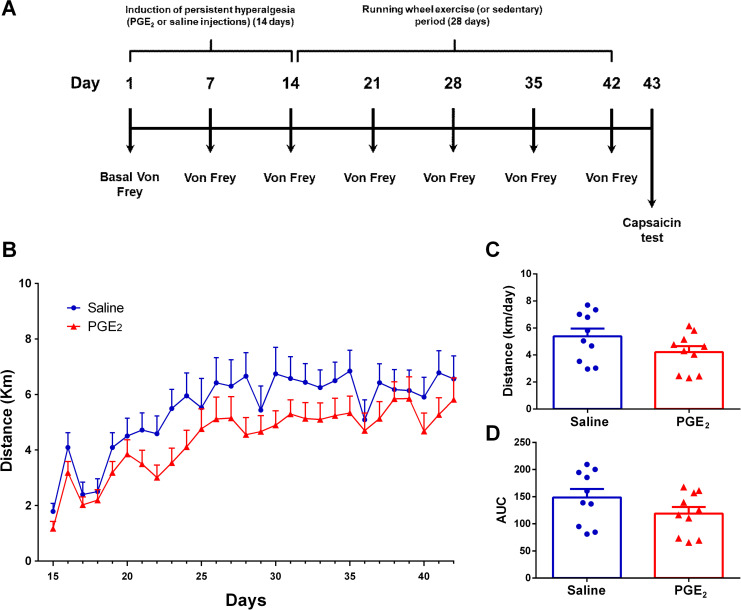
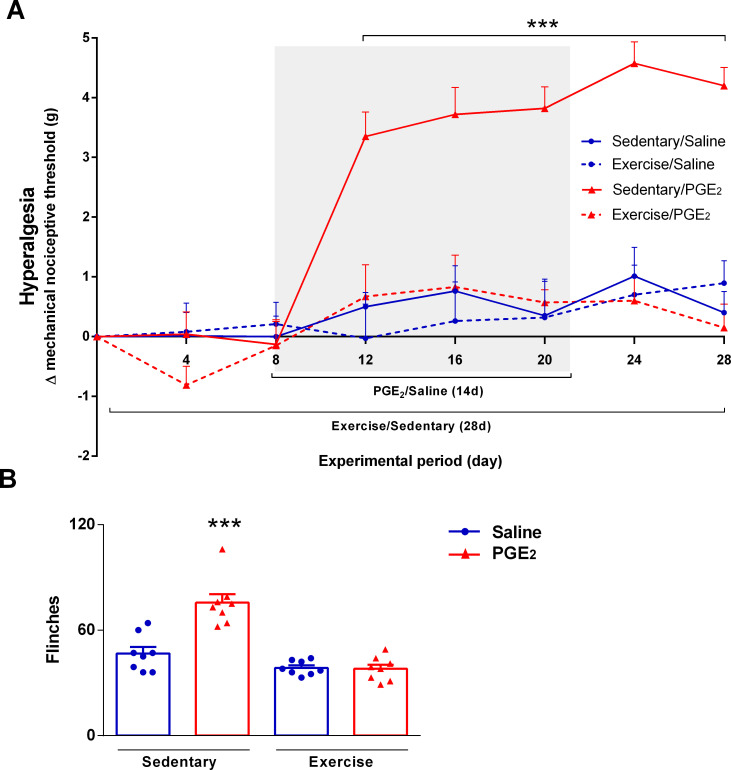
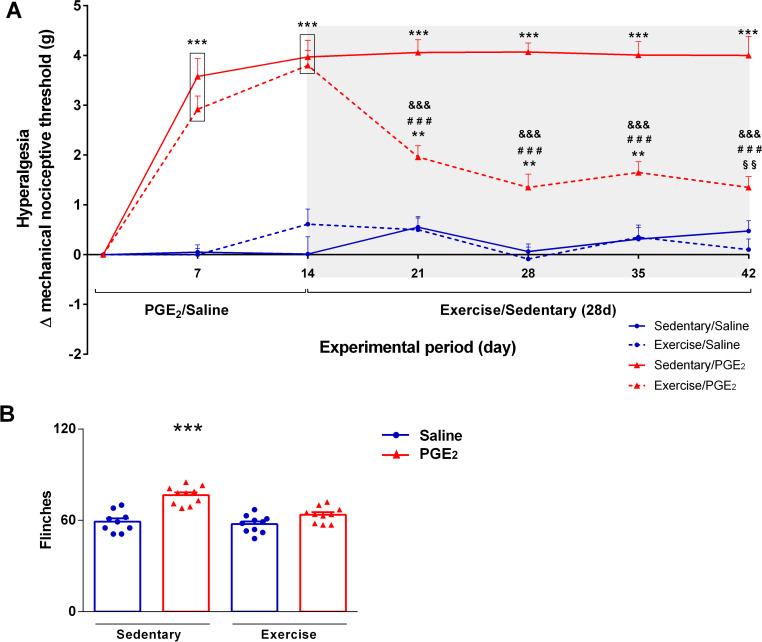
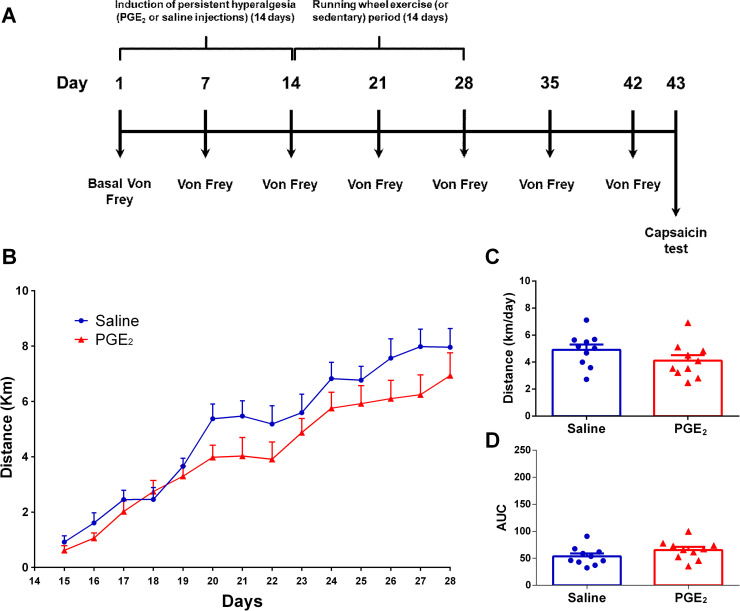
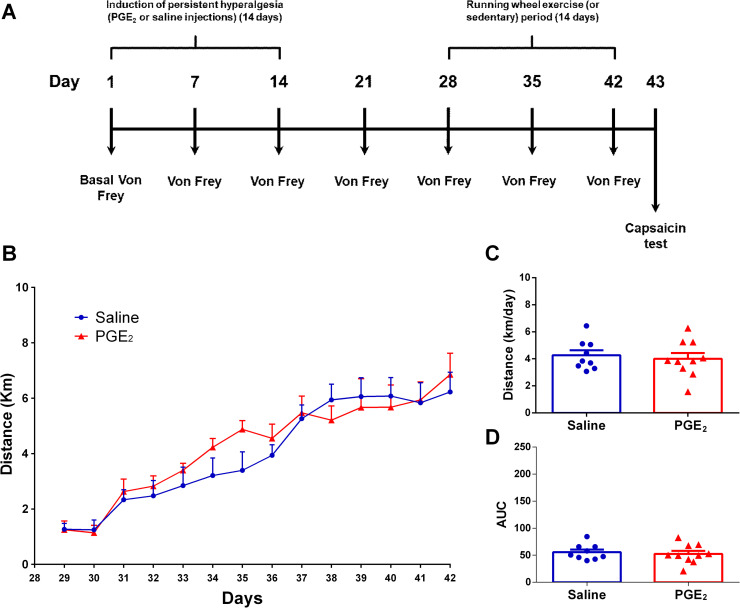
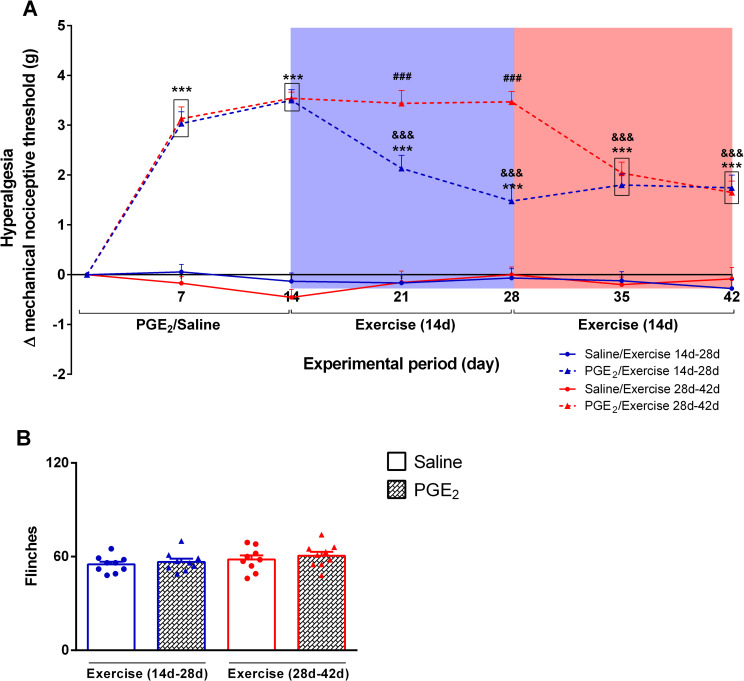
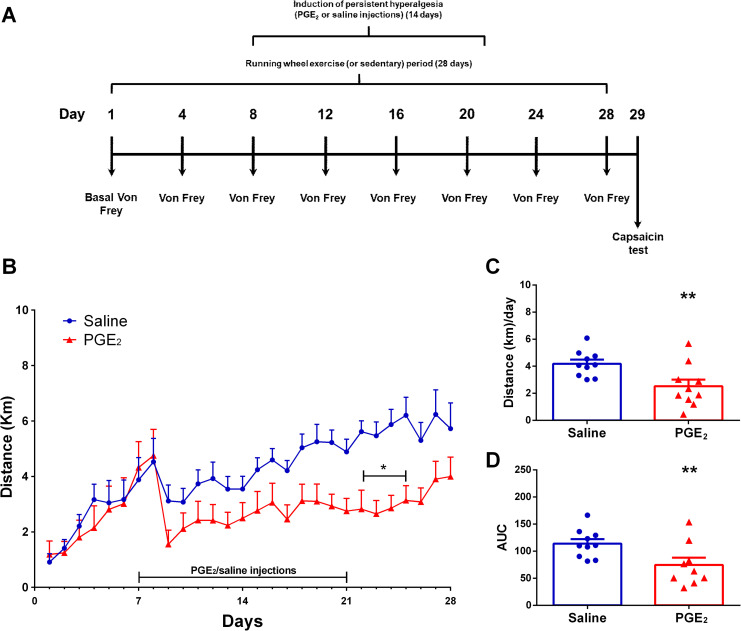
Chronic pain affects significant portion of the world's population and physical exercise has been extensively indicated as non-pharmacological clinical intervention to relieve symptoms in chronic pain conditions. In general, studies on pain chronification and physical exercise intervention have focused on neuropathic pain, although chronic pain commonly results from an original inflammatory episode. Based on this, the objective of the present study was to investigate the therapeutic and preventive effect of the running wheel exercise on the persistent hyperalgesia induced by repetitive inflammatory stimulus, a rodent model that simulates clinical conditions of chronic pain that persist even with no more inflammatory stimulus present. To evaluate the therapeutic effect of physical exercise, we first induced persistent hyperalgesia through 14 days of PGE2 hind paw injections and, after that, mice have access to the regular voluntary running wheel. To evaluate the preventive effect of physical exercise, we first left the mice with access to the regular voluntary running wheel and, after that, we performed 14 days of PGE2 hind paw injection. Our results showed that voluntary running wheel exercise reduced persistent mechanical and chemical hyperalgesia intensity induced by repetitive inflammatory stimulus. In addition, we showed that this therapeutic effect is long-lasting and is observed even if started belatedly, i.e. two weeks after the development of hyperalgesia. Also, our results showed that voluntary running wheel exercise absolutely prevented persistent mechanical and chemical hyperalgesia induction. We can conclude that physical exercise has therapeutic and preventive effect on inflammatory stimulus-induced persistent hyperalgesia. Our data from animal experiments bypass placebo effects bias of the human studies and reinforce physical exercise clinical recommendations to treat and prevent chronic pain.
慢性疼痛影响了世界上很大一部分人口,而体育锻炼已被广泛证明是一种非药物临床干预措施,可以缓解慢性疼痛症状。一般来说,关于疼痛慢性化和体育锻炼干预的研究都集中在神经病理性疼痛上,尽管慢性疼痛通常是由最初的炎症发作引起的。基于此,本研究的目的是研究跑步轮运动对重复炎症刺激引起的持续性痛觉过敏的治疗和预防作用,这是一种模拟慢性疼痛临床状况的啮齿动物模型,即使没有更多的炎症刺激,疼痛也会持续存在。为了评估体育锻炼的治疗效果,我们首先通过 14 天的 PGE2 后爪注射诱导持续性痛觉过敏,然后让小鼠使用常规的自愿跑步轮。为了评估体育锻炼的预防效果,我们首先让小鼠使用常规的自愿跑步轮,然后进行 14 天的 PGE2 后爪注射。我们的结果表明,自愿跑步轮运动减轻了由重复炎症刺激引起的持续性机械性和化学性痛觉过敏强度。此外,我们还表明,这种治疗效果是持久的,即使在痛觉过敏发展两周后才开始,也能观察到。此外,我们的结果表明,自愿跑步轮运动完全预防了持续性机械性和化学性痛觉过敏的诱导。我们可以得出结论,体育锻炼对炎症刺激引起的持续性痛觉过敏具有治疗和预防作用。我们的动物实验数据排除了人类研究中安慰剂效应的偏见,并加强了体育锻炼治疗和预防慢性疼痛的临床建议。