Université Grenoble-Alpes, CNRS, Grenoble INP, LEGI, 38000 Grenoble, France.
Université Grenoble-Alpes, CNRS, Grenoble INP, LEGI, 38000 Grenoble, France; Université Grenoble-Alpes, CEA-LITEN, 17 Rue des Martyrs, 38000 Grenoble, France.
Ultrason Sonochem. 2021 Mar;71:105351. doi: 10.1016/j.ultsonch.2020.105351. Epub 2020 Oct 1.
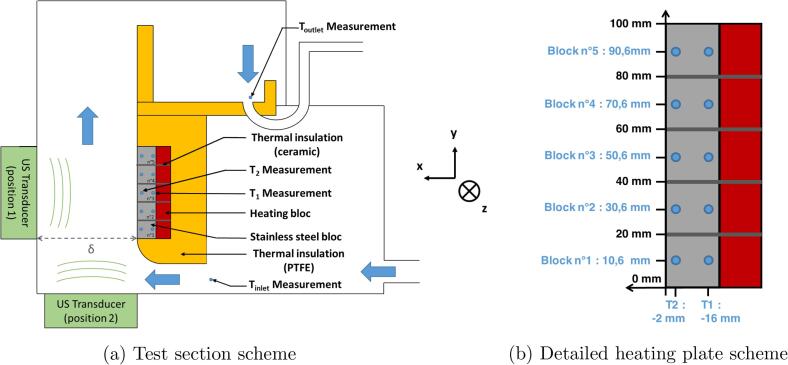
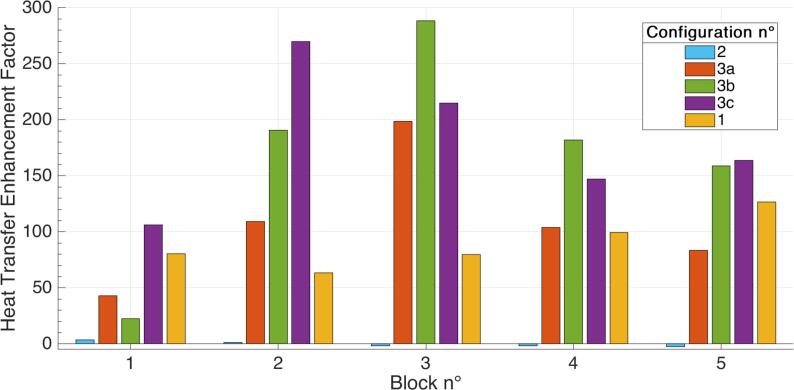
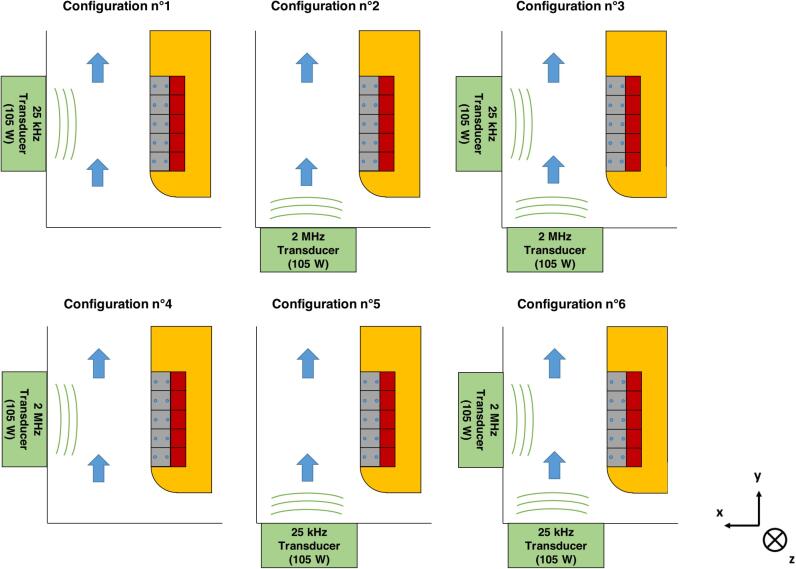
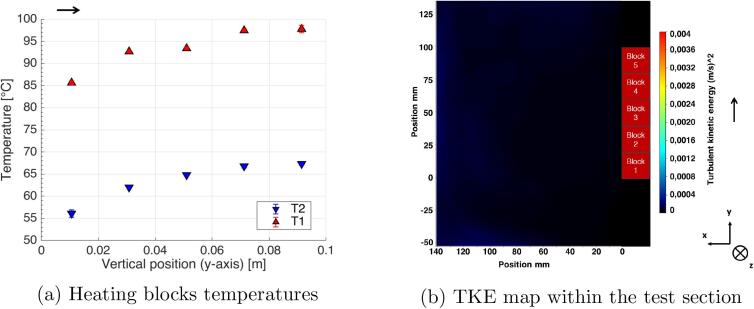
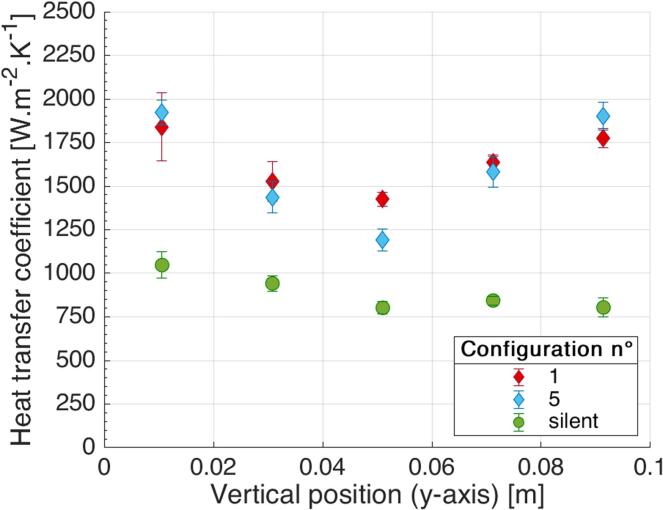
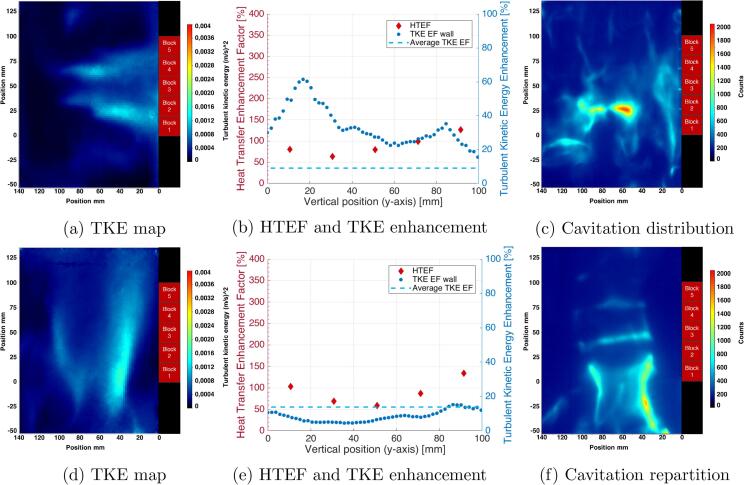
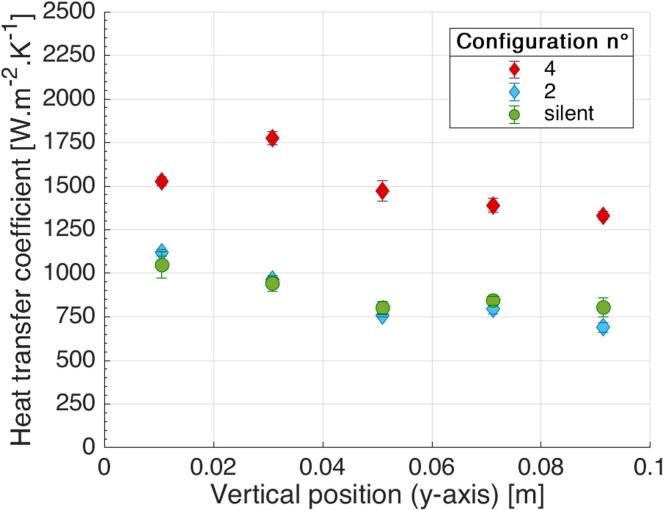
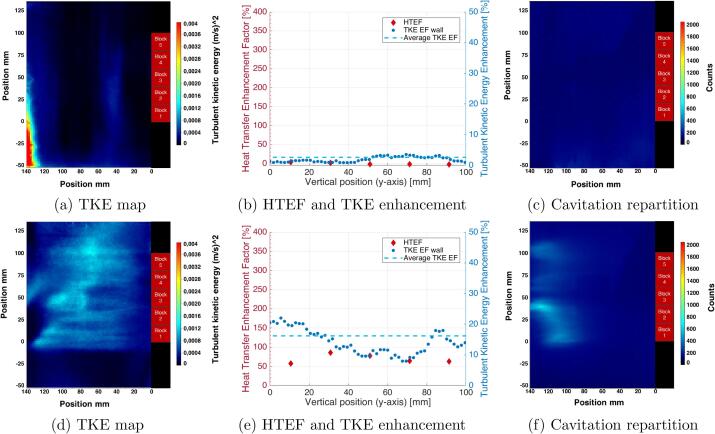
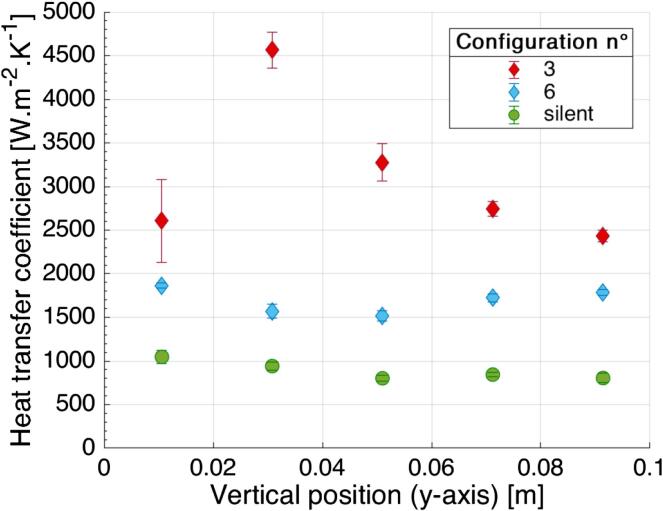
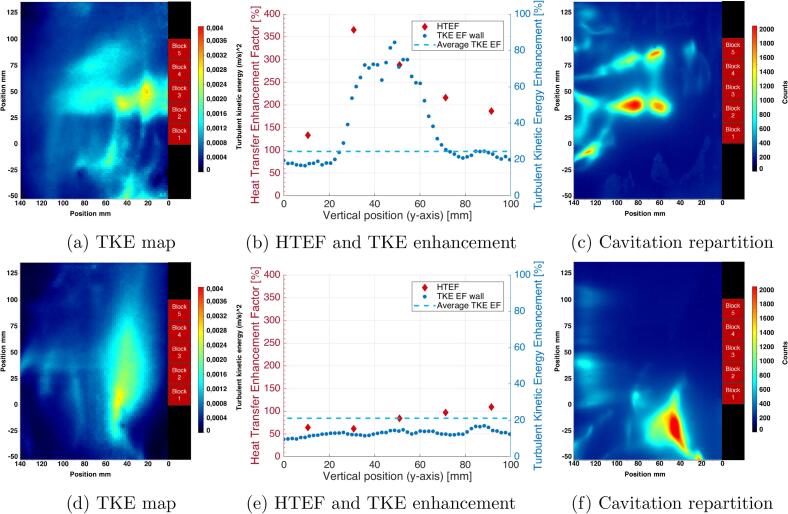
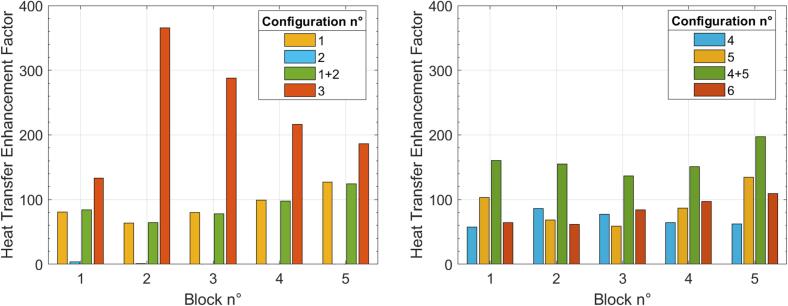
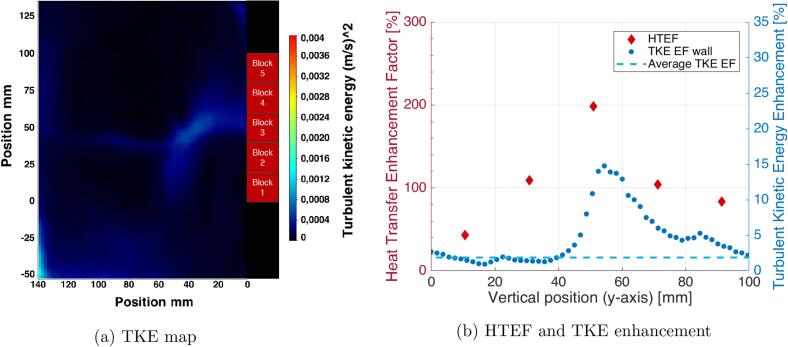
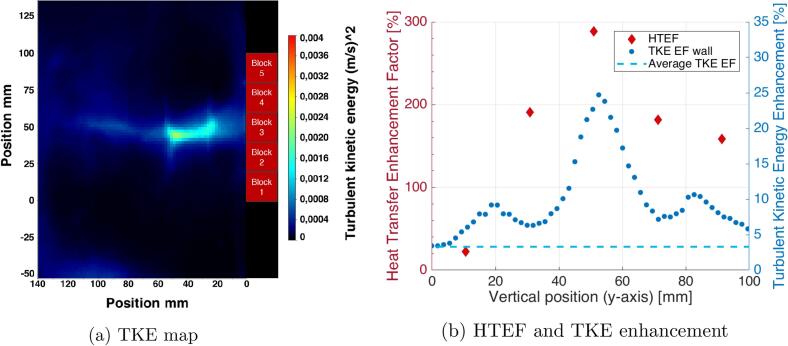
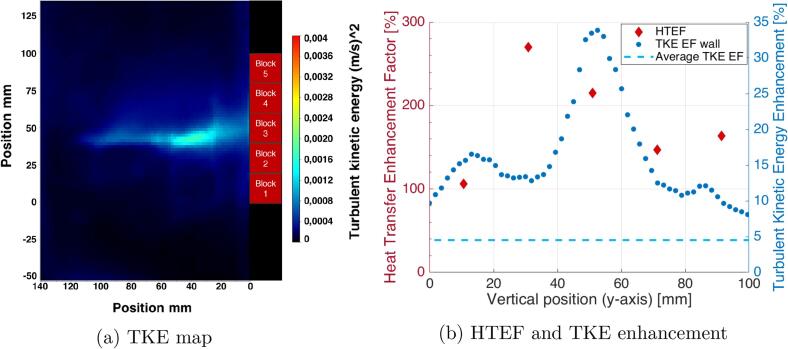
Combined sonication with dual-frequency ultrasound has been investigated to enhance heat transfer in forced convection. The test section used for this study consists of a channel with, on one hand, heating blocks normal to the water flow, equipped with thermocouples, and, on the other hand, two ultrasonic emitters. One is facing the heating blocks, thus the ultrasonic field is perpendicular, and the second ultrasonic field is collinear to the water flow. Two types of ultrasonic waves were used: low-frequency ultrasound (25 kHz) to generate mainly acoustic cavitation and high-frequency ultrasound (2 MHz) well-known to induce Eckart's acoustic streaming. A thermal approach was conducted to investigate heat transfer enhancement in the presence of ultrasound. This approach was completed with PIV measurements to assess the hydrodynamic behavior modifications under ultrasound. Sonochemiluminescence experiments were performed to account for the presence and the location of acoustic cavitation within the water flow. The results have shown a synergetic effect using combined low-and-high-frequency sonication. Enhancement of heat transfer is related to greater induced turbulence within the water flow by comparison with single-frequency sonication. However, the ultrasonically-induced turbulence is not homogeneously distributed within the water flow and the synergy effect on heat transfer enhancement depends mainly on the generation of turbulence along the heating wall. For the optimal configuration of dual-frequency sonication used in this work, a local heat transfer enhancement factor up to 366% was observed and Turbulent Kinetic Energy was enhanced by up to 84% when compared to silent regime.
联合声空化与双频超声强化强制对流换热的研究。本研究采用的测试段由一个通道组成,一方面,加热块垂直于水流方向,装有热电偶,另一方面,有两个超声发射器。一个面向加热块,因此超声场是垂直的,第二个超声场与水流共线。使用了两种类型的超声波:低频超声(25 kHz)主要产生声空化,高频超声(2 MHz)已知能产生艾克哈特声流。采用热方法研究了超声作用下的传热强化。该方法结合 PIV 测量,评估了超声作用下水动力行为的变化。还进行了声致发光实验,以说明在水流中存在的空化及其位置。结果表明,采用低频和高频联合超声有协同作用。与单频超声相比,超声强化换热与水流中诱导的湍流增强有关。然而,超声诱导的湍流在水流中分布不均匀,协同强化换热的效果主要取决于沿加热壁面产生的湍流。对于本工作中使用的双频超声的最佳配置,观察到局部传热增强因子高达 366%,与无超声时相比,湍流动能增强了 84%。