Drug Utilisation and Discovery Research Group, Faculty of Pharmacy, University of Jember, Jember 68121, Indonesia.
School of Biology, Faculty of Biology, Gadjah Mada University, Yogyakarta 55281, Indonesia.
Biomolecules. 2020 Oct 8;10(10):1420. doi: 10.3390/biom10101420.
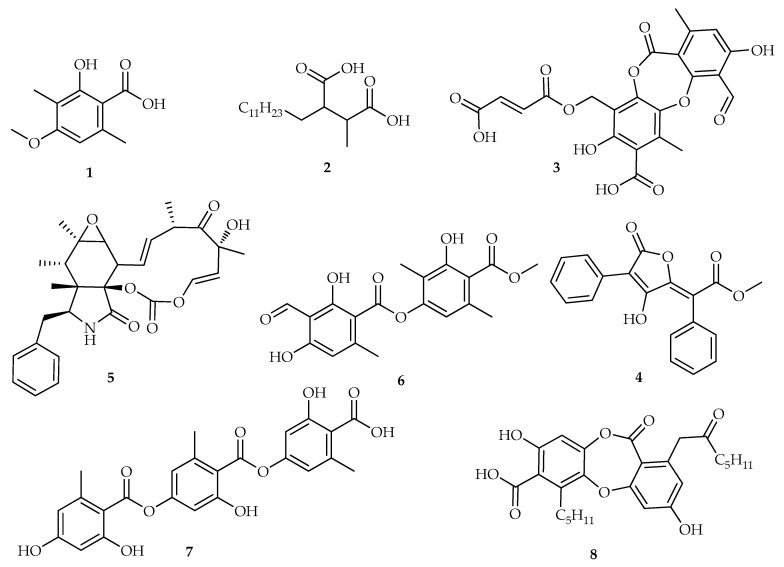
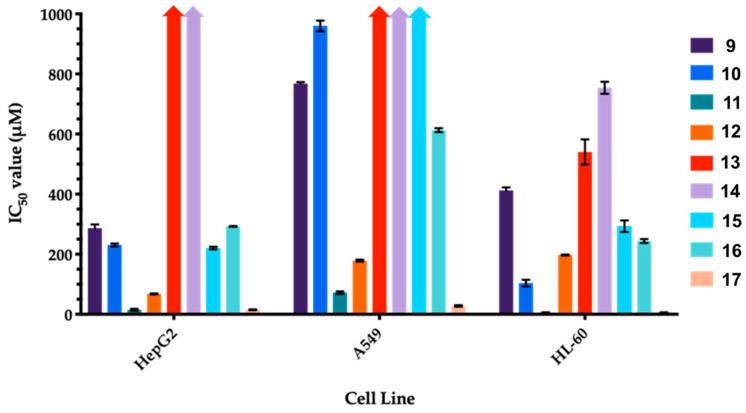
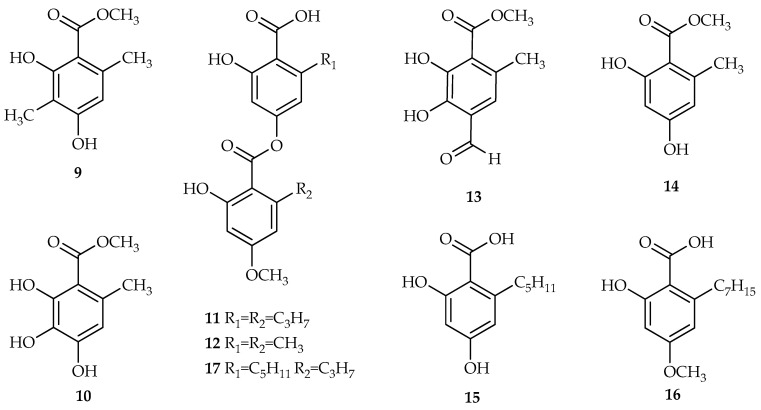
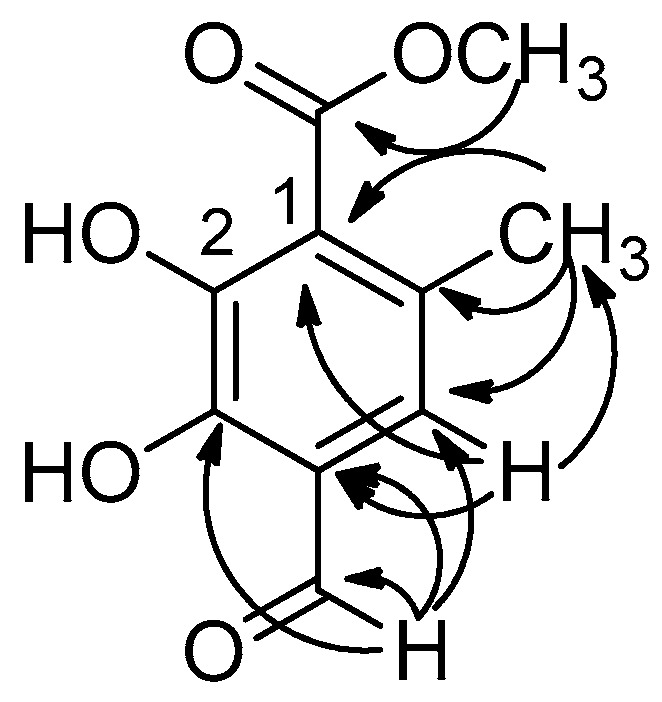
Cancer is a serious health burden on global societies. The discovery and development of new anti-cancer therapies remains a challenging objective. Although it has been shown that lichen secondary metabolites may be potent sources for new anti-cancer agents, the Indonesian- grown folious lichens, and have not yet been explored. In this study exhaustive preparative high-performance liquid chromatography was employed to isolate the lichen constituents with spectroscopic and spectrometric protocols identifying nine depsides -, including the new methyl 4-formyl-2,3-dihydroxy-6-methylbenzoate . The cytotoxicity of the depsides towards cancer cells was assessed using the 3-(4,5-dimethylthiazol-2-yl)-2,5-diphenyltetrazolium bromide (MTT) assay. The results indicated lowest toxicity of the depsides towards human A549 lung cancer cells. Importantly, the di-depsides (, and ) showed greatest toxicity, indicating that these structures are biologically more active than the mono-depsides against the HepG2 liver cancer, A549 lung cancer and HL-60 leukemia cell lines.
癌症是全球社会的严重健康负担。发现和开发新的抗癌疗法仍然是一个具有挑战性的目标。虽然已经表明地衣次级代谢产物可能是新的抗癌药物的有效来源,但印度尼西亚生长的叶状地衣 和 尚未得到探索。在这项研究中,采用了详尽的制备高效液相色谱法来分离具有光谱和光谱协议的地衣成分,鉴定了 9 种地衣二酸酯 - ,包括新的甲基 4-甲酰基-2,3-二羟基-6-甲基苯甲酸酯 。使用 3-(4,5-二甲基噻唑-2-基)-2,5-二苯基四唑溴盐(MTT)测定法评估了地衣二酸酯对癌细胞的细胞毒性。结果表明,地衣二酸酯对人 A549 肺癌细胞的毒性最低。重要的是,二地衣二酸酯( 、 和 )显示出最大的毒性,表明这些结构比单地衣二酸酯对 HepG2 肝癌、A549 肺癌和 HL-60 白血病细胞系更具生物活性。