Olivia Newton-John Cancer Research Institute and School of Cancer Medicine, La Trobe University, Heidelberg, Victoria 3084, Australia.
Department of Molecular Imaging and Therapy, Austin Hospital, and University of Melbourne, Heidelberg, Victoria 3084, Australia.
Theranostics. 2020 Sep 15;10(25):11404-11415. doi: 10.7150/thno.49422. eCollection 2020.
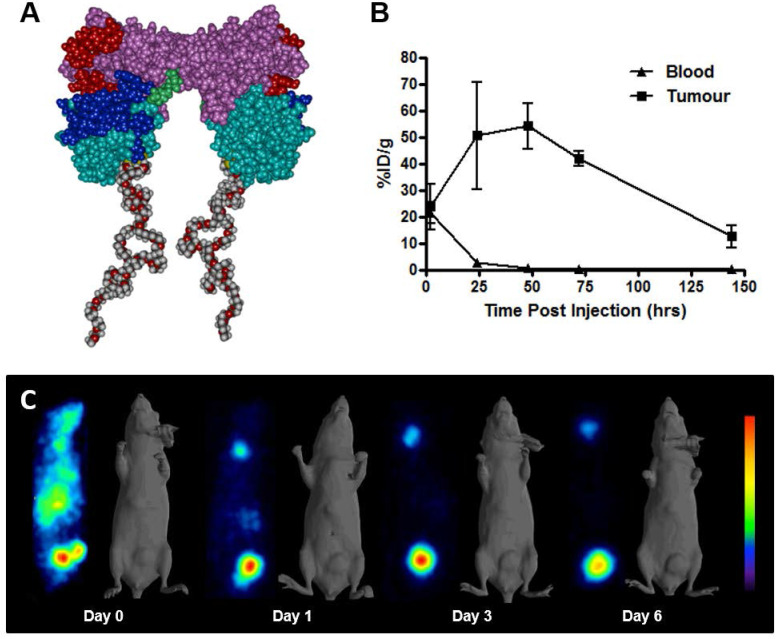
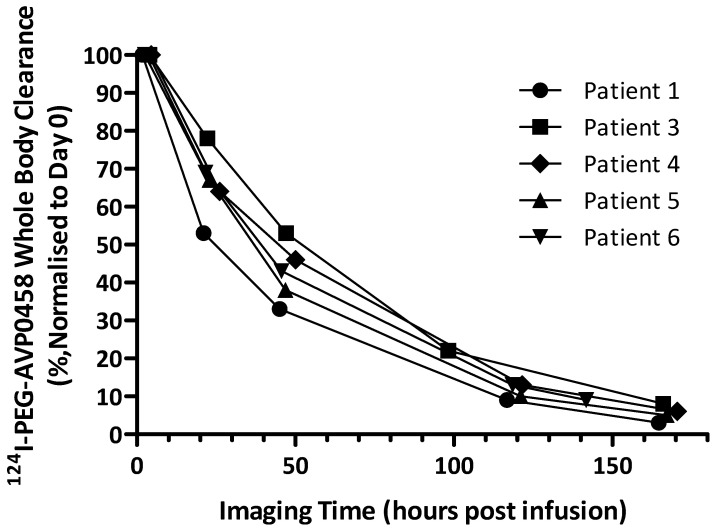
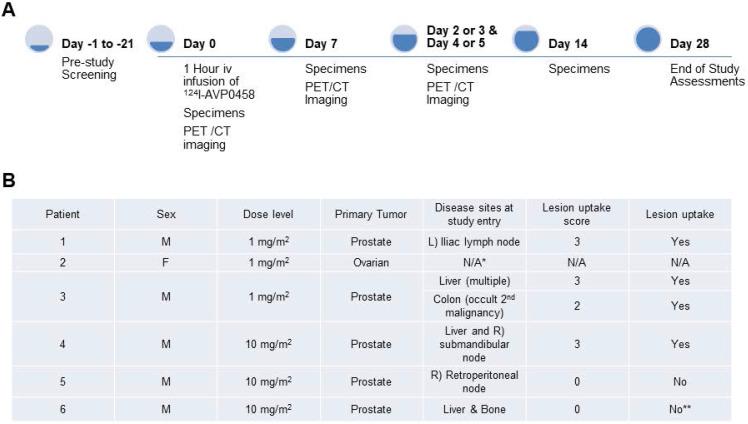
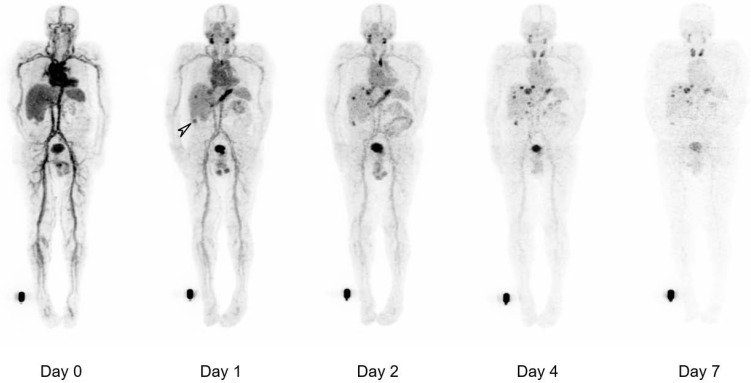
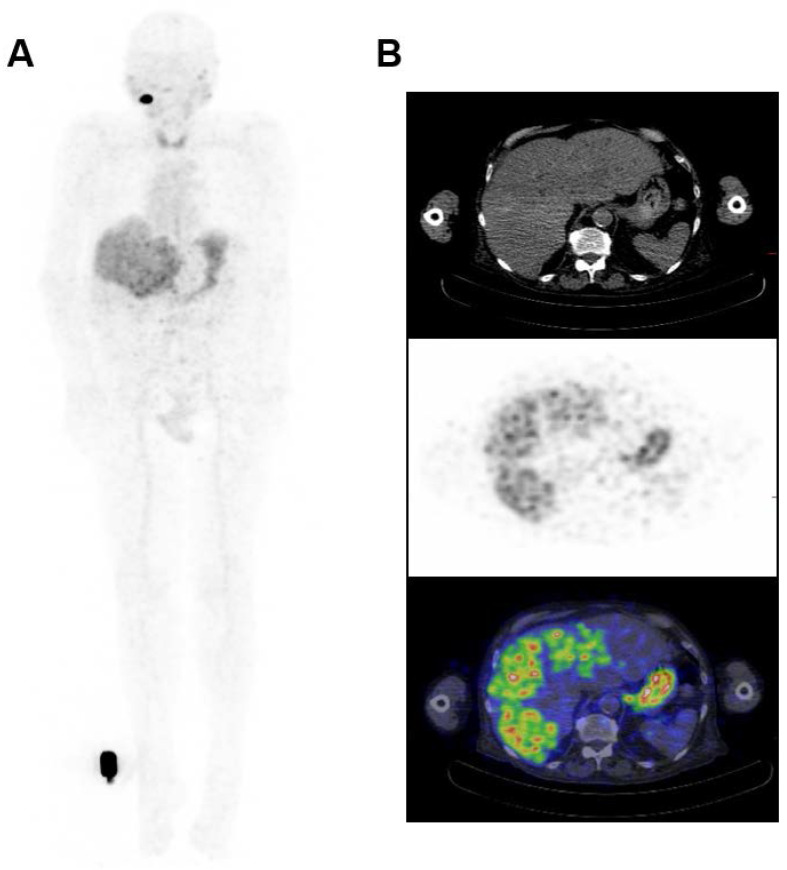
Through protein engineering and a novel pegylation strategy, a diabody specific to tumor-associated glycoprotein 72 (TAG-72) (PEG-AVP0458) has been created to optimize pharmacokinetics and bioavailability to tumor. We report the preclinical and clinical translation of PEG-AVP0458 to a first-in-human clinical trial of a diabody. Clinical translation followed characterization of PEG-AVP0458 drug product and preclinical biodistribution and imaging assessments of Iodine-124 trace labeled PEG-AVP0458 (I-PEG-AVP0458). The primary study objective of the first-in-human study was the safety of a single protein dose of 1.0 or 10 mg/mI-PEG-AVP0458 in patients with TAG-72 positive relapsed/ metastatic prostate or ovarian cancer. Secondary study objectives were evaluation of the biodistribution, tumor uptake, pharmacokinetics and immunogenicity. Patients were infused with a single-dose of I labeled PEG-AVP0458 (3-5 mCi (111-185 MBq) for positron emission tomography (PET) imaging, performed sequentially over a one-week period. Safety, pharmacokinetics, biodistribution, and immunogenicity were assessed up to 28 days after infusion. PEG-AVP0458 was radiolabeled with I and shown to retain high TAG-72 affinity and excellent targeting of TAG-72 positive xenografts by biodistribution analysis and PET imaging. In the first-in-human trial, no adverse events or toxicity attributable to I-PEG-AVP0458 were observed. Imaging was evaluable in 5 patients, with rapid and highly specific targeting of tumor and minimal normal organ uptake, leading to high tumor:blood ratios. Serum concentration values of I-PEG-AVP0458 showed consistent values between patients, and there was no significant difference in T½α and T½β between dose levels with mean (± SD) results of T½α = 5.10 ± 4.58 hours, T½β = 46.19 ± 13.06 hours. These data demonstrates the safety and feasibility of using pegylated diabodies for selective tumor imaging and potential delivery of therapeutic payloads in cancer patients.
通过蛋白质工程和一种新型的聚乙二醇化策略,我们创造了一种针对肿瘤相关糖蛋白 72(TAG-72)的双抗体(PEG-AVP0458),以优化其药代动力学和生物利用度,使其能够到达肿瘤部位。我们报告了将 PEG-AVP0458 从临床前转化为首次人体临床试验的过程,这是一种双抗体的首次人体临床试验。在进行碘 124 标记的 PEG-AVP0458(I-PEG-AVP0458)的药物产品特征描述以及临床前生物分布和成像评估后,开始了临床转化。首次人体研究的主要研究目标是在 TAG-72 阳性复发性/转移性前列腺或卵巢癌患者中,单次给予 1.0 或 10mg/mI-PEG-AVP0458 蛋白的安全性。次要研究目标是评估生物分布、肿瘤摄取、药代动力学和免疫原性。患者单次输注 I 标记的 PEG-AVP0458(3-5mCi(111-185MBq)进行正电子发射断层扫描(PET)成像,在一周内连续进行。在输注后 28 天内评估安全性、药代动力学、生物分布和免疫原性。PEG-AVP0458 用 I 进行放射性标记,通过生物分布分析和 PET 成像显示保留了对 TAG-72 的高亲和力和对 TAG-72 阳性异种移植物的出色靶向性。在首次人体试验中,未观察到与 I-PEG-AVP0458 相关的不良反应或毒性。5 名患者可进行成像评估,肿瘤快速且高度特异性靶向,正常器官摄取最小,导致肿瘤与血液的比值很高。I-PEG-AVP0458 的血清浓度值在患者之间表现出一致的数值,并且在剂量水平之间,T½α和 T½β 没有显著差异,平均(±SD)结果为 T½α=5.10±4.58 小时,T½β=46.19±13.06 小时。这些数据表明,使用聚乙二醇化双抗体进行选择性肿瘤成像以及在癌症患者中潜在递送治疗性有效载荷是安全且可行的。