Department of Obstetrics and Gynecology, Peking Union Medical College Hospital, Chinese Academy of Medical Sciences, Shuaifuyuan No. 1, Dongcheng District, Beijing, 100730, China.
Department of Health Sciences, Peking Union Medical College Hospital, Chinese Academy of Medical Sciences, Shuaifuyuan No. 1, Dongcheng District, Beijing, 100730, China.
BMC Cancer. 2020 Oct 14;20(1):999. doi: 10.1186/s12885-020-07483-z.
Cervical cancer is the second-most common gynecological cancer, early screening plays a key role in the diagnosis and treatment of cervical intraepithelial neoplasia (CIN). Sustained E7 protein expression is the pathological basis for CIN and cervical cancer.
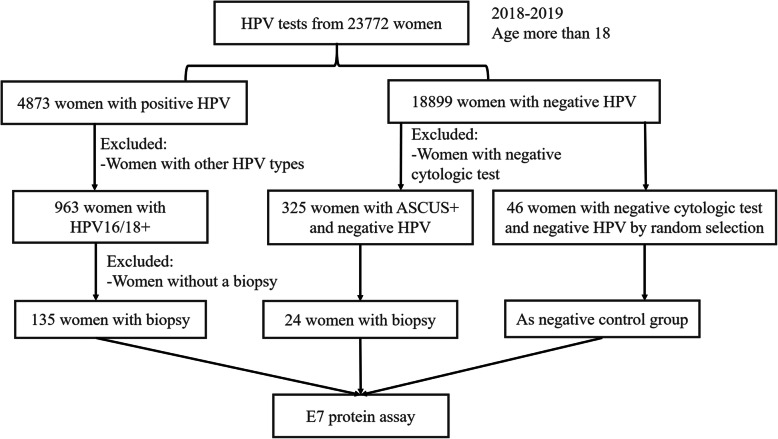
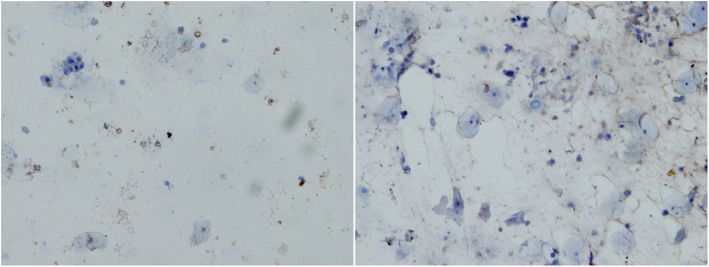
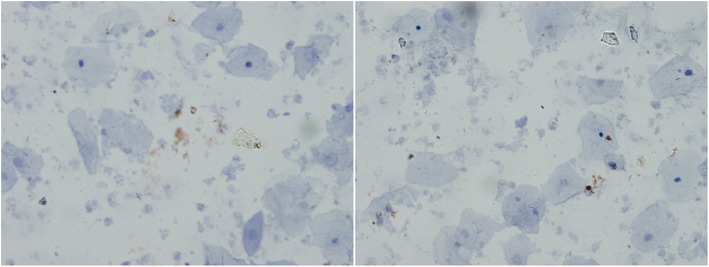
We collected the cervical cell samples of women who visited the gynecological clinic of Peking Union Medical College Hospital between September 2018 and September 2019 and submitted them to the high-risk human papillomavirus (Hr-HPV) test. We performed a magnetic particle-based chemiluminescence enzyme immunoassay to analyze the HPV16/18 E7 protein level in CIN of different severities and compared the results with those of cervical pathology (gold standard) and the HPV test.
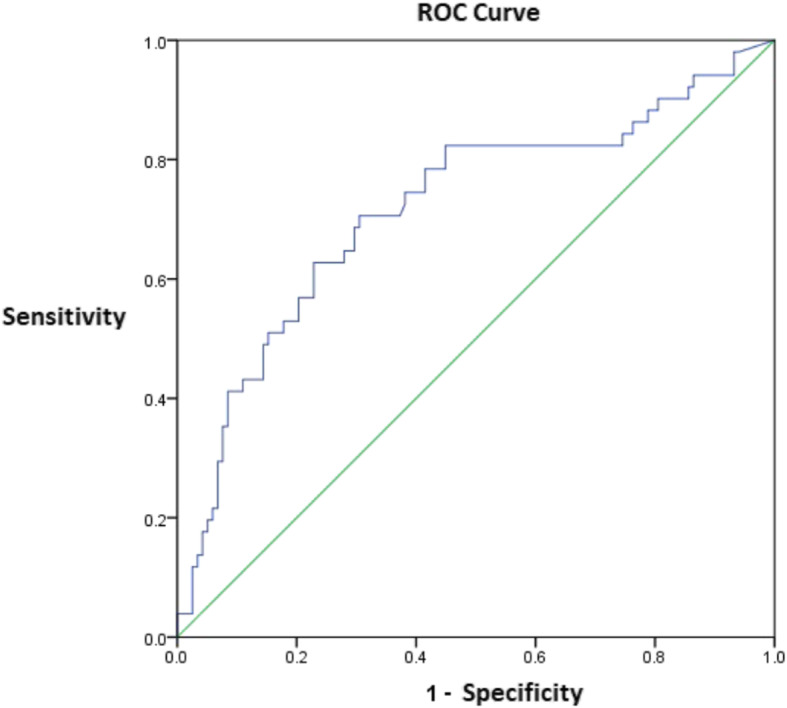
The positive rate of HPV16/18 E7 protein increased with the severity of CIN: 26.6% in normal tissue, 58.3% in CIN1, and 70.6% in CIN2 or higher (CIN2+). For CIN2+, the sensitivity, specificity, positive predictive value (PPV), and negative predictive value (NPV) of the E7 protein were 70.6, 67.9, 52.2, and 82.3%, respectively. These values of the HPV test were 86.8, 44.5, 43.7, and 87.1%, respectively. With the combination of the E7 protein assay and HPV test, the specificity for diagnosing CIN2+ was 78.1%, which was significantly higher than that of the HPV test alone.
HPV16/18 E7 protein level is correlated with the severity of CIN and has a high concordance rate with the pathological result. For cervical cancer screening, the combination of HPV16/18 E7 protein assay and HPV test improves the CIN diagnostic specificity, detection rate, and detection accuracy.
宫颈癌是第二大常见的妇科癌症,早期筛查在宫颈上皮内瘤变(CIN)的诊断和治疗中起着关键作用。E7 蛋白的持续表达是 CIN 和宫颈癌的病理基础。
我们收集了 2018 年 9 月至 2019 年 9 月期间在北京协和医院妇科门诊就诊的女性的宫颈细胞样本,并进行了高危型人乳头瘤病毒(Hr-HPV)检测。我们采用基于磁微粒化学发光酶免疫分析的方法检测了不同严重程度的 CIN 中 HPV16/18 E7 蛋白的水平,并将其结果与宫颈病理(金标准)和 HPV 检测结果进行了比较。
HPV16/18 E7 蛋白的阳性率随着 CIN 的严重程度增加而升高:正常组织中为 26.6%,CIN1 中为 58.3%,CIN2 及以上(CIN2+)中为 70.6%。对于 CIN2+,E7 蛋白的敏感性、特异性、阳性预测值(PPV)和阴性预测值(NPV)分别为 70.6%、67.9%、52.2%和 82.3%。HPV 检测的相应值分别为 86.8%、44.5%、43.7%和 87.1%。E7 蛋白检测和 HPV 检测联合应用时,诊断 CIN2+的特异性为 78.1%,显著高于 HPV 检测单独应用时的特异性。
HPV16/18 E7 蛋白水平与 CIN 的严重程度相关,与病理结果具有高度一致性。对于宫颈癌筛查,HPV16/18 E7 蛋白检测和 HPV 检测联合应用可提高 CIN 的诊断特异性、检出率和检测准确性。