Cancer Medical Center, The Second Affiliated Hospital of Nanjing Medical University, Nanjing, Jiangsu, People's Republic of China.
Department of Oncology, The Fourth Affiliated Hospital of Nanjing Medical University, Nanjing, Jiangsu, People's Republic of China.
Cell Death Dis. 2020 Oct 14;11(10):858. doi: 10.1038/s41419-020-03047-y.
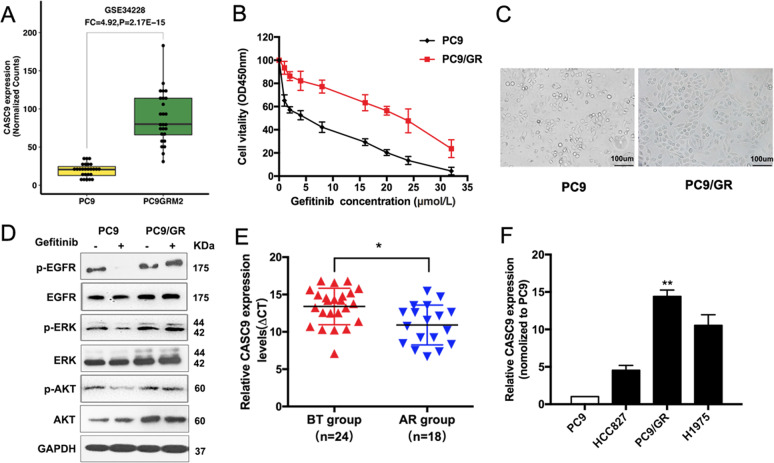
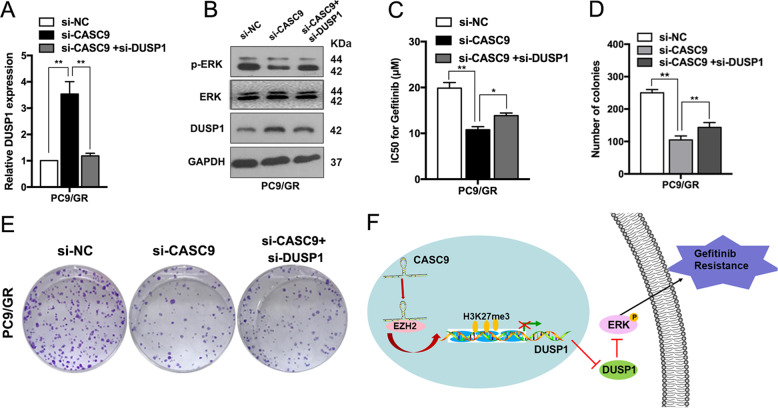
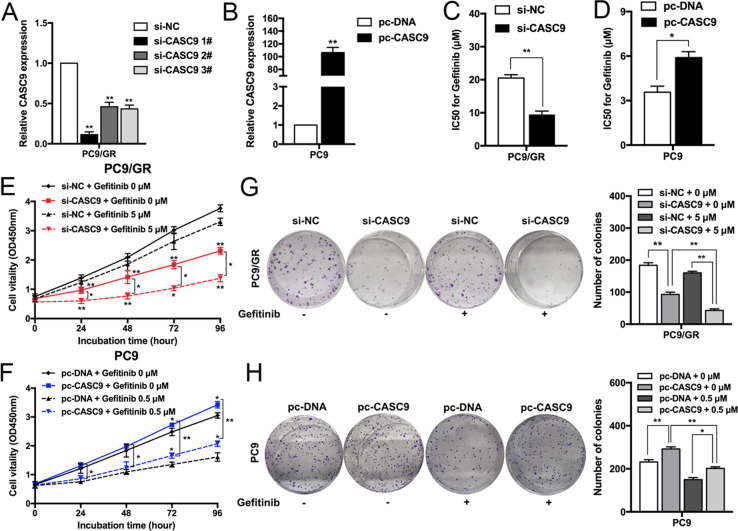
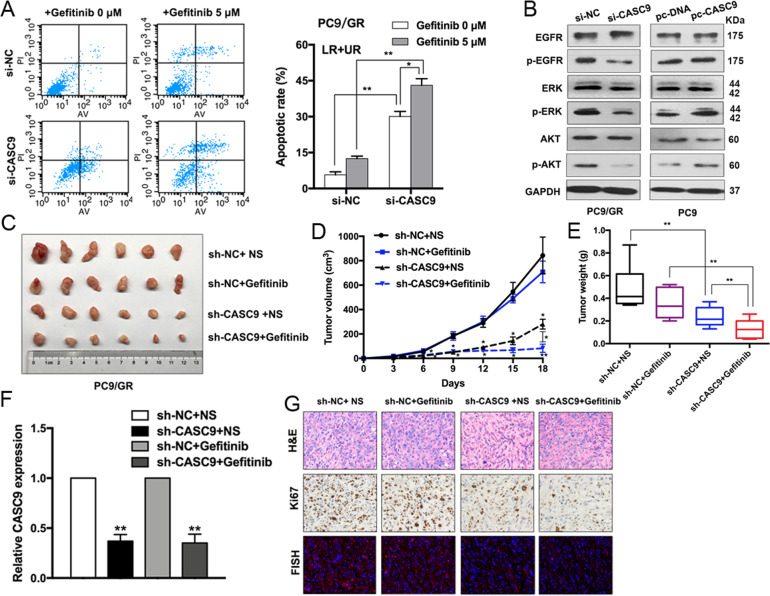
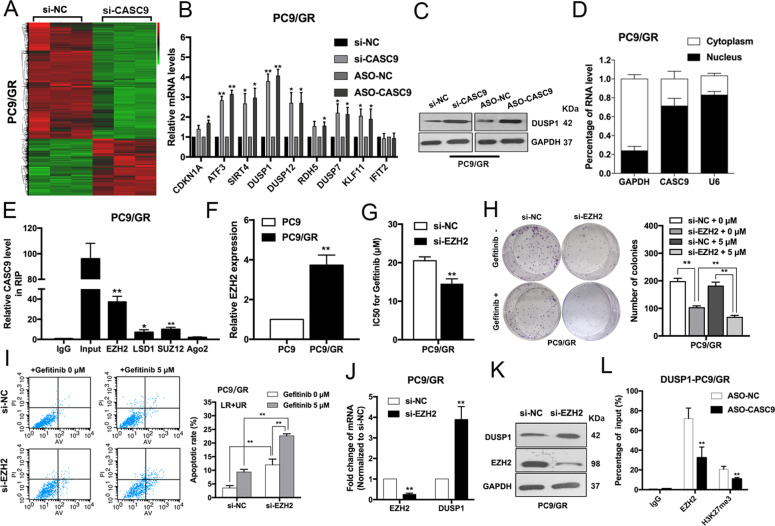
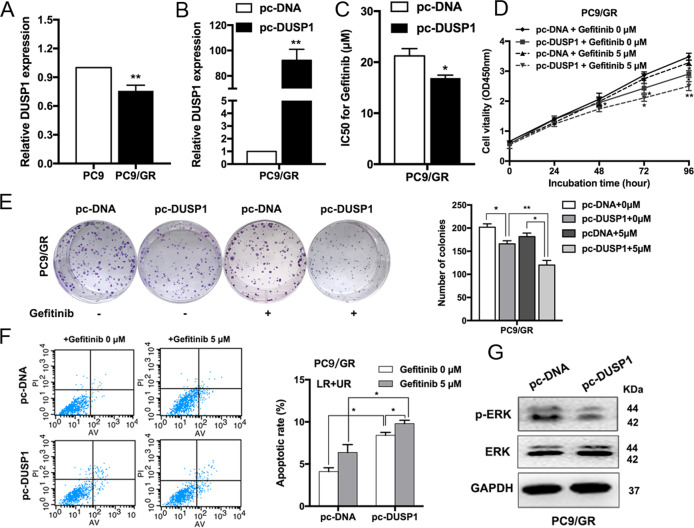
Resistance to epidermal growth factor receptor tyrosine kinase inhibitors (EGFR-TKIs), such as gefitinib, has greatly affected clinical outcomes in non-small cell lung cancer (NSCLC) patients. The long noncoding RNAs (lncRNAs) are known to regulate tumorigenesis and cancer progression, but their contributions to NSCLC gefitinib resistance remain poorly understood. In this study, by analyzing the differentially expressed lncRNAs in gefitinib-resistant cells and gefitinib-sensitive cells in the National Institute of Health GEO dataset, we found that lncRNA CASC9 expression was upregulated, and this was also verified in resistant tissues. Gain and loss of function studies showed that CASC9 inhibition restored gefitinib sensitivity both in vitro and in vivo, whereas CASC9 overexpression promoted gefitinib resistance. Mechanistically, CASC9 repressed the tumor suppressor DUSP1 by recruiting histone methyltransferase EZH2, thereby increasing the resistance to gefitinib. Furthermore, ectopic expression of DUSP1 increased gefitinib sensitivity by inactivating the ERK pathway. Our results highlight the essential role of CASC9 in gefitinib resistance, suggesting that the CASC9/EZH2/DUSP1 axis might be a novel target for overcoming EGFR-TKI resistance in NSCLC.
表皮生长因子受体酪氨酸激酶抑制剂(EGFR-TKIs)的耐药性,如吉非替尼,极大地影响了非小细胞肺癌(NSCLC)患者的临床疗效。长链非编码 RNA(lncRNAs)已知可调节肿瘤发生和癌症进展,但它们对 NSCLC 吉非替尼耐药性的贡献仍知之甚少。在这项研究中,通过分析国家卫生研究院 GEO 数据集内吉非替尼耐药细胞和吉非替尼敏感细胞中差异表达的 lncRNAs,我们发现 lncRNA CASC9 的表达上调,这在耐药组织中也得到了验证。功能获得和功能丧失研究表明,CASC9 抑制可在体外和体内恢复吉非替尼的敏感性,而 CASC9 过表达则促进吉非替尼耐药性。机制上,CASC9 通过募集组蛋白甲基转移酶 EZH2 来抑制肿瘤抑制因子 DUSP1,从而增加对吉非替尼的耐药性。此外,DUSP1 的异位表达通过使 ERK 通路失活来增加吉非替尼的敏感性。我们的结果强调了 CASC9 在吉非替尼耐药性中的重要作用,表明 CASC9/EZH2/DUSP1 轴可能是克服 NSCLC 中 EGFR-TKI 耐药性的新靶点。