Department of Cytology and Histology, Okayama University Graduate School of Medicine, Dentistry and Pharmaceutical Sciences, Okayama, Japan.
Department of Orthodontics and Dentofacial Orthopedics, Institute of Biomedical Sciences, Tokushima University Graduate School, Tokushima, Japan.
PLoS One. 2020 Oct 15;15(10):e0240333. doi: 10.1371/journal.pone.0240333. eCollection 2020.
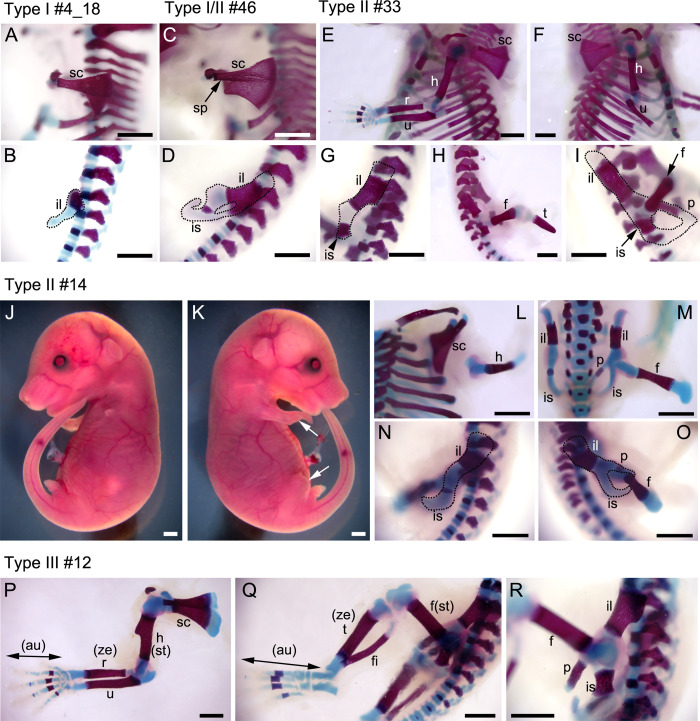
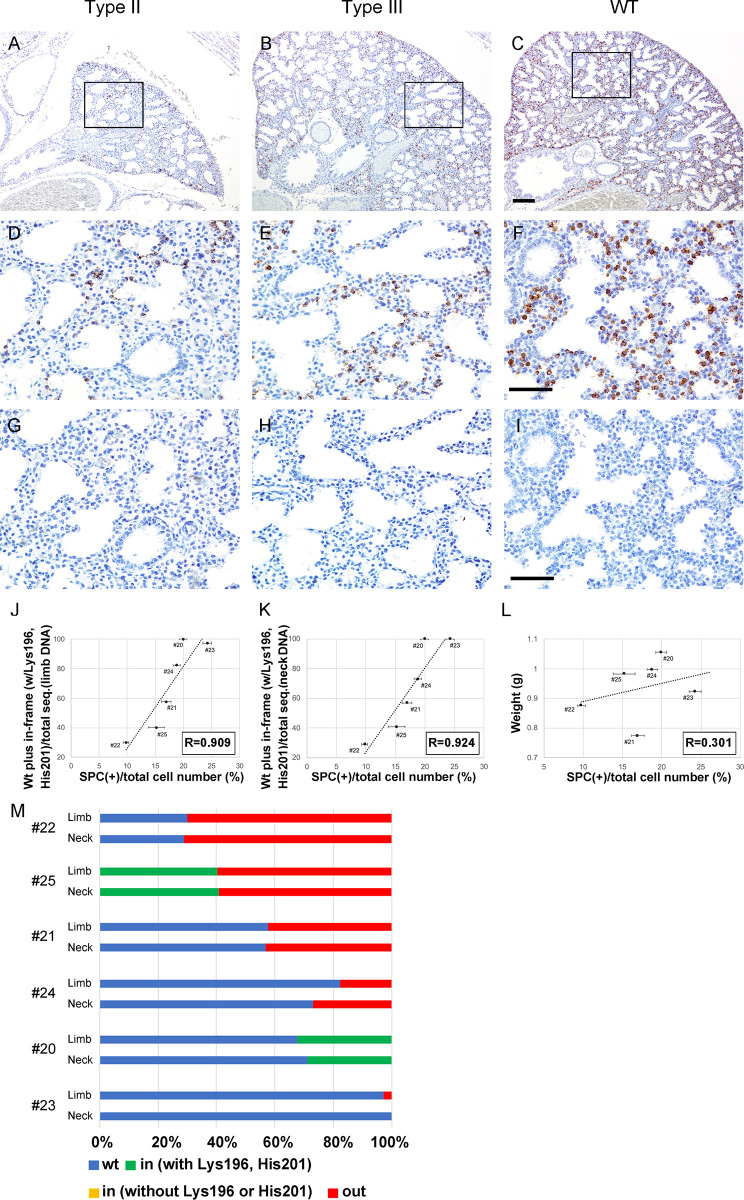
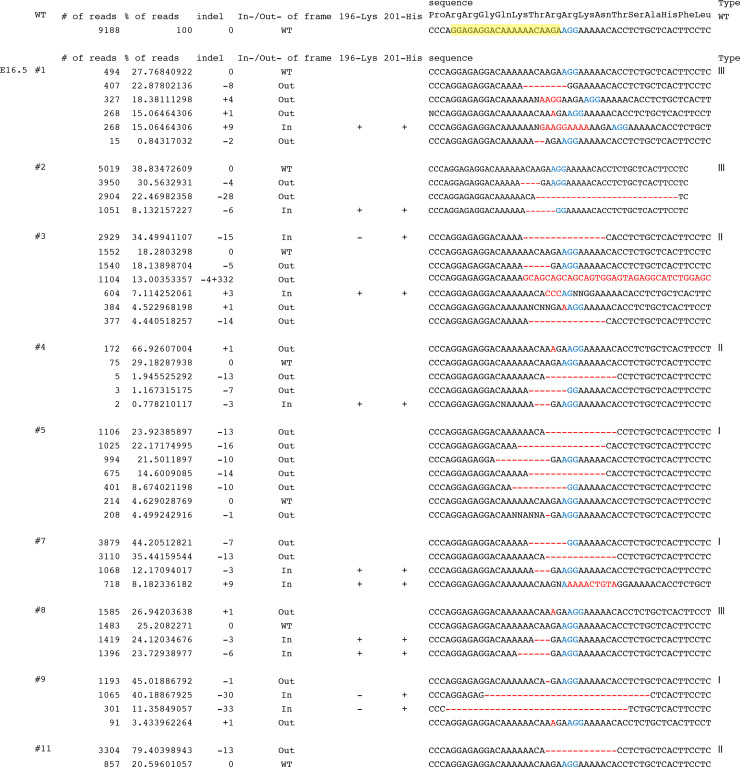
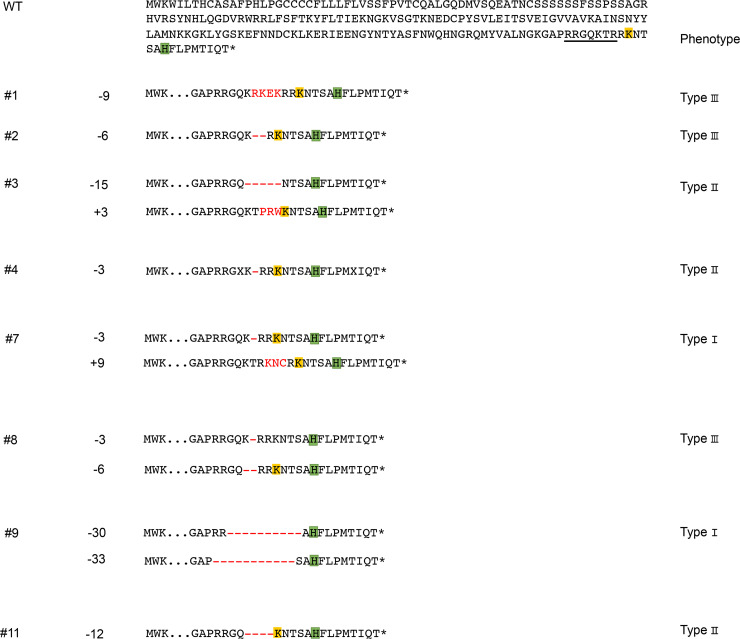
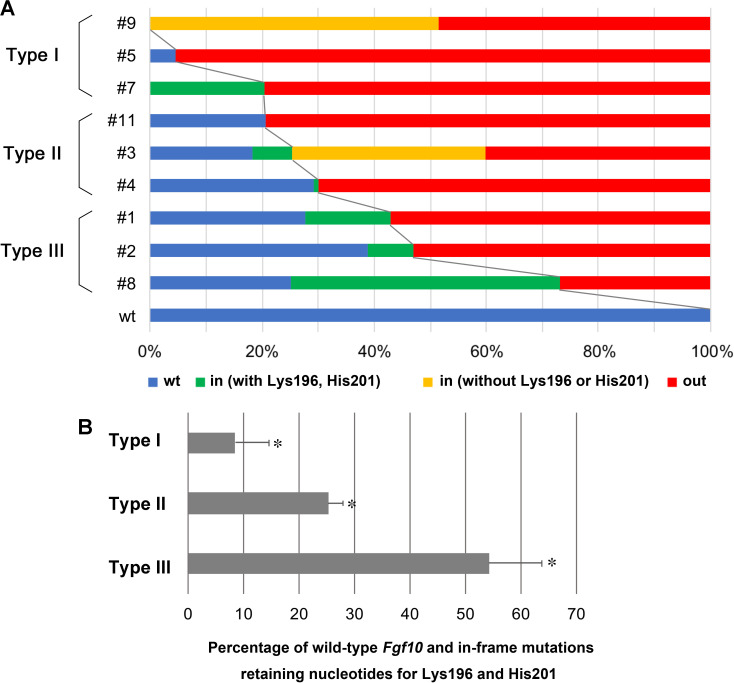
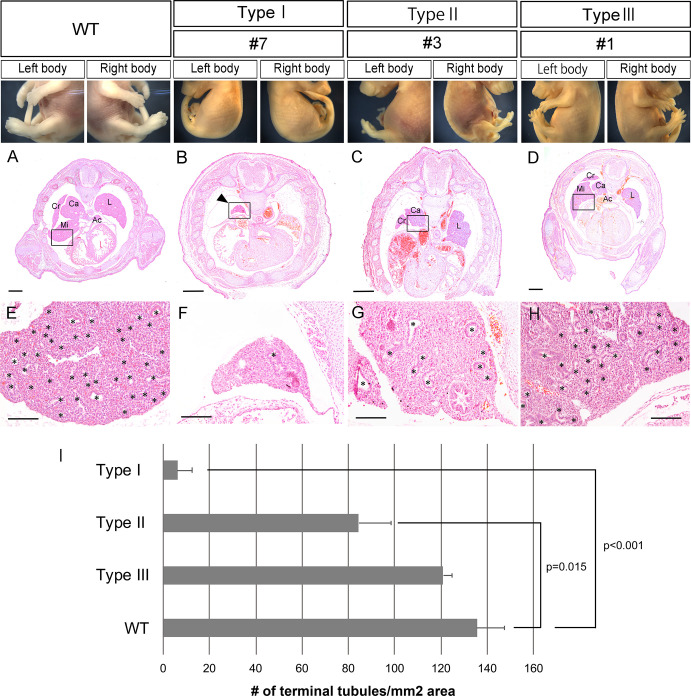
CRISPR/Cas9-mediated gene editing often generates founder generation (F0) mice that exhibit somatic mosaicism in the targeted gene(s). It has been known that Fibroblast growth factor 10 (Fgf10)-null mice exhibit limbless and lungless phenotypes, while intermediate limb phenotypes (variable defective limbs) are observed in the Fgf10-CRISPR F0 mice. However, how the lung phenotype in the Fgf10-mosaic mutants is related to the limb phenotype and genotype has not been investigated. In this study, we examined variable lung phenotypes in the Fgf10-targeted F0 mice to determine if the lung phenotype was correlated with percentage of functional Fgf10 genotypes. Firstly, according to a previous report, Fgf10-CRISPR F0 embryos on embryonic day 16.5 (E16.5) were classified into three types: type I, no limb; type II, limb defect; and type III, normal limbs. Cartilage and bone staining showed that limb truncations were observed in the girdle, (type I), stylopodial, or zeugopodial region (type II). Deep sequencing of the Fgf10-mutant genomes revealed that the mean proportion of codons that encode putative functional FGF10 was 8.3 ± 6.2% in type I, 25.3 ± 2.7% in type II, and 54.3 ± 9.5% in type III (mean ± standard error of the mean) mutants at E16.5. Histological studies showed that almost all lung lobes were absent in type I embryos. The accessory lung lobe was often absent in type II embryos with other lobes dysplastic. All lung lobes formed in type III embryos. The number of terminal tubules was significantly lower in type I and II embryos, but unchanged in type III embryos. To identify alveolar type 2 epithelial (AECII) cells, known to be reduced in the Fgf10-heterozygous mutant, immunostaining using anti-surfactant protein C (SPC) antibody was performed: In the E18.5 lungs, the number of AECII was correlated to the percentage of functional Fgf10 genotypes. These data suggest the Fgf10 gene dose-related loss of the accessory lobe and decrease in the number of alveolar type 2 epithelial cells in mouse lung. Since dysfunction of AECII cells has been implicated in the pathogenesis of parenchymal lung diseases, the Fgf10-CRISPR F0 mouse would present an ideal experimental system to explore it.
CRISPR/Cas9 介导的基因编辑通常会产生具有目标基因(s)体细胞嵌合的创始代(F0)小鼠。已知成纤维细胞生长因子 10(Fgf10)缺失小鼠表现出无肢和无肺表型,而在 Fgf10-CRISPR F0 小鼠中观察到中间肢表型(可变缺陷肢)。然而,Fgf10 嵌合体突变体中的肺表型与肢表型和基因型之间的关系尚未被研究。在这项研究中,我们检查了 Fgf10 靶向 F0 小鼠中的可变肺表型,以确定肺表型是否与功能性 Fgf10 基因型的百分比相关。首先,根据之前的一份报告,将 E16.5 天的 Fgf10-CRISPR F0 胚胎分为三类:I 型,无肢;II 型,肢缺陷;III 型,正常肢。软骨和骨骼染色显示,在带骨(I 型)、掌骨或桡骨(II 型)区域观察到肢截断。Fgf10 突变体基因组的深度测序显示,E16.5 天时,I 型突变体中编码推定功能性 FGF10 的密码子的平均比例为 8.3±6.2%,II 型为 25.3±2.7%,III 型为 54.3±9.5%(平均值±标准误差)。组织学研究表明,I 型胚胎几乎没有所有的肺叶。II 型胚胎中通常没有副肺叶,其他肺叶发育不良。III 型胚胎形成所有的肺叶。I 型和 II 型胚胎的终末小管数量明显减少,但 III 型胚胎不变。为了鉴定已知在 Fgf10 杂合突变体中减少的肺泡 II 型上皮(AECII)细胞,使用抗表面活性剂蛋白 C(SPC)抗体进行免疫染色:在 E18.5 肺中,AECII 的数量与功能性 Fgf10 基因型的百分比相关。这些数据表明,Fgf10 基因剂量相关的副肺叶丢失和肺泡 II 型上皮细胞数量减少在小鼠肺中。由于 AECII 细胞功能障碍与实质肺疾病的发病机制有关,因此 Fgf10-CRISPR F0 小鼠将提供一个理想的实验系统来探索它。