Department of Pharmacology and Toxicology, Indiana University School of Medicine, Indianapolis, IN 46202.
Indiana University School of Medicine, Medical Scientist Training Program, Indianapolis, IN 46202.
eNeuro. 2020 Oct 15;7(6). doi: 10.1523/ENEURO.0393-20.2020. Print 2020 Nov-Dec.
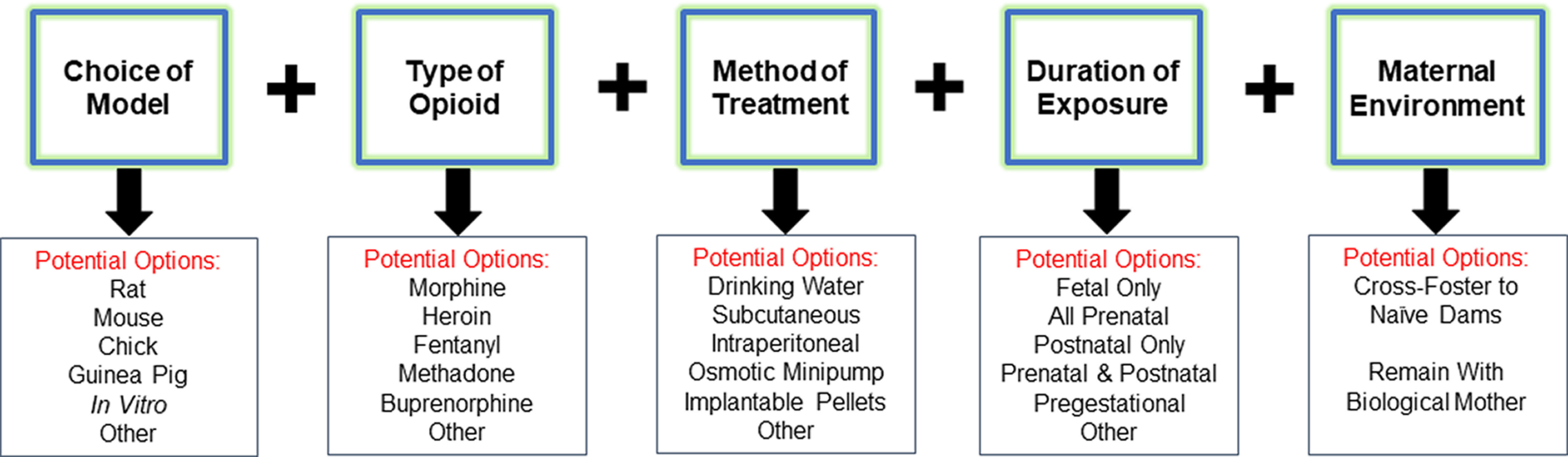
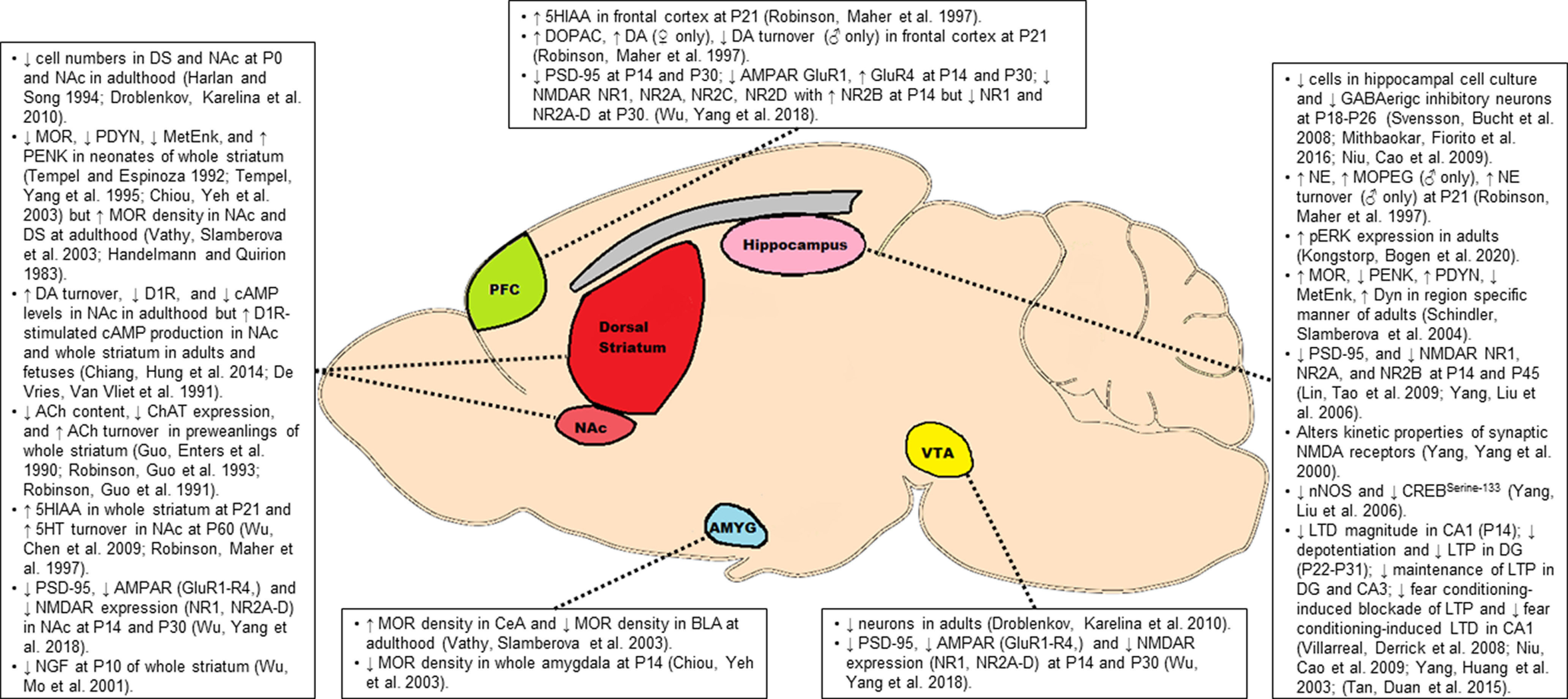
The opioid crisis has resulted in an unprecedented number of neonates born with prenatal opioid exposure (POE); however, the long-term effects of POE on offspring behavior and neurodevelopment remain relatively unknown. The advantages and disadvantages of the various preclinical POE models developed over the last several decades are discussed in the context of clinical and translational relevance. Although considerable and important variability exists among preclinical models of POE, the examination of these preclinical models has revealed that opioid exposure during the prenatal period contributes to maladaptive behavioral development as offspring mature including an altered responsiveness to rewarding drugs and increased pain response. The present review summarizes key findings demonstrating the impact of POE on offspring drug self-administration (SA), drug consumption, the reinforcing properties of drugs, drug tolerance, and other reward-related behaviors such as hypersensitivity to pain. Potential underlying molecular mechanisms which may contribute to this enhanced addictive phenotype in POE offspring are further discussed with special attention given to key brain regions associated with reward including the striatum, prefrontal cortex (PFC), ventral tegmental area (VTA), hippocampus, and amygdala. Improvements in preclinical models and further areas of study are also identified which may advance the translational value of findings and help address the growing problem of POE in clinical populations.
阿片类药物危机导致了数量空前的新生儿出生时存在产前阿片类药物暴露 (POE);然而,POE 对后代行为和神经发育的长期影响仍知之甚少。本文讨论了过去几十年开发的各种临床前 POE 模型的优缺点及其与临床和转化的相关性。尽管 POE 的临床前模型存在相当大的重要差异,但这些临床前模型的检查表明,产前暴露于阿片类药物会导致后代成熟时出现适应性行为发育障碍,包括对奖赏药物的反应改变和疼痛反应增加。本综述总结了关键发现,这些发现表明 POE 对后代药物自我给药 (SA)、药物消耗、药物的强化作用、药物耐受性以及其他与奖励相关的行为(如对疼痛的超敏反应)有影响。进一步讨论了可能导致 POE 后代这种增强的成瘾表型的潜在分子机制,并特别关注与奖励相关的关键大脑区域,包括纹状体、前额叶皮层 (PFC)、腹侧被盖区 (VTA)、海马体和杏仁核。还确定了临床前模型的改进和进一步的研究领域,这可能会提高研究结果的转化价值,并有助于解决临床人群中日益严重的 POE 问题。