Montesino-Goicolea Soamy, Valdes-Hernandez Pedro A, Hoyos Lorraine, Woods Adam J, Cohen Ronald, Huo Zhiguang, Riley Joseph L, Porges Eric C, Fillingim Roger B, Cruz-Almeida Yenisel
Department of Community Dentistry & Behavioral Sciences, University of Florida, Gainesville, FL, USA.
Center for Cognitive Aging and Memory, McKnight Brain Foundation, University of Florida, Gainesville, FL, USA.
J Pain Res. 2020 Sep 24;13:2389-2400. doi: 10.2147/JPR.S260611. eCollection 2020.
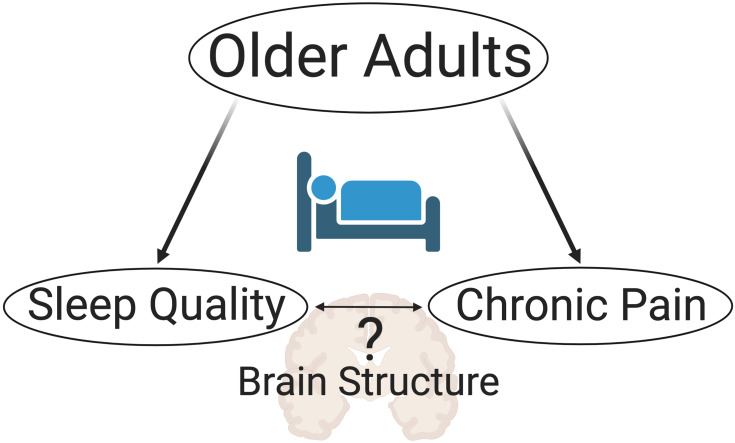
Musculoskeletal pain is prevalent in older adults representing the leading cause of disability in this population. Similarly, nearly half of older adults complain of difficulty sleeping. We aimed to explore the relationship between sleep quality with self-reported musculoskeletal pain, somatosensory and pain thresholds in community-dwelling older adults and further explore brain regions that may contribute to this association.
Older adults (>60 years old, n=69) from the NEPAL study completed demographic, pain and sleep assessments followed by a quantitative sensory testing battery. A subset (n=49) also underwent a 3T high-resolution, T1-weighted anatomical scan.
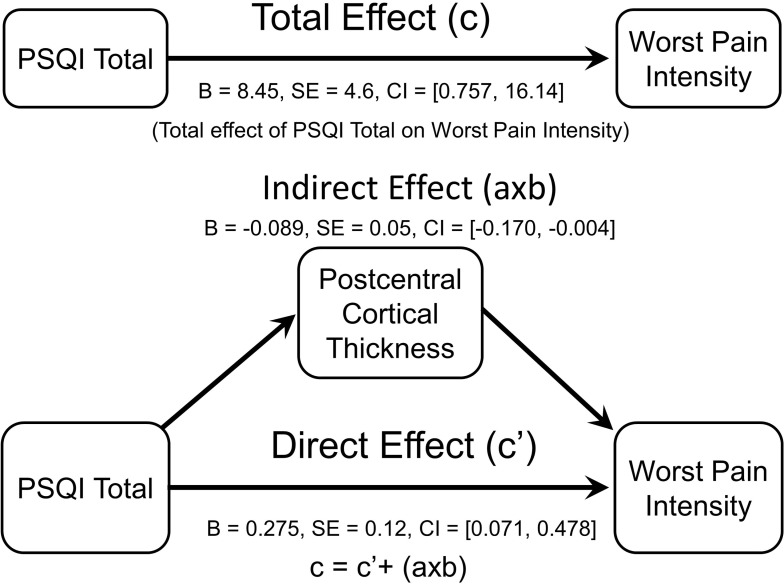
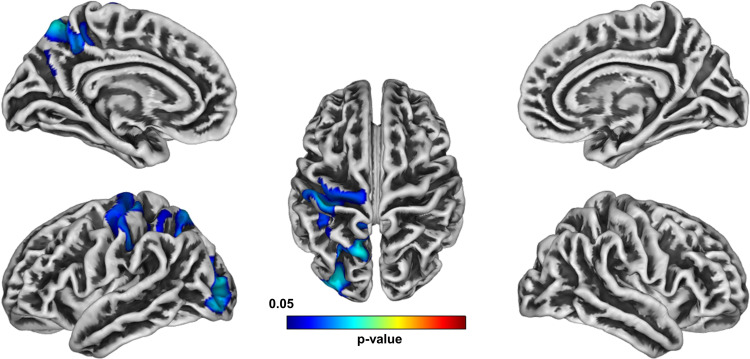
Poorer sleep quality using the Pittsburgh Sleep Quality Index was positively associated with self-reported pain measures (all p's >0.05), but not somatosensory and pain thresholds (all p's >0.05). Using a non-parametric threshold-free cluster enhancement (TFCE) approach, worse sleep quality was significantly associated with lower cortical thickness in the precentral, postcentral, precuneus, superior parietal, and lateral occipital regions (TFCE-FWE-corrected at p < 0.05). Further, only postcentral cortical thickness significantly mediated the association between sleep quality and self-reported pain intensity using bootstrapped mediation methods.
Our findings in older adults are similar to previous studies in younger individuals where sleep is significantly associated with self-reported pain. Specifically, our study implicates brain structure as a significant mediator of this association in aging. Future larger studies are needed to replicate our findings and to further understand if the brain can be a therapeutic target for both improved sleep and pain relief in older individuals.
肌肉骨骼疼痛在老年人中普遍存在,是该人群致残的主要原因。同样,近一半的老年人抱怨睡眠困难。我们旨在探讨社区居住的老年人睡眠质量与自我报告的肌肉骨骼疼痛、体感和疼痛阈值之间的关系,并进一步探索可能促成这种关联的脑区。
来自尼泊尔研究的老年人(>60岁,n = 69)完成了人口统计学、疼痛和睡眠评估,随后进行了定量感觉测试。一部分人(n = 49)还接受了3T高分辨率T1加权解剖扫描。
使用匹兹堡睡眠质量指数衡量,较差的睡眠质量与自我报告的疼痛指标呈正相关(所有p值>0.05),但与体感和疼痛阈值无关(所有p值>0.05)。采用无参数无阈值聚类增强(TFCE)方法,较差的睡眠质量与中央前回、中央后回、楔前叶、顶上叶和枕外侧叶区域的皮质厚度降低显著相关(TFCE-FWE校正,p < 0.05)。此外,使用自举中介方法,只有中央后回皮质厚度显著介导了睡眠质量与自我报告的疼痛强度之间的关联。
我们在老年人中的研究结果与之前在年轻人中的研究相似,即睡眠与自我报告的疼痛显著相关。具体而言,我们的研究表明脑结构是这种关联在衰老过程中的重要中介。未来需要更大规模的研究来重复我们的发现,并进一步了解大脑是否可以成为改善老年人睡眠和缓解疼痛的治疗靶点。