Ma Helen, Cheng Bin, Montanari Francesca, Lue Jennifer K, Deng Changchun, Marchi Enrica, O' Connor Owen A, Sawas Ahmed
Center for Lymphoid Malignancies, Columbia University Irving Medical Center, New York, NY, USA.
Department of Statistics, Columbia University Irving Medical Center, New York, NY, USA.
Ther Adv Hematol. 2020 Sep 26;11:2040620720947340. doi: 10.1177/2040620720947340. eCollection 2020.
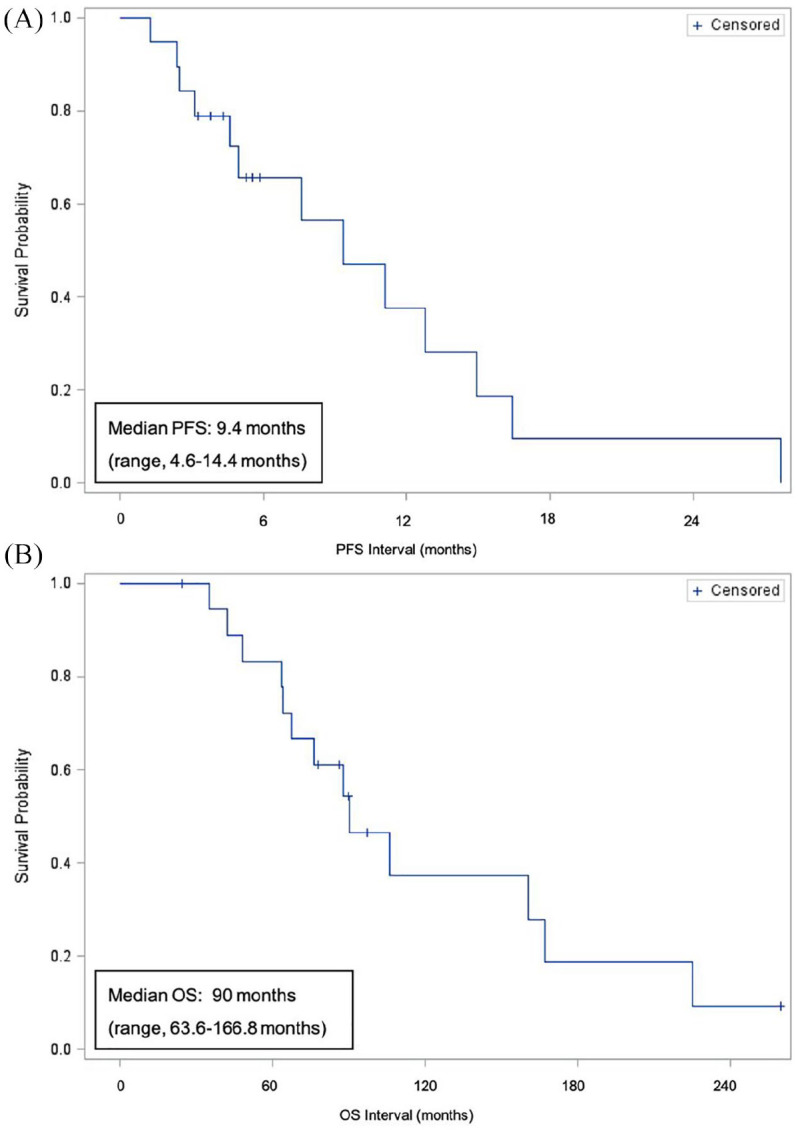
Patients with relapsed or refractory (R/R) classical Hodgkin lymphoma (cHL) following autologous stem cell transplant (ASCT) remain a management challenge with few reliably effective treatments. Lenalidomide, an immunomodulatory drug approved for patients with myelodysplastic syndrome with del(5q), multiple myeloma, and mantle cell lymphoma, has demonstrated some activity in patients with R/R cHL, though the toxicity of traditional doses and schedules has been a barrier to consistent use. Low dose continuous (LDC) schedules have emerged as promising, with a more favorable safety profile. We report herein that LDC schedules are associated with a far more tolerable toxicity profile, and exhibit at least equivalent efficacy in this patient population. We report that patients diagnosed with R/R cHL who previously underwent, or were not candidates for, ASCT and/or clinical trials, were administered daily LDC lenalidomide (20 mg orally with dose reduction for toxicity). Among the 19 patients included in this analysis, 11% of patients achieved a partial response (PR), with no documented complete responses (CR). A total of 12 (63%) patients maintained stable disease (SD), with 7 patients (37%) remaining in SD for more than 6 months. The clinical benefit rate (comprised of CR, PR, and SD for greater than 6 months) was 47% (7 out of 19 patients). The median progression-free survival and overall survival of all patients were 9.4 months (range, 4.6-14.4 months) and 90 months (range, 63.6-166.8 months), respectively. In general, the treatment was well tolerated, with grade 3 or 4 adverse events consisting of neutropenia ( = 4), and one case each of thrombocytopenia, fatigue, rash, creatinine elevation, aspartate transaminase/alanine transaminase elevation, and treatment related secondary malignancy. In a heavily treated R/R cHL patient population, daily LDC lenalidomide was associated with a high disease control rate with a favorable toxicity profile.
自体干细胞移植(ASCT)后复发或难治性(R/R)经典型霍奇金淋巴瘤(cHL)患者的治疗仍然是一项挑战,可靠有效的治疗方法很少。来那度胺是一种免疫调节药物,已被批准用于治疗伴有del(5q)的骨髓增生异常综合征、多发性骨髓瘤和套细胞淋巴瘤患者,在R/R cHL患者中已显示出一定活性,尽管传统剂量和给药方案的毒性一直是持续使用的障碍。低剂量持续(LDC)给药方案已成为有前景的方案,其安全性更好。我们在此报告,LDC给药方案的毒性更易于耐受,并且在该患者群体中显示出至少相当的疗效。我们报告,对诊断为R/R cHL且先前接受过或不适合进行ASCT和/或临床试验的患者,给予每日LDC来那度胺(口服20mg,根据毒性情况减量)。在纳入该分析的19例患者中,11%的患者达到部分缓解(PR),无记录的完全缓解(CR)。共有12例(63%)患者病情稳定(SD),7例(37%)患者病情稳定超过6个月。临床获益率(包括CR、PR和病情稳定超过6个月的SD)为47%(19例患者中的7例)。所有患者的无进展生存期和总生存期的中位数分别为9.4个月(范围4.6 - 14.4个月)和90个月(范围63.6 - 166.8个月)。总体而言,该治疗耐受性良好,3级或4级不良事件包括中性粒细胞减少(n = 4),以及血小板减少、疲劳、皮疹、肌酐升高、天冬氨酸转氨酶/丙氨酸转氨酶升高和治疗相关继发性恶性肿瘤各1例。在经过大量治疗的R/R cHL患者群体中,每日LDC来那度胺具有较高的疾病控制率,且毒性特征良好。