Fazarinc Gregor, Vrecl Milka, Poklukar Klavdija, Škrlep Martin, Batorek-Lukač Nina, Brankovič Jana, Tomažin Urška, Čandek-Potokar Marjeta
Veterinary Faculty, Institute of Preclinical Sciences, University of Ljubljana, Ljubljana, Slovenia.
Animal Science Department, Agricultural Institute of Slovenia, Ljubljana, Slovenia.
Front Vet Sci. 2020 Sep 18;7:533936. doi: 10.3389/fvets.2020.533936. eCollection 2020.
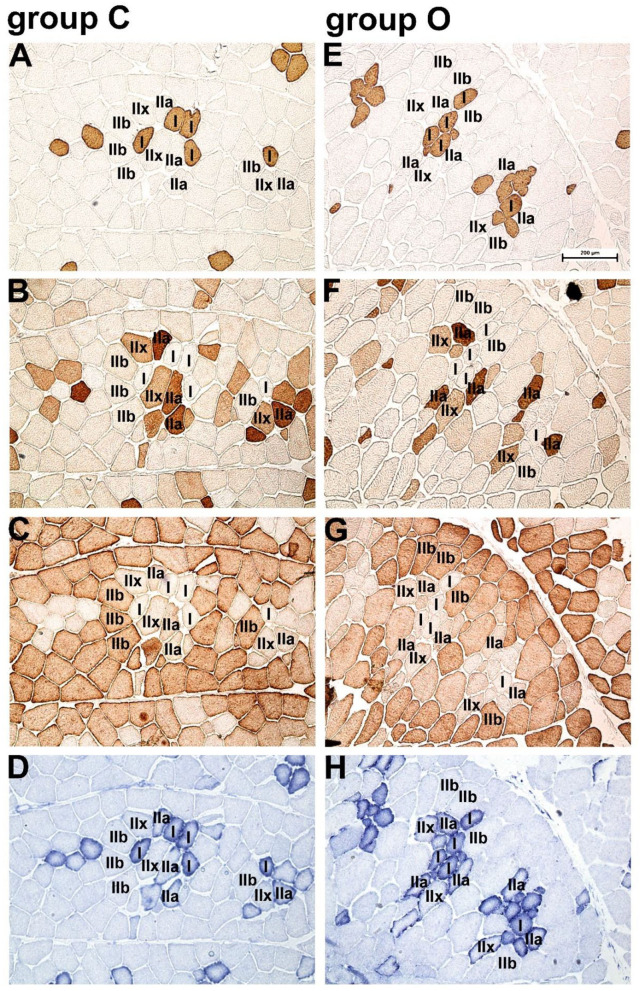
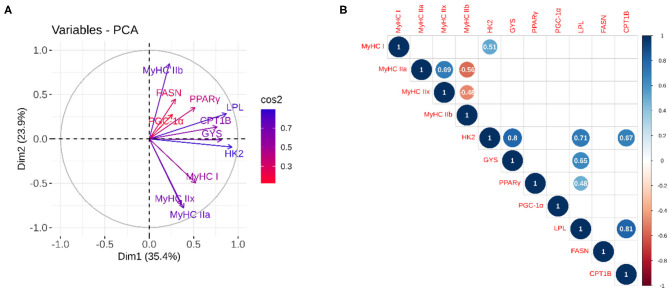
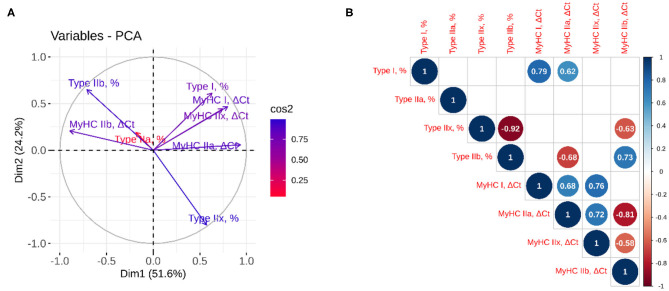
The Slovenian Krškopolje pig is the only preserved local autochthonous breed, appreciated mainly for its good meat quality and considered more appropriate for processing into dry-cured products. However, the biological characteristics of the skeletal myofibers of the Krškopolje breed, specifically the heavy myosin chain-based contractile and metabolic phenotypes that could affect meat quality, have not been established under different husbandry systems. The breed is generally maintained in either conventional indoor or organic systems. In the present study, the morphological, contractile, and metabolic properties of myofibers of the longissimus dorsi muscle were compared between animals reared in either an organic or a conventional indoor system. The myofibers were studied using immunohistochemical and succinate dehydrogenase (SDH) activity-based classification, histomorphometric assessment, and qPCR. Results revealed that the organic production system influenced the composition of the longissimus dorsi myofiber type, characterized by a smaller myofiber cross-sectional area, a shift toward oxidative (SDH-positive) myofiber types, increased relative expression of myosin heavy chain (MyHC) isoforms I, IIa, and IIx, and downregulation of MyHC IIb. On the contrary, no apparent effect was observed on the metabolic phenotype of the myofiber as assessed through relative mRNA expression of energy metabolism-related genes [peroxisome proliferator-activated receptor gamma, coactivator 1 alpha α, peroxisome proliferator-activated receptor gamma γ, lipoprotein-lipase , carnitine palmitoyltransferase 1B , glycogen synthase 1 , hexokinase 2 , and fatty acid synthase ]. Differences in MyHC expression were largely corroborated by the histochemical classification, indicating that the contractile protein content is directly regulated by the MyHC genes. A correlation between the muscle contractile and metabolic phenotypes was not established, except for that between the and genes. In conclusion, the present study showed an evident effect of rearing on the longissimus dorsi myofiber contractile phenotype but not the metabolic phenotype. Moreover, obtained data suggest that rearing the Krškopolje pig breed in a conventional system would result in an increased fiber size and a greater proportion of type IIb myofibers, which are known to be negatively correlated with some meat quality traits.
斯洛文尼亚克尔什科波列猪是唯一留存下来的本地土生品种,主要因其良好的肉质而受到青睐,且被认为更适合加工成干腌制品。然而,在不同养殖系统下,克尔什科波列品种猪骨骼肌肌纤维的生物学特性,特别是基于重链肌球蛋白的收缩和代谢表型对肉质的影响尚未明确。该品种猪一般饲养在传统室内养殖系统或有机养殖系统中。在本研究中,对在有机养殖系统或传统室内养殖系统中饲养的动物背最长肌肌纤维的形态、收缩和代谢特性进行了比较。通过免疫组织化学和基于琥珀酸脱氢酶(SDH)活性的分类、组织形态计量学评估和定量聚合酶链反应(qPCR)对肌纤维进行了研究。结果显示,有机生产系统影响了背最长肌肌纤维类型的组成,其特点是肌纤维横截面积较小,向氧化型(SDH阳性)肌纤维类型转变,肌球蛋白重链(MyHC)同工型I、IIa和IIx的相对表达增加,而MyHC IIb下调。相反,通过能量代谢相关基因[过氧化物酶体增殖物激活受体γ共激活因子1α、过氧化物酶体增殖物激活受体γ、脂蛋白脂肪酶、肉碱棕榈酰转移酶1B、糖原合酶1、己糖激酶2和脂肪酸合酶]的相对mRNA表达评估,未观察到对肌纤维代谢表型有明显影响。MyHC表达的差异在很大程度上得到了组织化学分类的证实,表明收缩蛋白含量直接受MyHC基因调控。除了 和 基因之间存在相关性外,未建立肌肉收缩和代谢表型之间的相关性。总之,本研究表明饲养方式对背最长肌肌纤维收缩表型有明显影响,但对代谢表型无明显影响。此外,获得的数据表明,在传统系统中饲养克尔什科波列猪品种会导致纤维尺寸增加和IIb型肌纤维比例增加,而IIb型肌纤维与某些肉质性状呈负相关。