Kadoi Yuji, Michizaki Minoru, Saito Takanari, Ota Jo, Saito Shigeru, Sameshima Tatsuo
Gunma University Hospital, 3-39-22 Showa-Machi, Maebashi, Gunma, 371-8511, Japan.
Department of Anesthesiology, Gunma University School of Medicine, 3-39-15, Showa-machi, Maebashi, Japan.
JA Clin Rep. 2020 Oct 16;6(1):83. doi: 10.1186/s40981-020-00389-6.
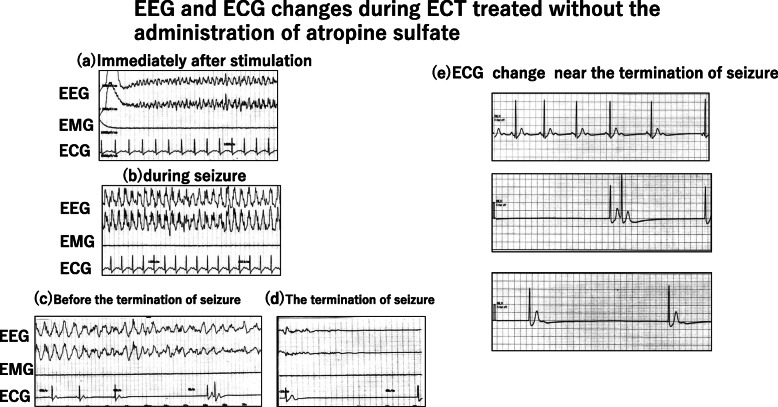
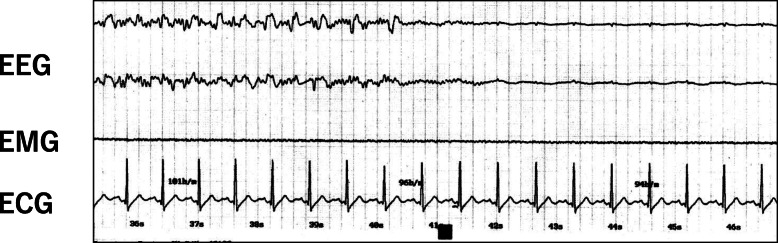
Few cases of asystole or severe bradycardia occurring after the termination of seizure in the third phase with the dominance of parasympathetic nervous system activity during electroconvulsive therapy (ECT) have been reported. We describe a case of severe bradycardia occurring at the termination of seizure.
The patient had been diagnosed with bipolar disorder more than 9 years earlier. No adverse hemodynamic events had been observed in over 100 sessions of ECT performed during a 9-year period. ECT was usually induced by propofol and suxamethonium. On this ECT, the heart rate gradually decreased before seizure termination, and severe bradycardia (5-6 beats/min) was identified lasting 15-20 s. Atropine administration immediately before electrical stimulus prevented any further bradycardia during the next session of ECT.
This case report indicates that attention should be paid to adverse cardiac events related to autonomic nerve activity even before such events occur during ECT.
据报道,在电休克治疗(ECT)的第三阶段,即副交感神经系统活动占主导的癫痫发作终止后,很少有心脏停搏或严重心动过缓的病例。我们描述了一例癫痫发作终止时发生严重心动过缓的病例。
该患者在9年多前被诊断为双相情感障碍。在9年期间进行的100多次ECT治疗中,未观察到不良血流动力学事件。ECT通常由丙泊酚和琥珀酰胆碱诱导。在这次ECT治疗中,癫痫发作终止前心率逐渐下降,发现严重心动过缓(5 - 6次/分钟)持续15 - 20秒。在下一次ECT治疗前立即给予阿托品可防止进一步的心动过缓。
本病例报告表明,即使在ECT期间此类事件发生之前,也应注意与自主神经活动相关的不良心脏事件。