Yılmaz Ömer Faruk, Özçelik Gökhan, Yeni Fatma Betül
Karadeniz Technical University, Department of Industrial Engineering, 61080, Trabzon, Turkey.
J Clean Prod. 2021 Feb 1;282:124548. doi: 10.1016/j.jclepro.2020.124548. Epub 2020 Oct 13.
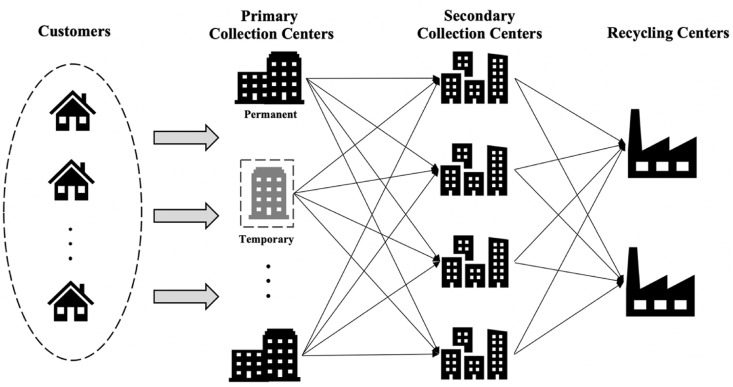
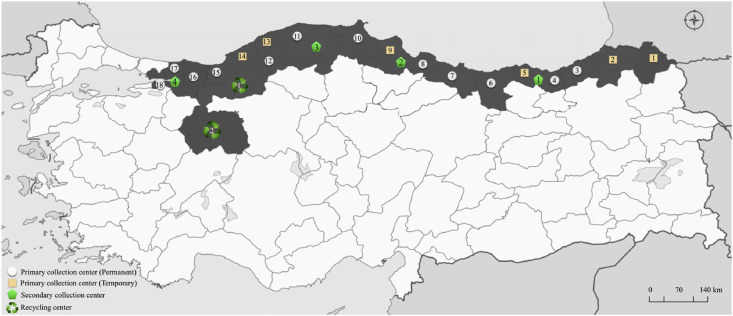
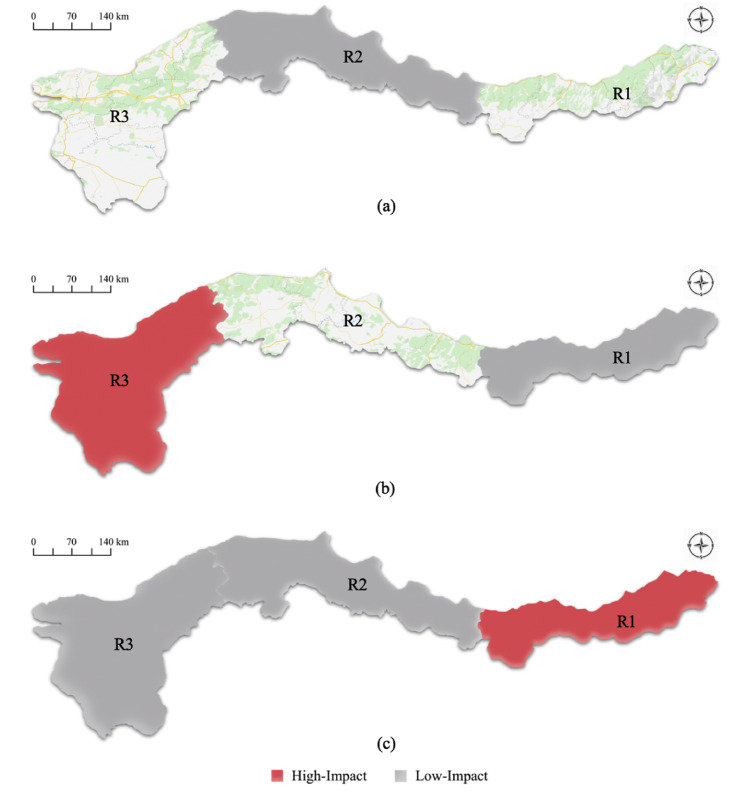
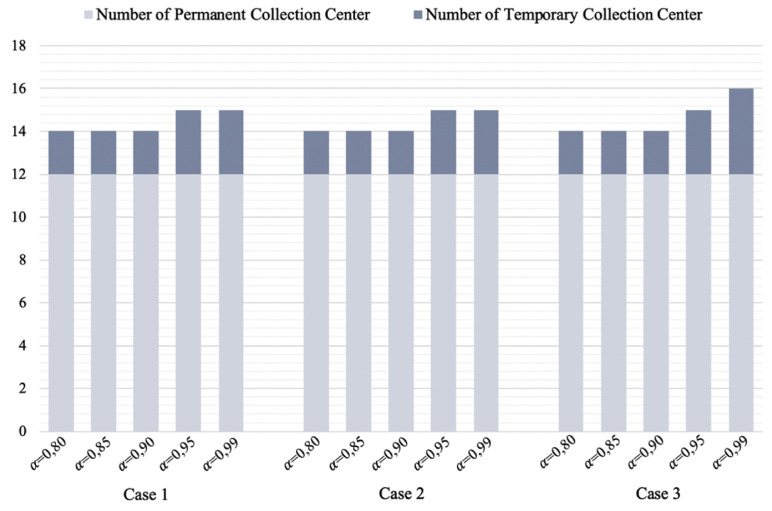
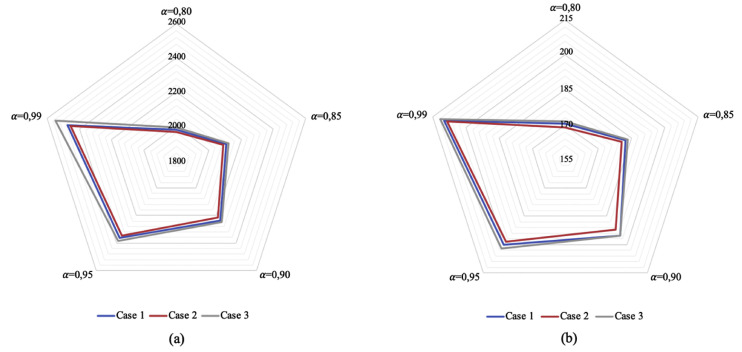
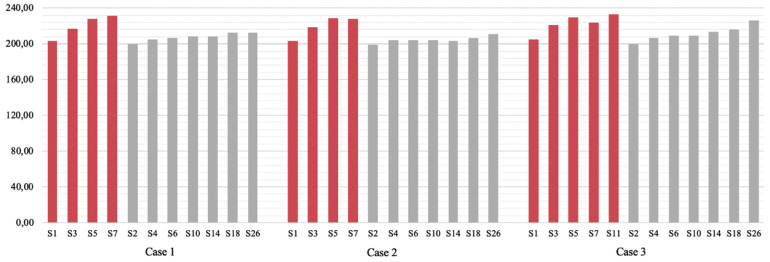
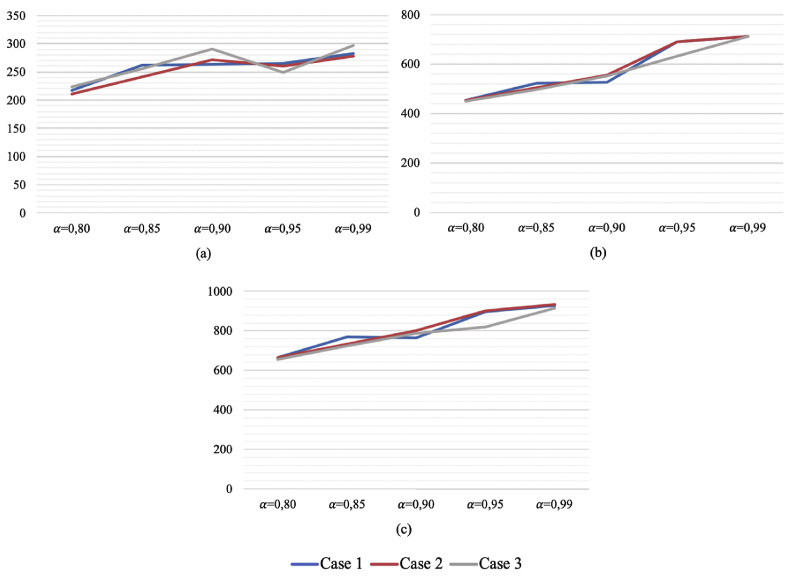
The devastating impact of the ripple effect increases the importance of the reverse supply chain (RSC) design to ensure sustainability in the long-term. That being the case, in this study, a two-stage stochastic mixed-integer optimization model is proposed to design an RSC network under uncertainty sourcing from the ripple effect (i.e. external side of RSC) by considering the environmental and economic dimensions of sustainability. The environmental and economic disruptions of the ripple effect are represented by the increase in the carbon emission levels and the distance of roads, and the decrease in the capacity of facilities, respectively. Accordingly, a set of scenarios is considered based on the disruption levels (low- and high-impact) in case of the ripple effect. Furthermore, an -reliability constraint is integrated into the model to further analyze the occurrence of scenarios. The model allows us to make integrated operational and strategic decisions by placing an emphasis on the carbon emission levels (i.e. environmental dimension) and the total cost (i.e. economic dimension). To obtain some remarkable insights, the proposed model is validated through computational experiments based on data extracted from a real case. The computational results show that the ripple effect increases the emission level and total cost up to 40%. For this reason, it suggested that the regulations regarding WEEE (Waste Electrical and Electronic Equipment) should be prepared by considering sustainability in the entire RSC network. Besides, it is realized that the centralized distribution strategy leads to a more resilient RSC network design.
涟漪效应的破坏性影响增加了逆向供应链(RSC)设计的重要性,以确保长期的可持续性。鉴于此,在本研究中,提出了一种两阶段随机混合整数优化模型,用于在考虑可持续性的环境和经济维度的情况下,设计一个在来自涟漪效应(即RSC的外部)的不确定性采购下的RSC网络。涟漪效应的环境和经济干扰分别由碳排放水平的增加、道路距离以及设施容量的减少来表示。因此,基于涟漪效应情况下的干扰水平(低影响和高影响)考虑了一组情景。此外,将一个 -可靠性约束纳入模型,以进一步分析情景的发生。该模型通过强调碳排放水平(即环境维度)和总成本(即经济维度),使我们能够做出综合的运营和战略决策。为了获得一些显著的见解,通过基于从实际案例中提取的数据进行计算实验,对所提出的模型进行了验证。计算结果表明,涟漪效应使排放水平和总成本增加高达40%。因此,建议在考虑整个RSC网络的可持续性的情况下制定有关废弃电气电子设备(WEEE)的法规。此外,还认识到集中配送策略会导致更具弹性的RSC网络设计。