Van Ryzin Mark J, Roseth Cary J, Biglan Anthony
Oregon Research Institute, Eugene, OR.
Michigan State University, East Lansing, MI.
Int J Appl Posit Psychol. 2020 Apr;5(1-2):37-52. doi: 10.1007/s41042-020-00026-8. Epub 2020 Feb 6.
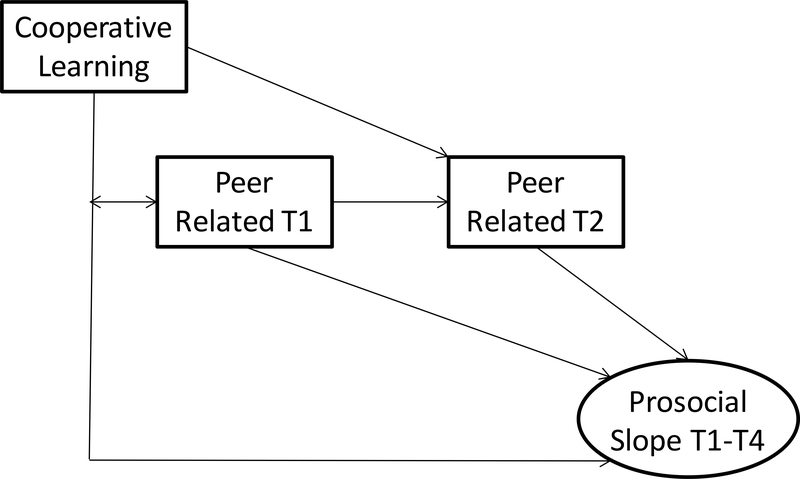
In this study, we tested the effects of cooperative learning on students' prosocial behavior. Cooperative learning is a small-group instructional technique that establishes positive interdependence among students and, unlike most current school-based programs, does not mandate a formal curriculum. Given the emphasis in cooperative learning on peer reinforcement for positive and helpful behavior during learning activities, we hypothesized that cooperative learning would promote higher levels of prosocial behavior, and that these effects would be mediated by peer relatedness. Using a sample of 1,890 students (47.1% female, 75.2% White) from a cluster randomized trial of 15 middle schools, we found that cooperative learning significantly enhanced prosocial behavior across two years. Mediation was only partial, however, suggesting that additional mechanisms were at work, such as changes to social norms or teacher behavior. Given that cooperative learning has been shown to enhance student engagement and academic achievement in prior research, we argue that cooperative learning should be a central component of teacher training and professional development.
在本研究中,我们测试了合作学习对学生亲社会行为的影响。合作学习是一种小组教学技术,它在学生之间建立积极的相互依赖关系,并且与目前大多数校本课程不同,它不要求有正式的课程。鉴于合作学习强调在学习活动中同伴对积极和有益行为的强化,我们假设合作学习会促进更高水平的亲社会行为,并且这些影响将通过同伴关系来介导。我们使用了来自15所中学的整群随机试验中的1890名学生(47.1%为女性,75.2%为白人)作为样本,发现合作学习在两年内显著增强了亲社会行为。然而,中介作用只是部分的,这表明还有其他机制在起作用,比如社会规范或教师行为的变化。鉴于在先前的研究中已经表明合作学习能提高学生的参与度和学业成绩,我们认为合作学习应该成为教师培训和专业发展的核心组成部分。