Division of Stroke and Endovascular Neurosurgery, Department of Neurological Surgery, Keck School of Medicine, University of Southern California, California, USA.
Clinical Neurology Research Center, Shiraz University of Medical Sciences, Shiraz, Iran.
J Neurol Sci. 2020 Dec 15;419:117183. doi: 10.1016/j.jns.2020.117183. Epub 2020 Oct 14.
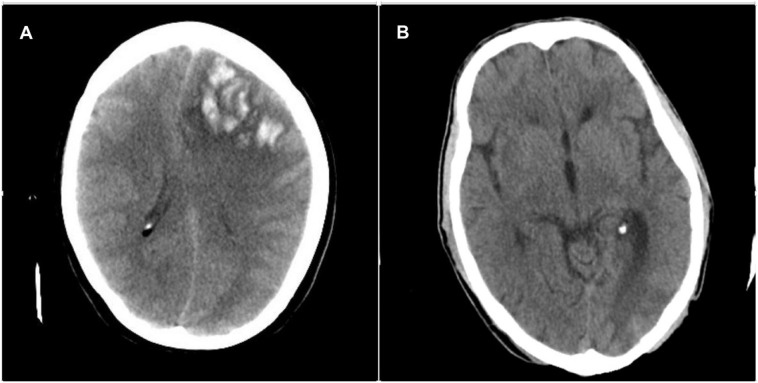
SARS-CoV-2 induced coagulopathy can lead to thrombotic complications such as stroke. Cerebral venous sinus thrombosis (CVST) is a less common type of stroke which might be triggered by COVID-19. We present a series of CVST cases with SARS-CoV-2 infection.
In a multinational retrospective study, we collected all cases of CVST in SARS-CoV-2 infected patients admitted to nine tertiary stroke centers from the beginning of the pandemic to June 30th, 2020. We compared the demographics, clinical and radiological characteristics, risk factors, and outcome of these patients with a control group of non-SARS-CoV-2 infected CVST patients in the same seasonal period of the years 2012-2016 from the country where the majority of cases were recruited.
A total of 13 patients fulfilled the inclusion criteria (62% women, mean age 50.9 ± 11.2 years). Six patients were discharged with good outcomes (mRS ≤ 2) and three patients died in hospital. Compared to the control group, the SARS-CoV-2 infected patients were significantly older (50.9 versus 36.7 years, p < 0.001), had a lower rate of identified CVST risk factors (23.1% versus 84.2%, p < 0.001), had more frequent cortical vein involvement (38.5% versus 10.5%, p: 0.025), and a non-significant higher rate of in-hospital mortality (23.1% versus 5.3%, p: 0.073).
CVST should be considered as potential comorbidity in SARS-CoV-2 infected patients presenting with neurological symptoms. Our data suggest that compared to non-SARS-CoV-2 infected patients, CVST occurs in older patients, with lower rates of known CVST risk factors and might lead to a poorer outcome in the SARS-CoV-2 infected group.
SARS-CoV-2 诱导的凝血病可导致血栓并发症,如中风。脑静脉窦血栓形成(CVST)是一种较少见的中风类型,可能由 COVID-19 引发。我们报告了一系列伴有 SARS-CoV-2 感染的 CVST 病例。
在一项多中心回顾性研究中,我们收集了从大流行开始到 2020 年 6 月 30 日期间,在 9 家三级卒中中心因 SARS-CoV-2 感染住院的所有 CVST 患者的病例。我们将这些患者的人口统计学、临床和影像学特征、危险因素和结局与同一季节(2012-2016 年)来自大多数病例所在国家的非 SARS-CoV-2 感染 CVST 患者的对照组进行了比较。
共有 13 例患者符合纳入标准(62%为女性,平均年龄 50.9 ± 11.2 岁)。6 例患者出院时预后良好(mRS ≤ 2),3 例患者住院期间死亡。与对照组相比,SARS-CoV-2 感染患者明显更年长(50.9 岁比 36.7 岁,p < 0.001),识别出的 CVST 危险因素发生率较低(23.1%比 84.2%,p < 0.001),皮质静脉受累更频繁(38.5%比 10.5%,p:0.025),住院死亡率虽非显著较高(23.1%比 5.3%,p:0.073)。
在出现神经系统症状的 SARS-CoV-2 感染患者中,应考虑 CVST 作为潜在的合并症。我们的数据表明,与非 SARS-CoV-2 感染患者相比,CVST 发生在年龄较大的患者中,已知 CVST 危险因素的发生率较低,且在 SARS-CoV-2 感染组中可能导致预后较差。