Sepúlveda-García Edgar Baldemar, Pulido-Barajas José Francisco, Huerta-Heredia Ariana Arlene, Peña-Castro Julián Mario, Liu Renyi, Barrera-Figueroa Blanca Estela
Laboratorio de Biotecnología Vegetal, Instituto de Biotecnología, Universidad del Papaloapan, Tuxtepec 68301, Mexico.
Division de Estudios de Posgrado, Universidad del Papaloapan, Tuxtepec 68301, Mexico.
Plants (Basel). 2020 Oct 15;9(10):1367. doi: 10.3390/plants9101367.
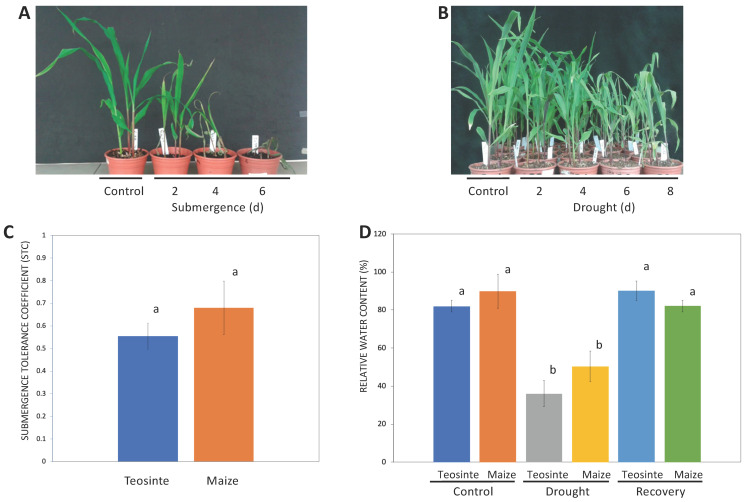
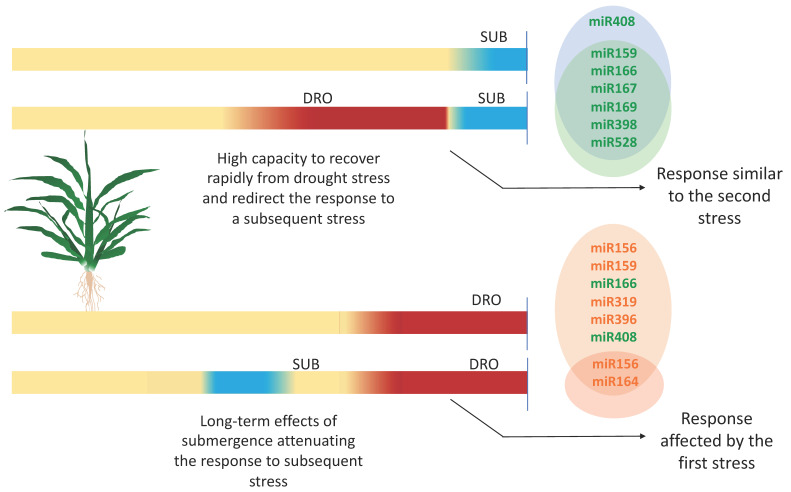
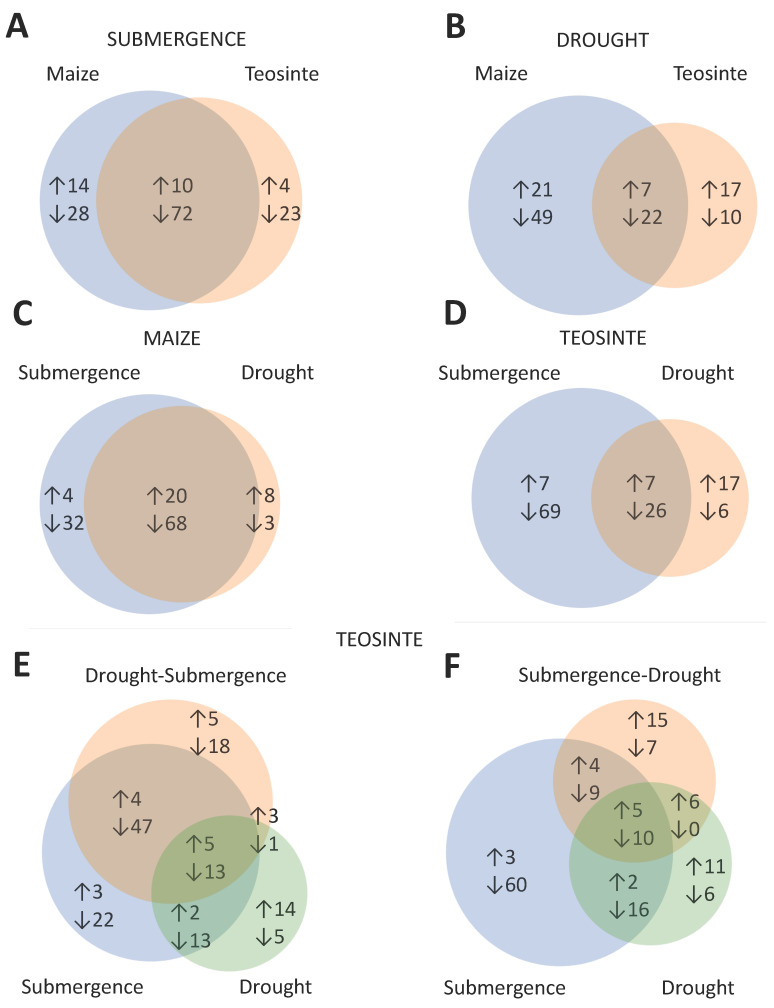
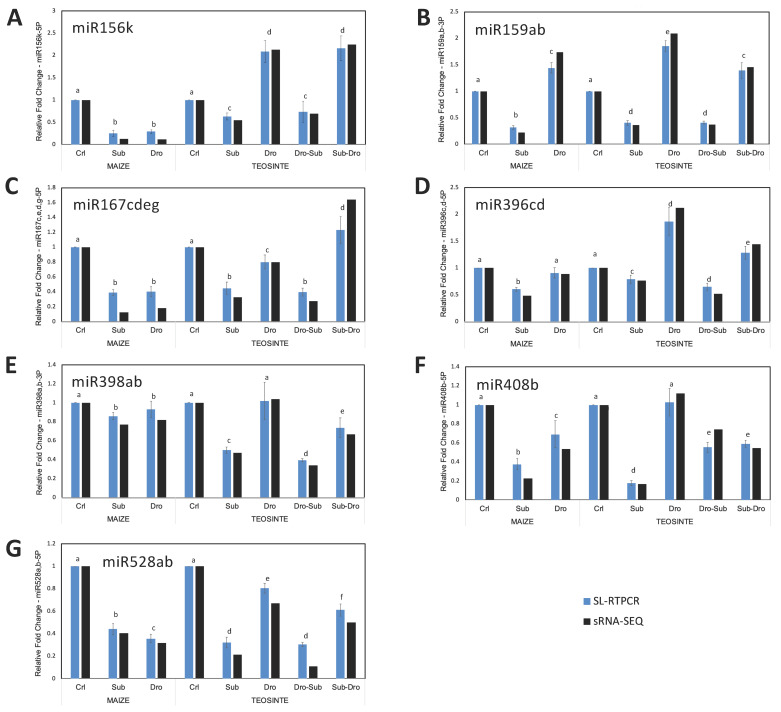
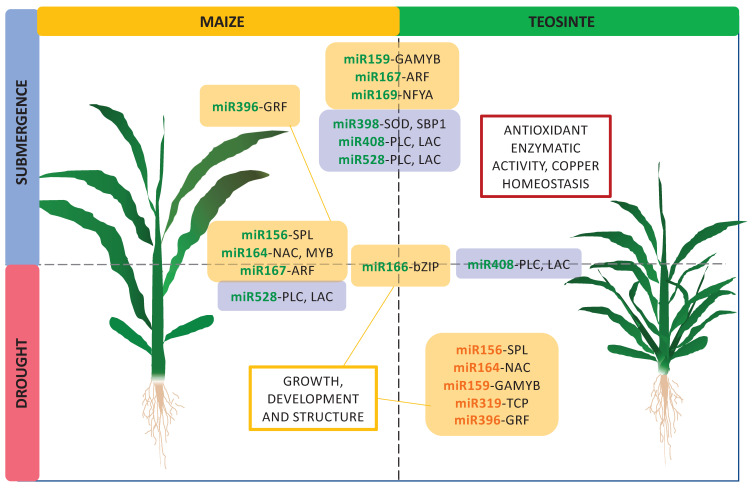
Submergence and drought stresses are the main constraints to crop production worldwide. MicroRNAs (miRNAs) are known to play a major role in plant response to various stresses. In this study, we analyzed the expression of maize and teosinte miRNAs by high-throughput sequencing of small RNA libraries in maize and its ancestor teosinte ( ssp. ), under submergence, drought, and alternated stress. We found that the expression patterns of 67 miRNA sequences representing 23 miRNA families in maize and other plants were regulated by submergence or drought. miR159a, miR166b, miR167c, and miR169c were downregulated by submergence in both plants but more severely in maize. miR156k and miR164e were upregulated by drought in teosinte but downregulated in maize. Small RNA profiling of teosinte subject to alternate treatments with drought and submergence revealed that submergence as the first stress attenuated the response to drought, while drought being the first stress did not alter the response to submergence. The miRNAs identified herein, and their potential targets, indicate that control of development, growth, and response to oxidative stress could be crucial for adaptation and that there exists evolutionary divergence between these two subspecies in miRNA response to abiotic stresses.
淹水和干旱胁迫是全球作物生产的主要限制因素。已知微小RNA(miRNA)在植物对各种胁迫的反应中起主要作用。在本研究中,我们通过对玉米及其祖先大刍草(亚种)在淹水、干旱和交替胁迫下的小RNA文库进行高通量测序,分析了玉米和大刍草miRNA的表达。我们发现,代表23个miRNA家族的67个miRNA序列在玉米和其他植物中的表达模式受淹水或干旱调控。miR159a、miR166b、miR167c和miR169c在两种植物中均受淹水下调,但在玉米中下调更严重。miR156k和miR164e在大刍草中受干旱上调,但在玉米中受干旱下调。对经历干旱和淹水交替处理的大刍草进行小RNA谱分析表明,以淹水作为首个胁迫会减弱对干旱的反应,而以干旱作为首个胁迫不会改变对淹水的反应。本文鉴定的miRNA及其潜在靶标表明,发育、生长的调控以及对氧化胁迫的反应可能对适应性至关重要,并且这两个亚种在miRNA对非生物胁迫的反应中存在进化差异。