Li Yeou-Fong, Sio Wai-Keong, Yang Tzu-Hsien, Tsai Ying-Kuan
Department of Civil Engineering, National Taipei University of Technology, 1, Section 3, Chung-Hsiao E. Rd., Taipei 10608, Taiwan.
Department of Materials and Mineral Resources Engineering, National Taipei University of Technology, 1, Sec. 3, Chung-Hsiao E. Rd., Taipei 10608, Taiwan.
Polymers (Basel). 2020 Oct 15;12(10):2369. doi: 10.3390/polym12102369.
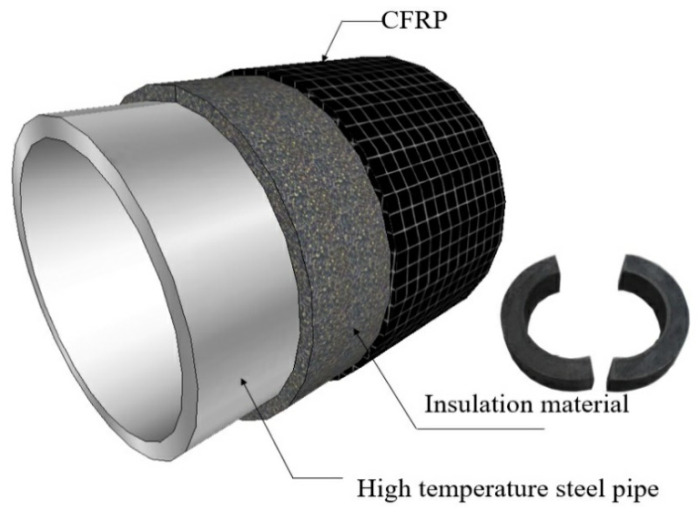
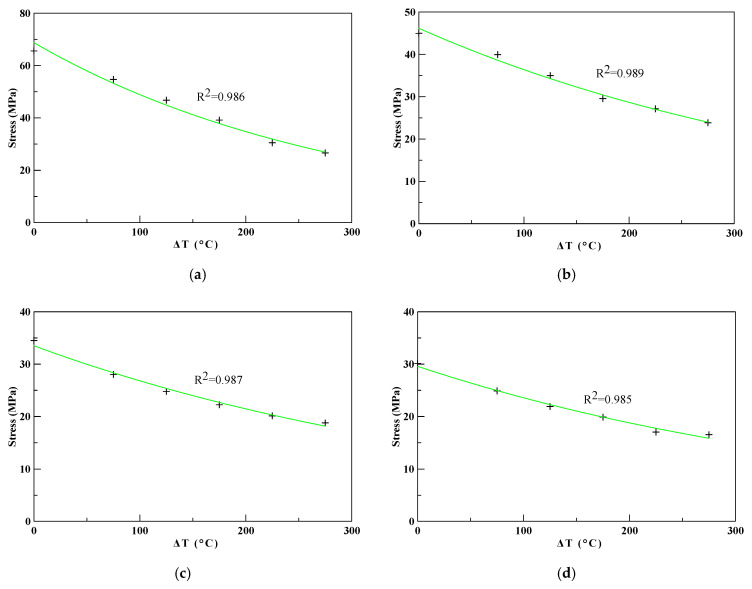
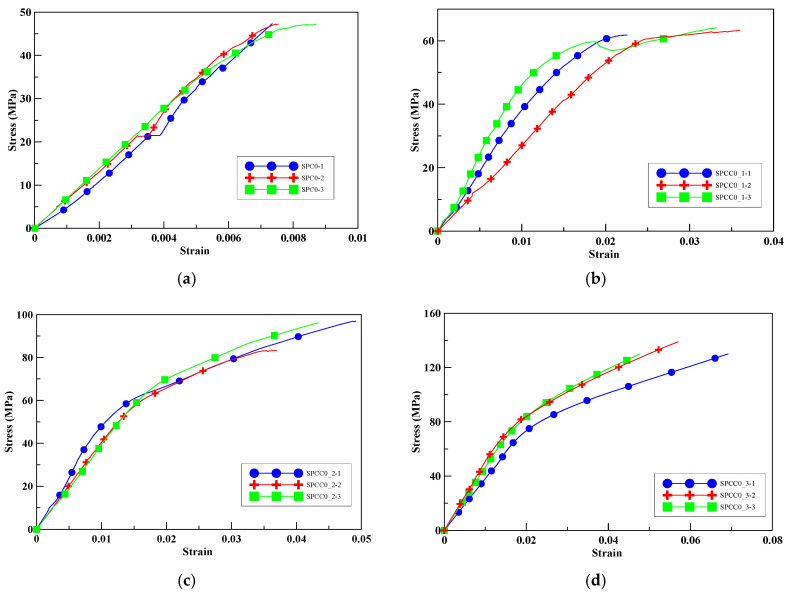
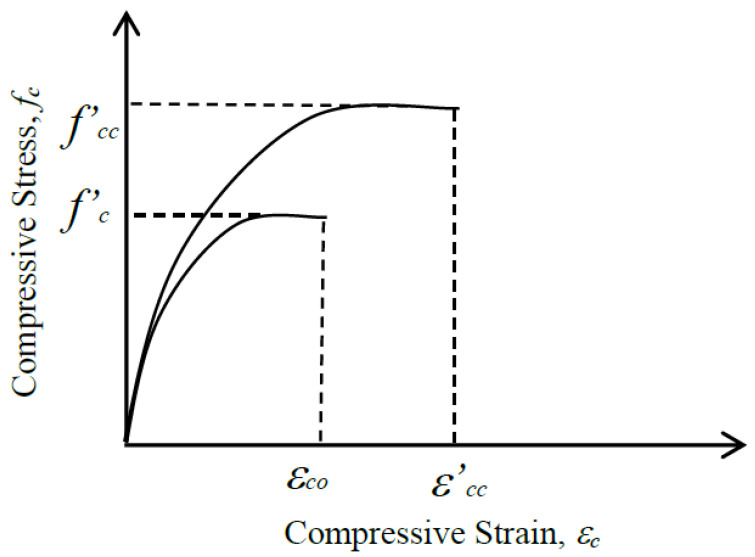
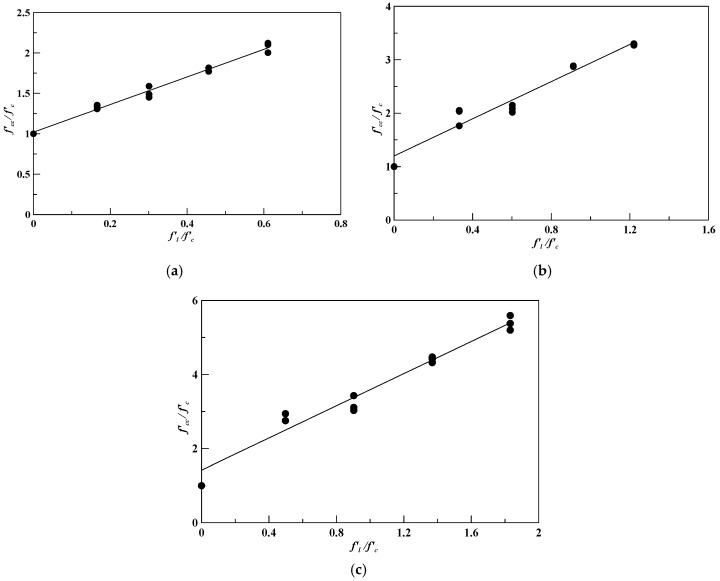
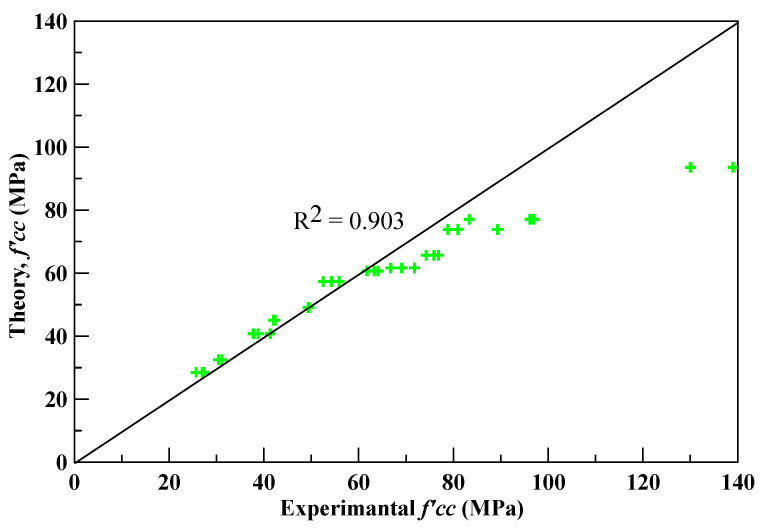
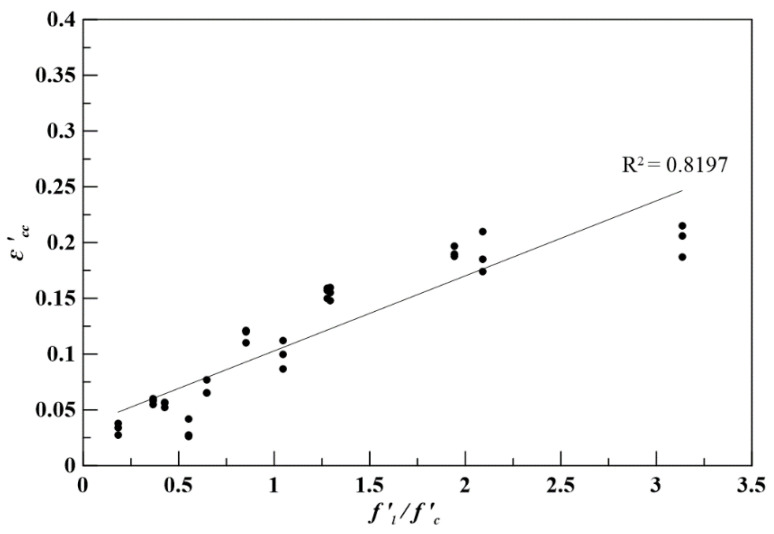
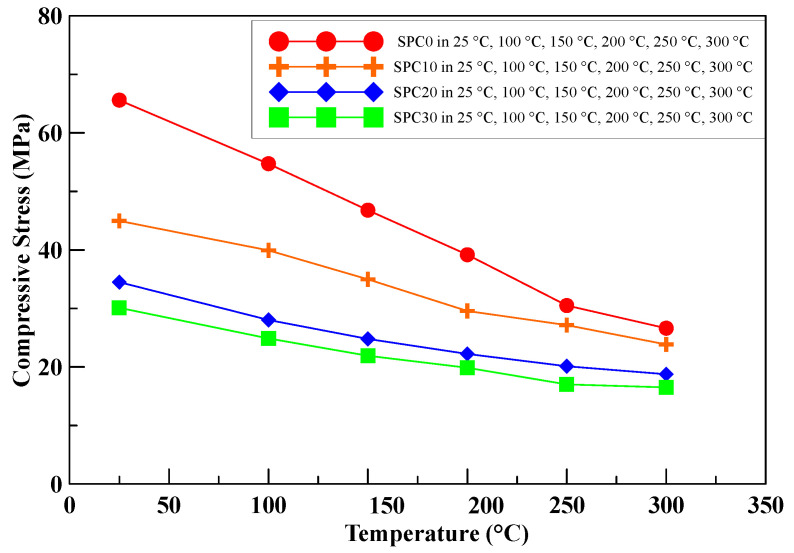
A parabolic stress-strain constitutive model for inorganic thermal-insulating material confined by carbon fiber-reinforced polymer (CFRP) exposed to a surrounding elevated temperature was proposed in this paper. The thermal-insulating material used in this study was composed of high-early-strength cement (HESC) and perlite powder. The compression strengths of four kinds of perlite powder composition ratios of thermal-insulating materials cylindrical specimens which were confined by one, two, and three-layer CFRP composite materials were acquired. The experimental results showed that the compression strength was enhanced as the amount of perlite substitute decreased or as the number of CFRP wrapping layers increased. The Mohr-Columb failure criteria were adopted to predict the maximum compressive strength of CFRP-confined inorganic thermal-insulating material. The strain at the maximum compressive strength was found from the experimental results, and the corresponding axial strain at the maximum compressive strength in the constitutive model was determined from the regression analysis. Furthermore, the compressive strengths of the four different perlite composites of thermal-insulating materials were obtained when heating the specimens from ambient temperature to 300 °C. The compressive strength decreased with an increase in temperature, and a thermal softening parameter model was proposed; the thermal softening parameter was determined from the experimental maximum compressive strength at an elevated temperature. Combining the above two models, the constitutive model of HESC with perlite powder additive as a thermal-insulating material confined by CFRP under elevated temperature was proposed.
本文提出了一种用于碳纤维增强聚合物(CFRP)约束的无机保温材料在周围高温环境下的抛物线型应力-应变本构模型。本研究中使用的保温材料由高早强水泥(HESC)和珍珠岩粉末组成。获取了由一层、两层和三层CFRP复合材料约束的保温材料圆柱形试件的四种珍珠岩粉末组成比例下的抗压强度。实验结果表明,随着珍珠岩替代量的减少或CFRP包裹层数的增加,抗压强度提高。采用莫尔-库仑破坏准则来预测CFRP约束的无机保温材料的最大抗压强度。从实验结果中得到最大抗压强度时的应变,并通过回归分析确定本构模型中最大抗压强度对应的轴向应变。此外,当将试件从室温加热到300℃时,获得了四种不同珍珠岩复合材料保温材料的抗压强度。抗压强度随温度升高而降低,并提出了热软化参数模型;热软化参数由高温下的实验最大抗压强度确定。结合上述两个模型,提出了高温下CFRP约束的以HESC和珍珠岩粉末添加剂作为保温材料的本构模型。