Tumor Ecology Lab, Department of Oncology, Microbiology and Immunology, Faculty of Science and Medicine, University of Fribourg, Switzerland.
Mol Oncol. 2020 Dec;14(12):3198-3210. doi: 10.1002/1878-0261.12828. Epub 2020 Nov 5.
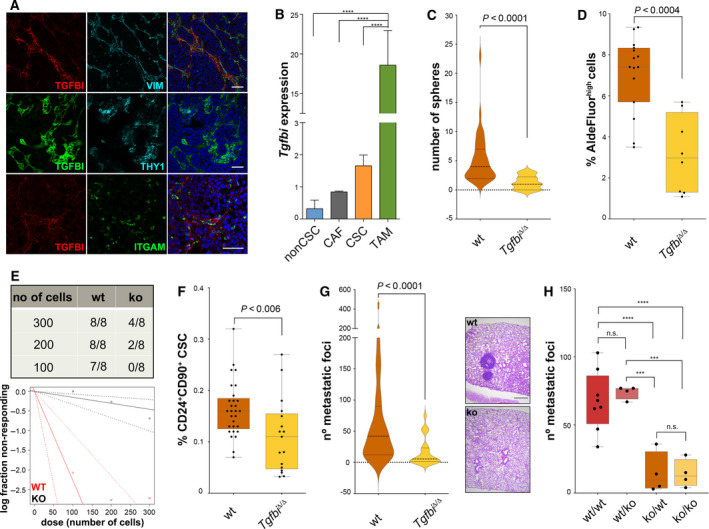
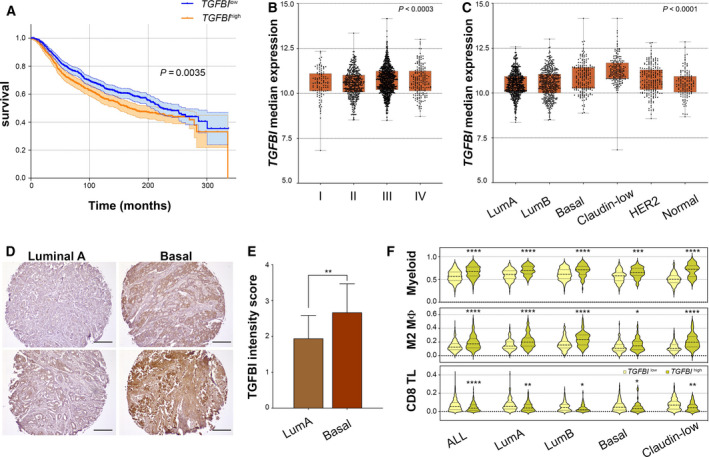
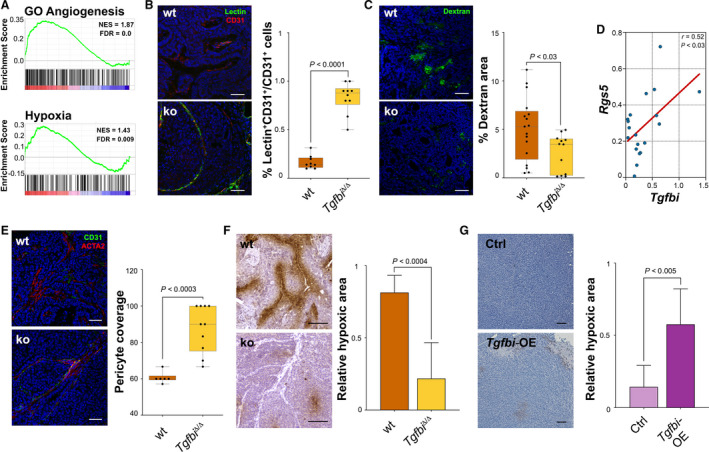
Breast cancer metastasis is a complex process that depends not only on intrinsic characteristics of metastatic stem cells, but also on the particular microenvironment that supports their growth and modulates the plasticity of the system. In search for microenvironmental factors supporting cancer stem cell (CSC) growth and tumour progression to metastasis, we here investigated the role of the matricellular protein transforming growth factor beta induced (TGFBI) in breast cancer. We crossed the MMTV-PyMT model of mammary gland tumorigenesis with a Tgfbi mouse and studied the CSC content of the tumours. We performed RNAseq on wt and ko tumours, and analysed the tumour vasculature and the immune compartment by IHC and FACS. The source of TGFBI expression was determined by qPCR and by bone marrow transplantation experiments. Finally, we performed in silico analyses using the METABRIC cohort to assess the potential prognostic value of TGFBI. We observed that deletion of Tgfbi led to a dramatic decrease in CSC content and lung metastasis. Our results show that lack of TGFBI resulted in tumour vessel normalisation, with improved vessel perfusion and decreased hypoxia, a major factor controlling CSCs and metastasis. Furthermore, human data mining in a cohort of breast cancer patients showed that higher expression of TGFBI correlates with poor prognosis and is associated with the more aggressive subtypes of breast cancer. Overall, these data reveal a novel biological mechanism controlling metastasis that could potentially be exploited to improve the efficacy and delivery of chemotherapeutic agents in breast cancer.
乳腺癌转移是一个复杂的过程,不仅依赖于转移性干细胞的内在特征,还依赖于支持其生长并调节系统可塑性的特定微环境。在寻找支持癌症干细胞(CSC)生长和肿瘤转移进展的微环境因素时,我们研究了基质细胞蛋白转化生长因子β诱导(TGFBI)在乳腺癌中的作用。我们将乳腺肿瘤发生的 MMTV-PyMT 模型与 Tgfbi 小鼠进行了杂交,并研究了肿瘤的 CSC 含量。我们对 wt 和 ko 肿瘤进行了 RNAseq 分析,并通过 IHC 和 FACS 分析了肿瘤血管和免疫组。通过 qPCR 和骨髓移植实验确定了 TGFBI 表达的来源。最后,我们使用 METABRIC 队列进行了计算分析,以评估 TGFBI 的潜在预后价值。我们观察到 Tgfbi 的缺失导致 CSC 含量和肺转移的急剧下降。我们的结果表明,缺乏 TGFBI 导致肿瘤血管正常化,改善了血管灌注并减少了缺氧,这是控制 CSCs 和转移的主要因素。此外,对乳腺癌患者队列中的人类数据挖掘表明,TGFBI 的高表达与预后不良相关,并且与乳腺癌更具侵袭性的亚型相关。总的来说,这些数据揭示了一种控制转移的新生物学机制,这可能被用来提高乳腺癌化疗药物的疗效和递送。