Department of Internal Medicine, Section of Hematology, Yale University School of Medicine, PO Box 208028, New Haven, CT 06520-8028, USA.
Cells. 2020 Oct 17;9(10):2310. doi: 10.3390/cells9102310.
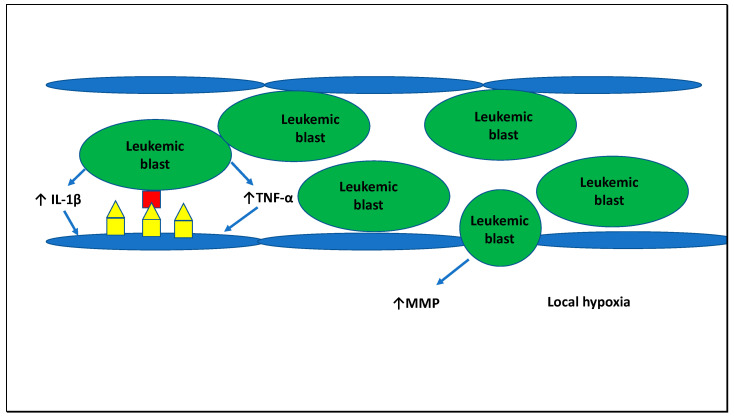
Up to 18% of patients with acute myeloid leukemia (AML) present with a white blood cell (WBC) count of greater than 100,000/µL, a condition that is frequently referred to as hyperleukocytosis. Hyperleukocytosis has been associated with an adverse prognosis and a higher incidence of life-threatening complications such as leukostasis, disseminated intravascular coagulation (DIC), and tumor lysis syndrome (TLS). The molecular processes underlying hyperleukocytosis have not been fully elucidated yet. However, the interactions between leukemic blasts and endothelial cells leading to leukostasis and DIC as well as the processes in the bone marrow microenvironment leading to the massive entry of leukemic blasts into the peripheral blood are becoming increasingly understood. Leukemic blasts interact with endothelial cells via cell adhesion molecules such as various members of the selectin family which are upregulated via inflammatory cytokines released by leukemic blasts. Besides their role in the development of leukostasis, cell adhesion molecules have also been implicated in leukemic stem cell survival and chemotherapy resistance and can be therapeutically targeted with specific inhibitors such as plerixafor or GMI-1271 (uproleselan). However, in the absence of approved targeted therapies supportive treatment with the uric acid lowering agents allopurinol and rasburicase as well as aggressive intravenous fluid hydration for the treatment and prophylaxis of TLS, transfusion of blood products for the management of DIC, and cytoreduction with intensive chemotherapy, leukapheresis, or hydroxyurea remain the mainstay of therapy for AML patients with hyperleukocytosis.
高达 18%的急性髓系白血病 (AML) 患者的白细胞 (WBC) 计数大于 100,000/µL,这种情况通常被称为白细胞增多症。白细胞增多症与不良预后和更高的危及生命的并发症发生率相关,如白细胞淤滞、弥漫性血管内凝血 (DIC) 和肿瘤溶解综合征 (TLS)。导致白细胞增多症的分子过程尚未完全阐明。然而,白血病细胞与内皮细胞之间的相互作用导致白细胞淤滞和 DIC,以及骨髓微环境中的过程导致大量白血病细胞进入外周血,这些过程正在被越来越多地理解。白血病细胞通过细胞黏附分子与内皮细胞相互作用,这些分子包括选择素家族的各种成员,这些分子通过白血病细胞释放的炎症细胞因子而上调。除了在白细胞淤滞的发展中发挥作用外,细胞黏附分子还与白血病干细胞的存活和化疗耐药有关,可以用特定的抑制剂如plerixafor 或 GMI-1271 (uproleselan) 进行治疗靶向。然而,在没有批准的靶向治疗的情况下,支持性治疗包括降低尿酸的别嘌醇和rasburicase,以及积极的静脉补液用于治疗和预防 TLS、输血用于治疗 DIC 和用强化化疗、白细胞去除术或羟基脲进行细胞减少,仍然是白细胞增多症 AML 患者的主要治疗方法。