Department of Nephrology, The First Affiliated Hospital of Nanjing Medical University, Nanjing Medical University, 300 Guangzhou Road, Nanjing, Jiangsu Province, 210029, P.R. China.
BMC Nephrol. 2020 Oct 20;21(1):442. doi: 10.1186/s12882-020-02106-y.
Although lupus nephritis (LN) is mostly characterized by glomerular involvement, tubular injury is indispensable in its pathogenesis and progression. The purpose of this study is to examine associations between urinary acidification function and clinical and pathological features in LN.
A total of 103 patients with renal biopsy-proven LN were included, and clinical parameters and laboratory data were obtained from the medical records. Plasma samples, 24-h urine samples and the urinary acidification function, including urine pH, titratable acid, and ammonia, were collected within 3 days before the day of renal biopsy. The correlations between defects of acid excretion and clinical and pathological features were then assessed. Logistic regression analysis was used to assess factors associated with the presence of nephrotic range proteinuria.
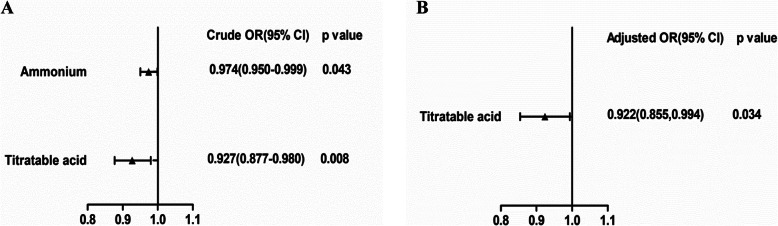
The urine ammonia level was inversely correlated with SLEDAI-2 K scores, rSLEDAI scores, serum creatinine levels and proteinuria, while it was positively correlated with eGFR. And urine titratable acid was only inversely correlated with rSLEDAI scores and proteinuria. Moreover, urine ammonia had significant negative correlations with AI scores, interstitial inflammatory cell infiltration, CI scores, glomerular sclerosis, fibrous crescents, tubular atrophy and interstitial fibrosis. And urine titratable acid was mainly inversely correlated with CI scores. Furthermore, univariate logistic analyses identified that both urine titratable acid and ammonia were correlated with the presence of nephrotic range proteinuria. After the adjustment for chronicity index and eGFR in a multivariate logistic analysis, only urine titratable acid was still identified as an independent risk factor for the occurrence of nephrotic range proteinuria.
Urine ammonia was associated with clinical and pathological features of chronicity and tubulointerstitial disease activity among patients with lupus nephritis. Furthermore, the strong association between urinary protein and titratable acid excretion at the time of kidney biopsy is significant even after adjusting for the chronicity index and eGFR at biopsy.
尽管狼疮肾炎(LN)主要表现为肾小球受累,但肾小管损伤在其发病机制和进展中不可或缺。本研究旨在探讨 LN 患者尿酸化功能与临床和病理特征之间的关系。
共纳入 103 例经肾活检证实的 LN 患者,从病历中获取临床参数和实验室数据。在肾活检前 3 天内采集血样、24 小时尿液样本和尿酸化功能,包括尿 pH 值、滴定酸和氨。然后评估酸排泄缺陷与临床和病理特征之间的相关性。使用逻辑回归分析评估与肾病范围蛋白尿存在相关的因素。
尿氨水平与 SLEDAI-2K 评分、rSLEDAI 评分、血清肌酐水平和蛋白尿呈负相关,与 eGFR 呈正相关。而尿滴定酸仅与 rSLEDAI 评分和蛋白尿呈负相关。此外,尿氨与 AI 评分、间质炎症细胞浸润、CI 评分、肾小球硬化、纤维性新月体、肾小管萎缩和间质纤维化呈显著负相关。而尿滴定酸主要与 CI 评分呈负相关。进一步的单因素逻辑分析表明,尿滴定酸和氨均与肾病范围蛋白尿的发生相关。在多因素逻辑分析中,校正慢性指数和 eGFR 后,仅尿滴定酸仍被确定为肾病范围蛋白尿发生的独立危险因素。
尿氨与 LN 患者慢性和肾小管间质疾病活动的临床和病理特征相关。此外,即使在调整活检时的慢性指数和 eGFR 后,肾活检时尿蛋白和滴定酸排泄之间的强相关性仍然显著。