Albiero Remo, Seresini Giuseppe
Interventional Cardiology Unit, Cardiovascular Department, Sondrio Hospital, Sondrio (SO), Italy.
Eur Heart J Case Rep. 2020 May 12;4(FI1):1-6. doi: 10.1093/ehjcr/ytaa133. eCollection 2020 Oct.
Spontaneous coronary artery dissection (SCAD) may be atherosclerotic (A-SCAD) or non-atherosclerotic (NA-SCAD) in origin. Contemporary usage of the term 'SCAD' is typically synonymous with NA-SCAD. COVID-19 could induce a vascular inflammation localized in the coronary adventitia and periadventitial fat and contribute to the development of an A-SCAD of a vulnerable plaque in a susceptible patient.
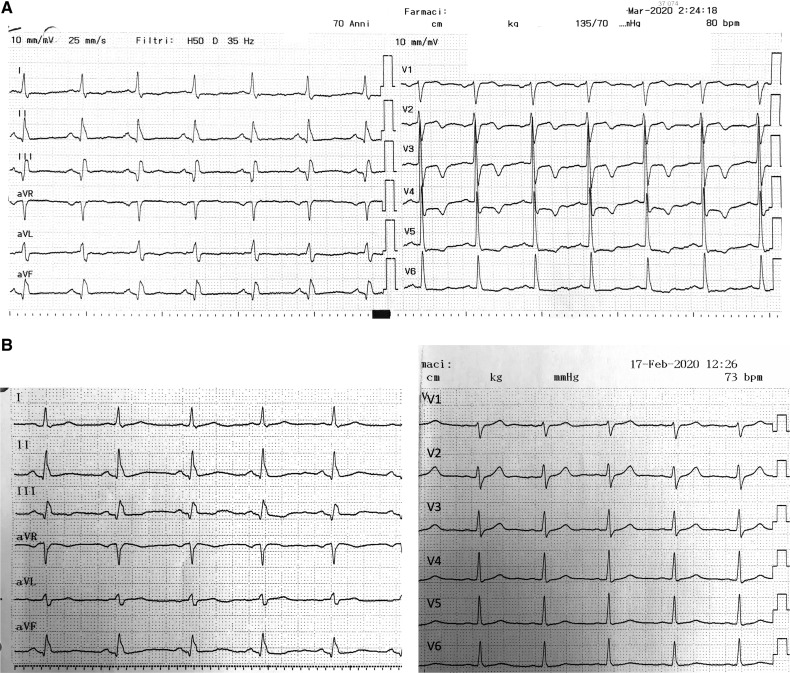
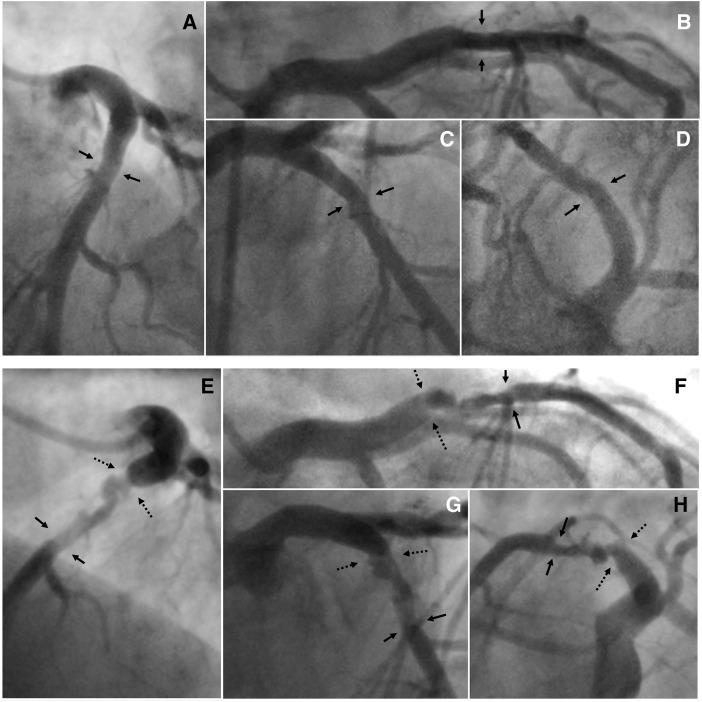
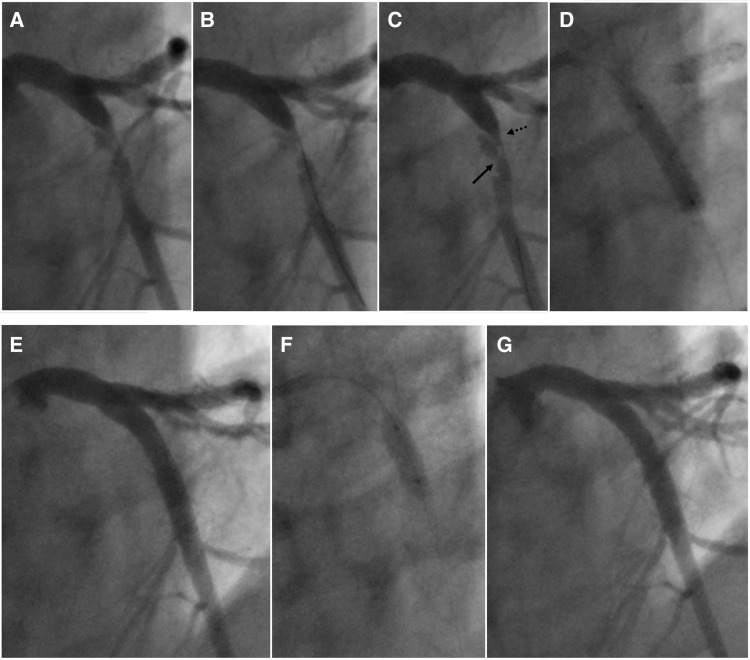
In this report we describe a case of a COVID-19 patient with past cardiac history of CAD who was admitted for acute coronary syndrome (ACS). Coronary angiography demonstrated the culprit lesion in the proximal LAD that presented with a very complex and unusual morphology, indicative of an A-SCAD. The diagnosis of A-SCAD was supported by the presence of a mild stenosis in the same coronary segment in the last angiogram performed 3 years previously. He was successfully treated by PCI, had a favourable course of the COVID-19 with no symptoms of pneumonia, and was discharged from the hospital after two negative tests for SARS-CoV-2.
A higher index of suspicion of A-SCAD is needed in patients with suspected or confirmed COVID-19 presenting with ACS. The proposed approach with 'thrombolysis first' for treating STEMI patients with suspected or confirmed COVID-19 infection could be unsafe in the case of underlying A-SCAD.
自发性冠状动脉夹层(SCAD)可能起源于动脉粥样硬化性(A-SCAD)或非动脉粥样硬化性(NA-SCAD)。目前“SCAD”一词的使用通常与NA-SCAD同义。2019冠状病毒病(COVID-19)可诱发局限于冠状动脉外膜和外膜周围脂肪的血管炎症,并促使易感患者易损斑块发生A-SCAD。
在本报告中,我们描述了一例既往有冠心病病史的COVID-19患者,因急性冠状动脉综合征(ACS)入院。冠状动脉造影显示罪犯病变位于左前降支近端,形态非常复杂且不寻常,提示为A-SCAD。3年前最后一次血管造影显示同一冠状动脉节段存在轻度狭窄,支持A-SCAD的诊断。他通过经皮冠状动脉介入治疗(PCI)成功治疗,COVID-19病程良好,无肺炎症状,两次严重急性呼吸综合征冠状病毒2(SARS-CoV-2)检测阴性后出院。
对于疑似或确诊COVID-19且伴有ACS的患者,需要提高对A-SCAD的怀疑指数。对于疑似或确诊COVID-19感染的ST段抬高型心肌梗死(STEMI)患者,建议采用“先溶栓”的治疗方法,对于潜在的A-SCAD患者可能不安全。