Marshall Lindsay J, Triunfol Marcia, Seidle Troy
Humane Society International and the Humane Society of the United States, Washington, DC 20037, USA.
Humane Society International, Washington, DC, 20037, USA.
Animals (Basel). 2020 Oct 20;10(10):1923. doi: 10.3390/ani10101923.
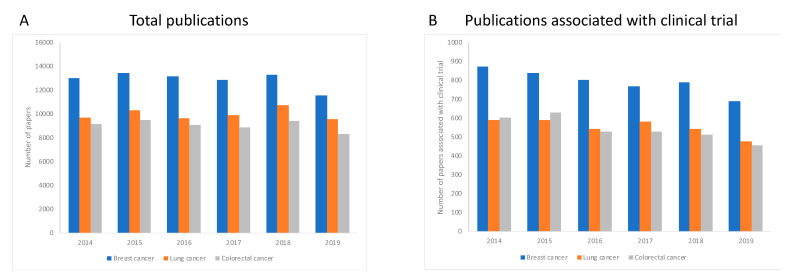
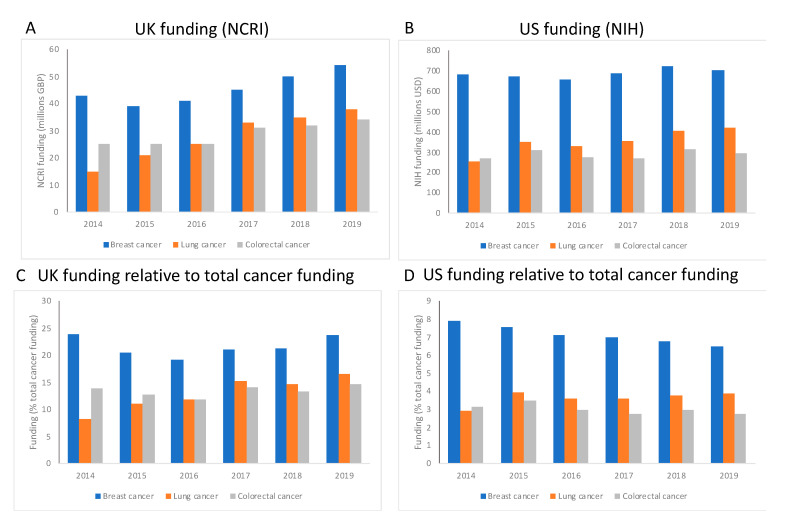
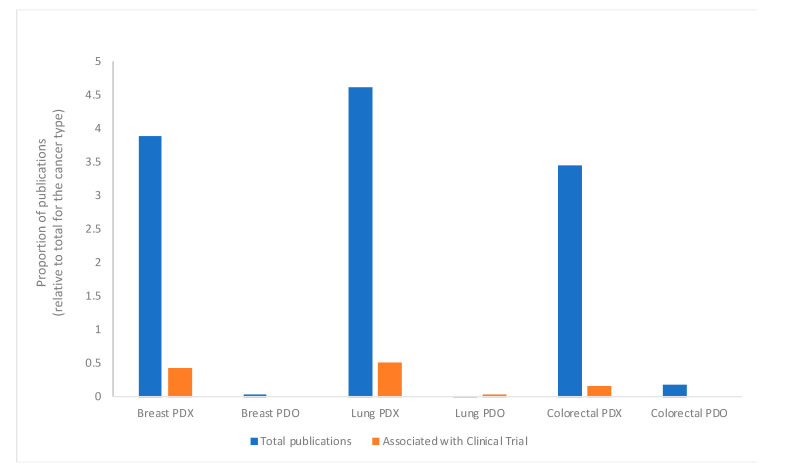
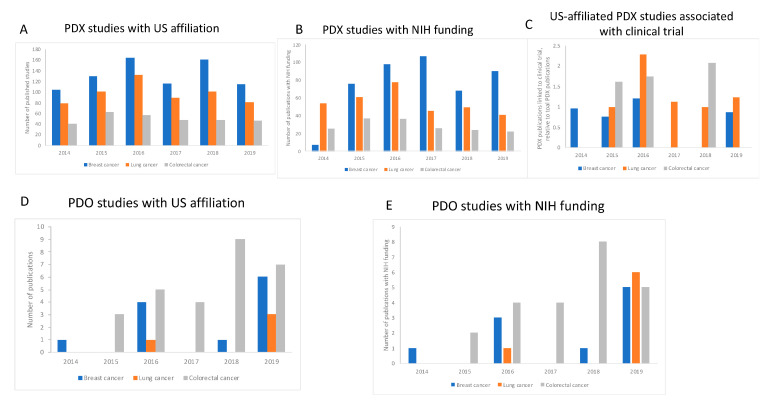
Cancer remains a major threat to mortality and morbidity globally, despite intense research and generous funding. Patient-derived xenograft (PDX) models-where tumor biopsies are injected into an animal-were developed to improve the predictive capacity of preclinical animal models. However, recent observations have called into question the clinical relevance, and therefore the translational accuracy, of these. Patient-derived organoids (PDO) use patient tumor samples to create in vitro models that maintain aspects of tumor structure and heterogeneity. We undertook a preliminary analysis of the number of breast, colorectal, and lung cancer research studies using PDX or PDO published worldwide between 2014-2019. We looked for evidence of impacts of this research on human health. The number of publications that focused on PDO is gradually increasing over time, but is still very low compared to publications using PDX models. Support for new research projects using PDO is gradually increasing, a promising indicator of a shift towards more human-relevant approaches to understanding human disease. Overall, increases in total funding for these three major cancer types does not appear to be translating to any consequential increase in outputs, defined for this purpose as publications associated with clinical trials. With increasing public discomfort in research using animals and demands for 'alternative' methods, it is timely to consider how to implement non-animal methods more effectively.
尽管进行了深入研究并投入了大量资金,但癌症仍然是全球死亡率和发病率的主要威胁。患者来源的异种移植(PDX)模型——即将肿瘤活检组织注射到动物体内的模型——旨在提高临床前动物模型的预测能力。然而,最近的观察结果对这些模型的临床相关性以及因此其转化准确性提出了质疑。患者来源的类器官(PDO)利用患者肿瘤样本创建体外模型,该模型保留了肿瘤结构和异质性的特征。我们对2014年至2019年间全球发表的使用PDX或PDO的乳腺癌、结直肠癌和肺癌研究数量进行了初步分析。我们寻找了这项研究对人类健康产生影响的证据。关注PDO的出版物数量随着时间的推移逐渐增加,但与使用PDX模型的出版物相比仍然非常少。对使用PDO的新研究项目的支持也在逐渐增加,这是一个有希望的指标,表明在理解人类疾病方面正朝着更符合人类实际情况的方法转变。总体而言,这三种主要癌症类型的总资金增加似乎并没有转化为任何相应的产出增加,在此将产出定义为与临床试验相关的出版物。随着公众对动物研究的不满情绪增加以及对“替代”方法的需求,现在是时候考虑如何更有效地实施非动物方法了。