Gao Jinliang, Luo Tao, Lin Na, Zhang Shuyan, Wang Jinke
State Key Laboratory of Bioelectronics, Southeast University, Nanjing 210096, P.R. China.
Mol Ther Oncolytics. 2020 Sep 16;19:79-92. doi: 10.1016/j.omto.2020.09.004. eCollection 2020 Dec 16.
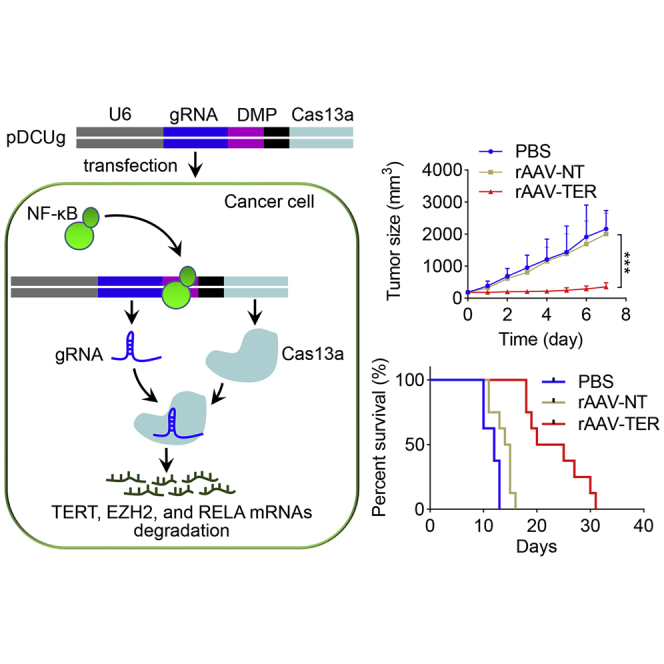
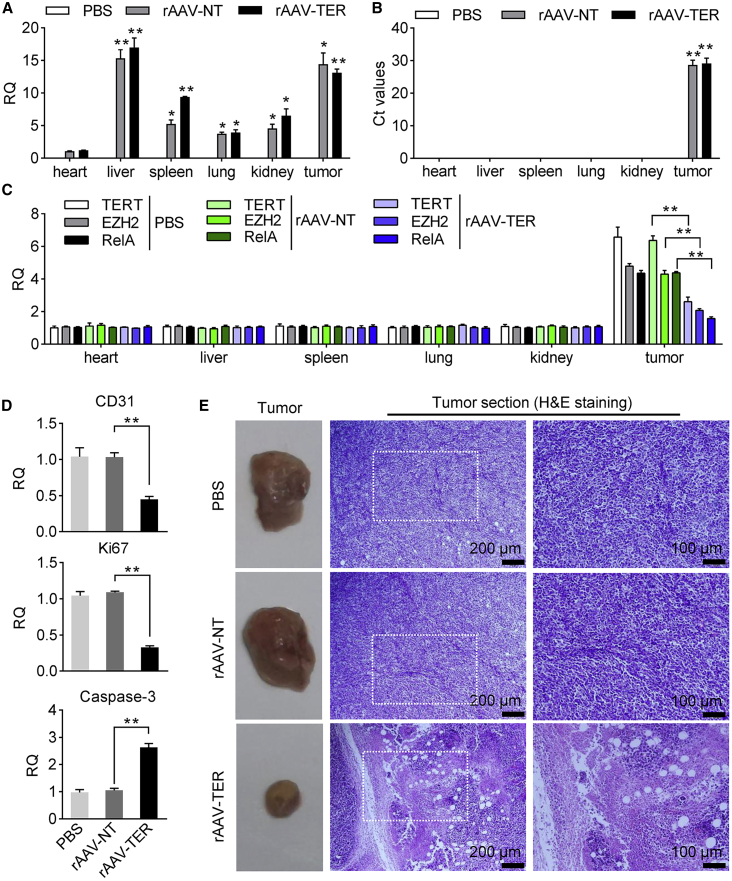
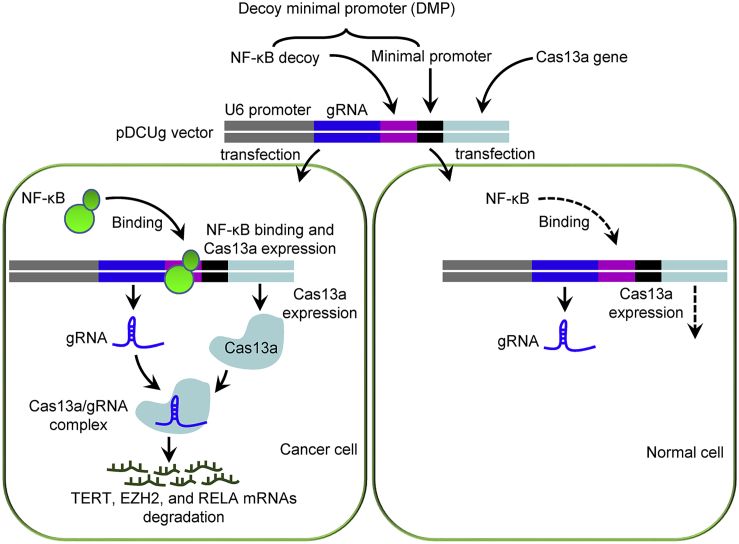
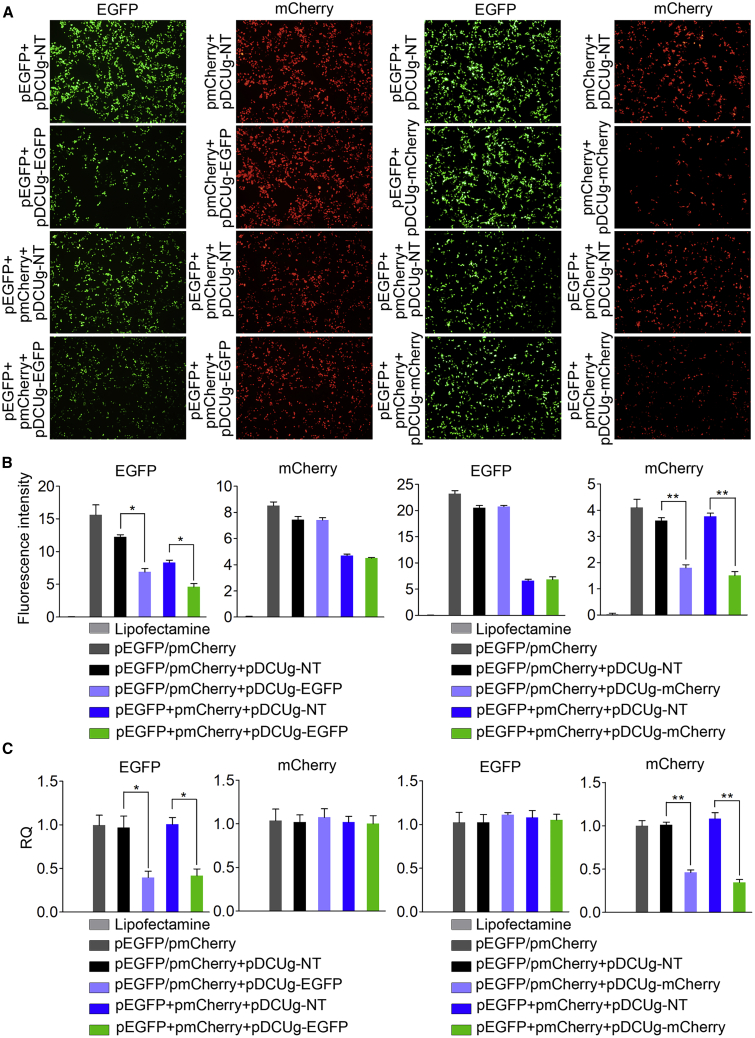
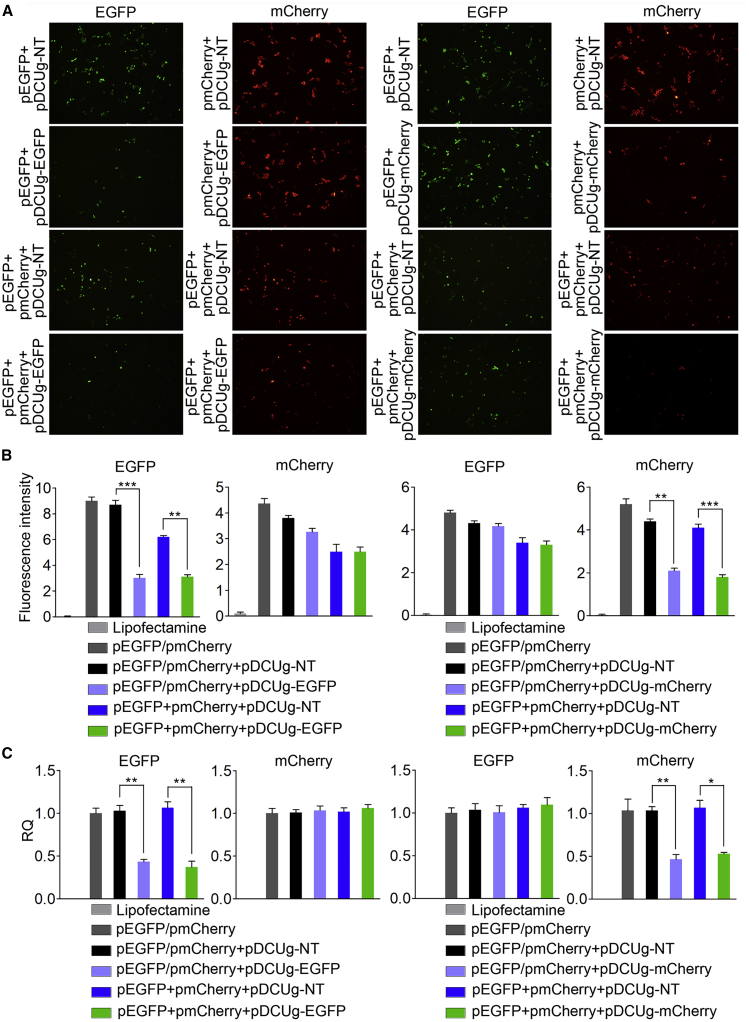
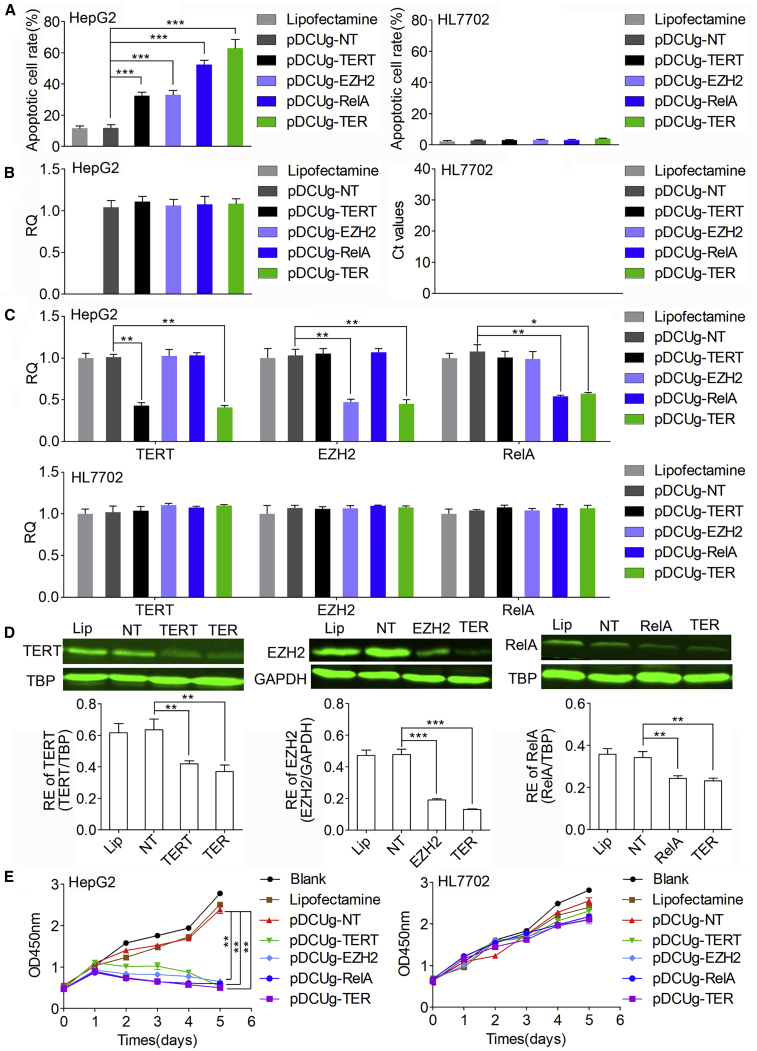
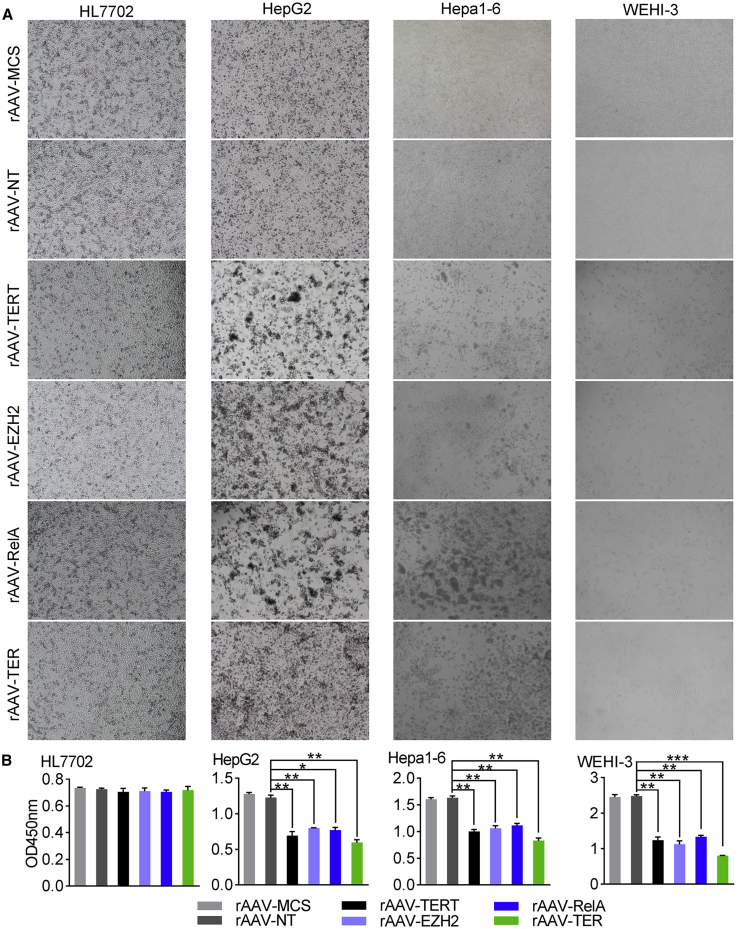
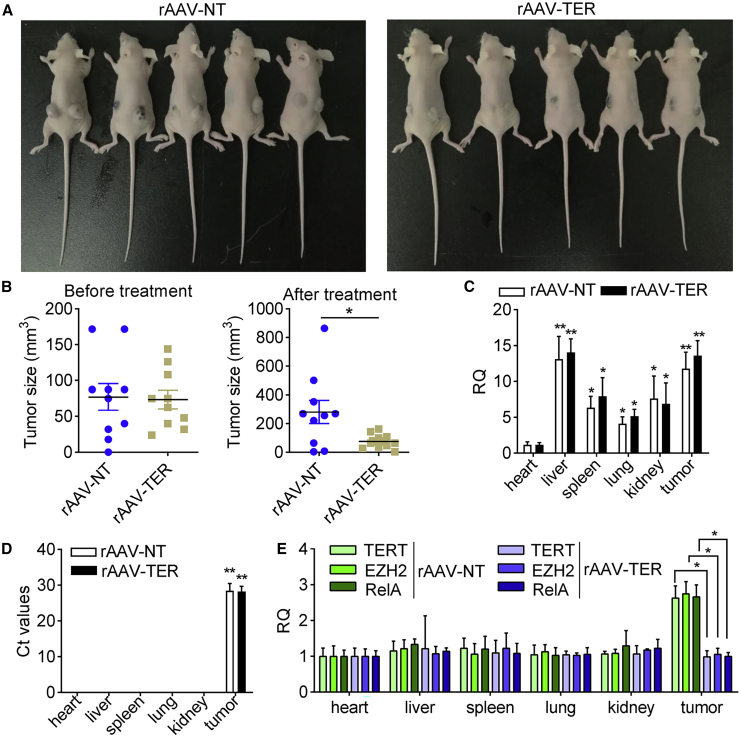
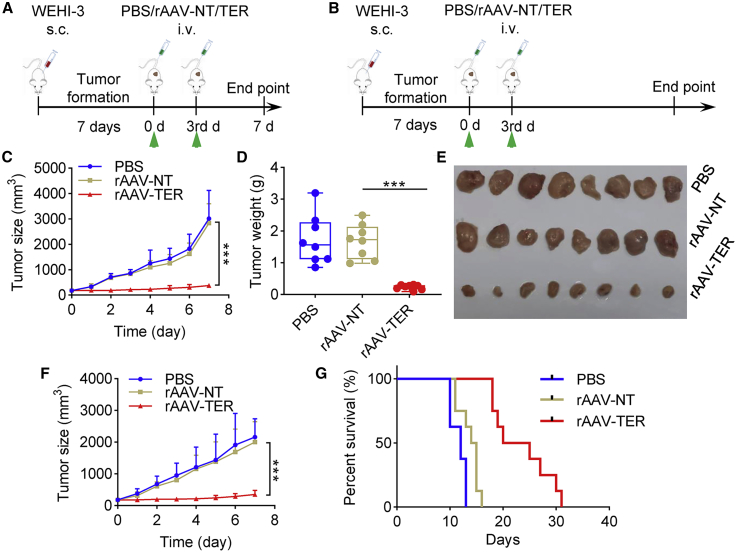
Cas13a has already been successfully applied to virus detection. However, as a new gene interference tool, its potential in cancer treatment was not fully explored until now. This study constructed a new Cas13a expression vector, decoy minimal promoter-Cas13a-U6-guide RNA (DMP-Cas13a-U6-gRNA [DCUg]), by controlling the Cas13a and gRNA expression with a nuclear factor κB (NF-κB)-specific promoter and U6 promoter, respectively. DCUg could specifically and effectively knock down the expression of reporter genes in the 293T and HepG2 cells. DCUg could also similarly knock down the expression of endogenous oncogenes (TERT, EZH2, and RelA) at both mRNA and protein levels in a human hepatoma cell HepG2, which led to significant apoptosis and growth inhibition. In contrast, the same transfection did not affect the target gene expression, cell apoptosis, and growth of a human normal liver cell HL7702. Finally, DCUg targeting these oncogenes was packaged into adeno-associated virus (AAV) and treated four cells (HepG2, HL7702, WEHI-3, and Hepa1-6) and tumor-bearing mice. As results, the recombinant AAV significantly inhibited the growth of three cancer cells (HepG2, Hepa1-6, and WEHI-3) and the xenografted Hepa1-6 and WEHI-3 tumors in mice. This study therefore developed a new tool for the CRISPR-Cas13a-based cancer gene therapy.
Cas13a已成功应用于病毒检测。然而,作为一种新的基因干扰工具,其在癌症治疗中的潜力至今尚未得到充分探索。本研究构建了一种新的Cas13a表达载体,即诱饵最小启动子-Cas13a-U6-引导RNA(DMP-Cas13a-U6-gRNA [DCUg]),分别通过核因子κB(NF-κB)特异性启动子和U6启动子来控制Cas13a和gRNA的表达。DCUg能够特异性且有效地敲低293T和HepG2细胞中报告基因的表达。DCUg同样能够在人肝癌细胞HepG2中,在mRNA和蛋白质水平上类似地敲低内源性癌基因(TERT、EZH2和RelA)的表达,这导致了显著的细胞凋亡和生长抑制。相比之下,相同的转染对人正常肝细胞HL7702的靶基因表达、细胞凋亡和生长没有影响。最后,将靶向这些癌基因的DCUg包装成腺相关病毒(AAV),并用于处理四种细胞(HepG2、HL7702、WEHI-3和Hepa1-6)以及荷瘤小鼠。结果显示,重组AAV显著抑制了三种癌细胞(HepG2、Hepa1-6和WEHI-3)以及小鼠体内异种移植的Hepa1-6和WEHI-3肿瘤的生长。因此,本研究开发了一种基于CRISPR-Cas13a的癌症基因治疗新工具。