Center for Genetic Medicine, Feinberg School of Medicine, Northwestern University, Chicago, IL, USA.
Molecular Cardiovascular Biology Division, Heart Institute, Cincinnati Children's Hospital Medical Center, Cincinnati, OH, USA.
J Neuromuscul Dis. 2021;8(1):39-52. doi: 10.3233/JND-200556.
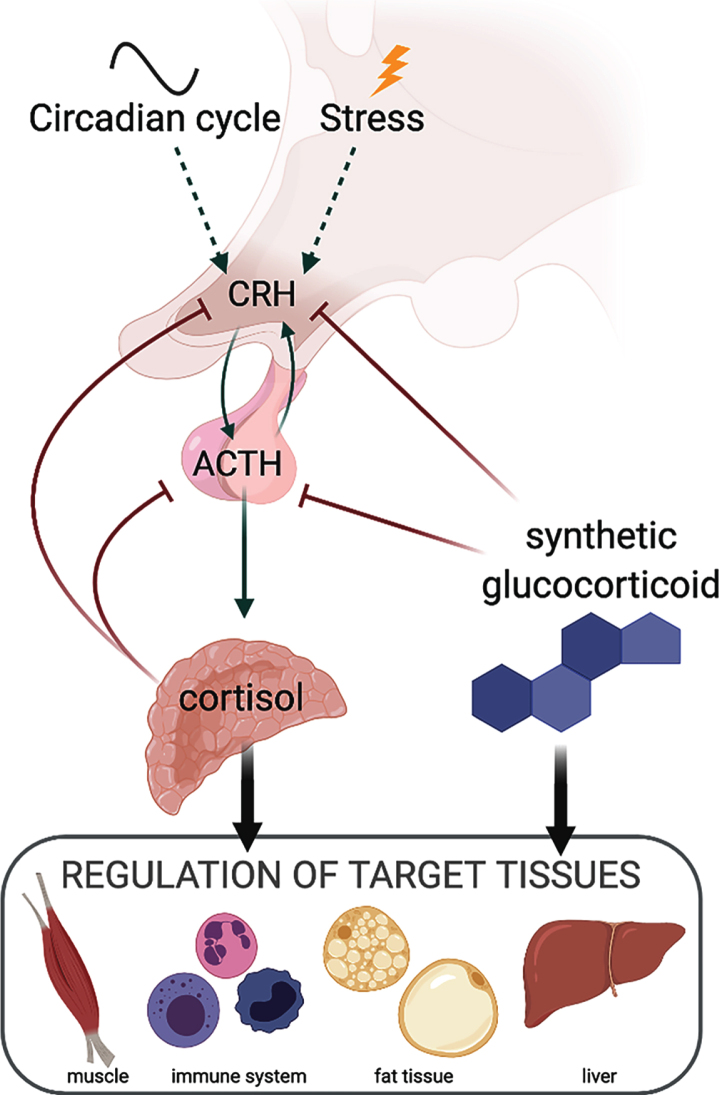
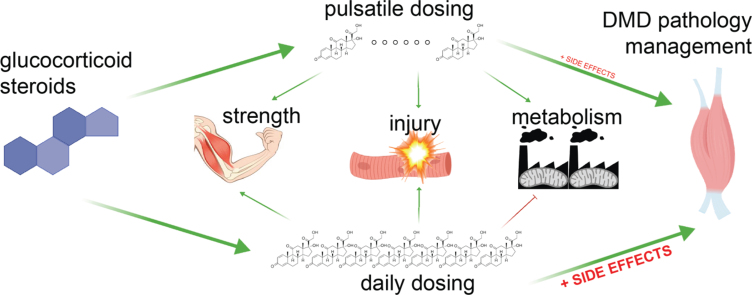
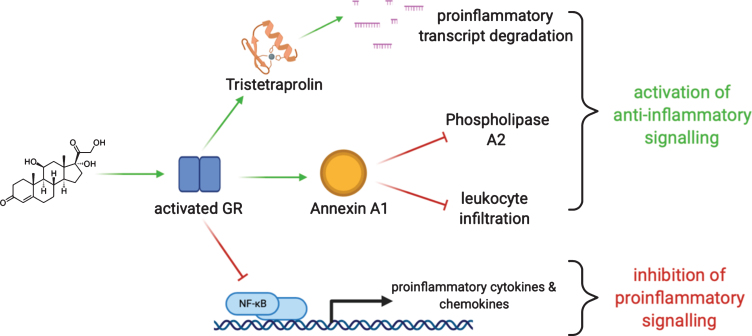
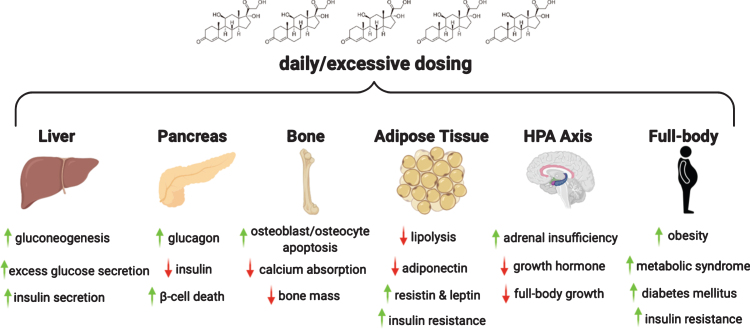
Glucocorticoid steroids are widely used as immunomodulatory agents in acute and chronic conditions. Glucocorticoid steroids such as prednisone and deflazacort are recommended for treating Duchenne Muscular Dystrophy where their use prolongs ambulation and life expectancy. Despite this benefit, glucocorticoid use in Duchenne Muscular Dystrophy is also associated with significant adverse consequences including adrenal suppression, growth impairment, poor bone health and metabolic syndrome. For other forms of muscular dystrophy like the limb girdle dystrophies, glucocorticoids are not typically used. Here we review the experimental evidence supporting multiple mechanisms of glucocorticoid action in dystrophic muscle including their role in dampening inflammation and myofiber injury. We also discuss alternative dosing strategies as well as novel steroid agents that are in development and testing, with the goal to reduce adverse consequences of prolonged glucocorticoid exposure while maximizing beneficial outcomes.
糖皮质激素类固醇被广泛用作急性和慢性疾病的免疫调节剂。泼尼松和地夫可特等糖皮质激素类固醇被推荐用于治疗杜氏肌营养不良症,其使用可延长患者的活动能力和预期寿命。尽管有此益处,但糖皮质激素在杜氏肌营养不良症中的使用也与显著的不良后果相关,包括肾上腺抑制、生长受损、骨骼健康不良和代谢综合征。对于其他形式的肌肉营养不良症,如肢带型肌营养不良症,通常不使用糖皮质激素。在这里,我们回顾了支持糖皮质激素在营养不良肌肉中发挥多种作用的实验证据,包括它们在抑制炎症和肌纤维损伤中的作用。我们还讨论了替代剂量策略以及正在开发和测试的新型类固醇药物,目的是在最大程度地提高有益结果的同时,减少长期糖皮质激素暴露的不良后果。