Chen Ke, Wan Xinxing, Zhao Liling, Zhao Shaoli, Peng Lin, Yang Wenjun, Yuan Jingjing, Zhu Liyong, Mo Zhaohui
Department of Endocrinology, The Third Xiangya Hospital of Central South University, Changsha, Hunan 410013, People's Republic of China.
Department of Nephrology, The First Hospital of Changsha, Changsha, Hunan 410005, People's Republic of China.
Diabetes Metab Syndr Obes. 2020 Oct 6;13:3535-3549. doi: 10.2147/DMSO.S273780. eCollection 2020.
Multiple symmetric lipomatosis (MSL) is a rare disease showing chronic progression of multiple, symmetrical, and non-encapsulated subcutaneous lipoma. The cause of the disease remains unknown.
This study reported and summarized 13 sporadic cases of Type I MSL patients in terms of histopathology and cellular and molecular biology and assessed the CBLB c.197A>T mutation in the IRS1-PI3K-Akt pathway.
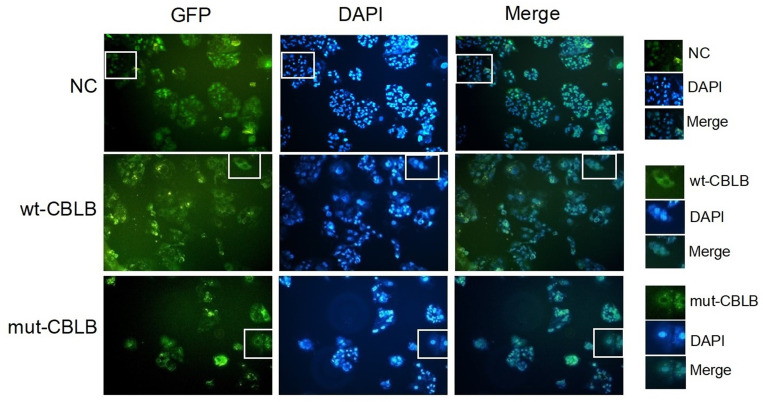
The clinical data showed that these 13 Type I patients were all male with a mean age of 57.0 ± 6.6 years old and consumed alcohol heavily. The laboratory tests revealed that most of the patients had hyperuricemia, diabetes, hyperinsulinemia, or insulin resistance; however, their blood lipid levels were close to a normal range. The imaging data exhibited lipomas that only occurred subcutaneously but not viscerally, ie, Types Ia (15.4%), Ib (30.8%), and Ic (53.8%). The molecular analyses of adipocytes of isoprenaline stimulated human adipose tissue-derived mesenchymal stromal cells (hADSCs) isolated from the adipose tissue lipoma-like masses (ATLLM) demonstrated that these adipocytes did not express UCP-1. The Cbl proto-oncogene B (CBLB), an E3 ubiquitin-protein ligase, was associated with insulin resistance and obesity and was mutated (ie, CBLB c.197A>T) in four MSL patients after the whole genome and Sanger sequencing of the blood samples. Furthermore, the CBLB c.197A>T mutation induced hADSC resistance to insulin by inactivation of the IRS-1-PI3K-AKT pathway.
This study analyzed clinical, histopathological, and cellular and molecular biological characterizations of 13 Type I MSL patients and identified the CBLB c.197A>T heterozygous mutation that could be responsible for MSL metabolic dysfunction or even MSL development.
多发性对称性脂肪瘤病(MSL)是一种罕见疾病,表现为多个、对称且无包膜的皮下脂肪瘤呈慢性进展。该病病因不明。
本研究报告并总结了13例散发的I型MSL患者的组织病理学、细胞及分子生物学情况,并评估了胰岛素受体底物1-磷脂酰肌醇-3-激酶-蛋白激酶B(IRS1-PI3K-Akt)信号通路中的CBLB基因c.197A>T突变。
临床数据显示,这13例I型患者均为男性,平均年龄57.0±6.6岁,且均有大量饮酒史。实验室检查表明,大多数患者有高尿酸血症、糖尿病、高胰岛素血症或胰岛素抵抗;然而,他们的血脂水平接近正常范围。影像学数据显示脂肪瘤仅发生于皮下,而非内脏,即Ia型(15.4%)、Ib型(30.8%)和Ic型(53.8%)。对从脂肪组织脂肪瘤样肿块(ATLLM)中分离出的异丙肾上腺素刺激的人脂肪组织来源间充质基质细胞(hADSCs)的脂肪细胞进行分子分析表明,这些脂肪细胞不表达解偶联蛋白1(UCP-1)。E3泛素蛋白连接酶Cbl原癌基因B(CBLB)与胰岛素抵抗和肥胖相关,对血液样本进行全基因组和桑格测序后发现,4例MSL患者中存在该基因的突变(即CBLB基因c.197A>T)。此外,CBLB基因c.197A>T突变通过使IRS-1-PI3K-AKT信号通路失活,导致hADSCs对胰岛素产生抵抗。
本研究分析了13例I型MSL患者的临床、组织病理学、细胞及分子生物学特征,并鉴定出CBLB基因c.197A>T杂合突变,该突变可能是MSL代谢功能障碍甚至发病的原因。