Department of Pathophysiology, Medical University of Lublin, Lublin, Poland.
Department of Child Neurology, Medical University of Lublin, Lublin, Poland.
Front Endocrinol (Lausanne). 2020 Sep 30;11:541802. doi: 10.3389/fendo.2020.541802. eCollection 2020.
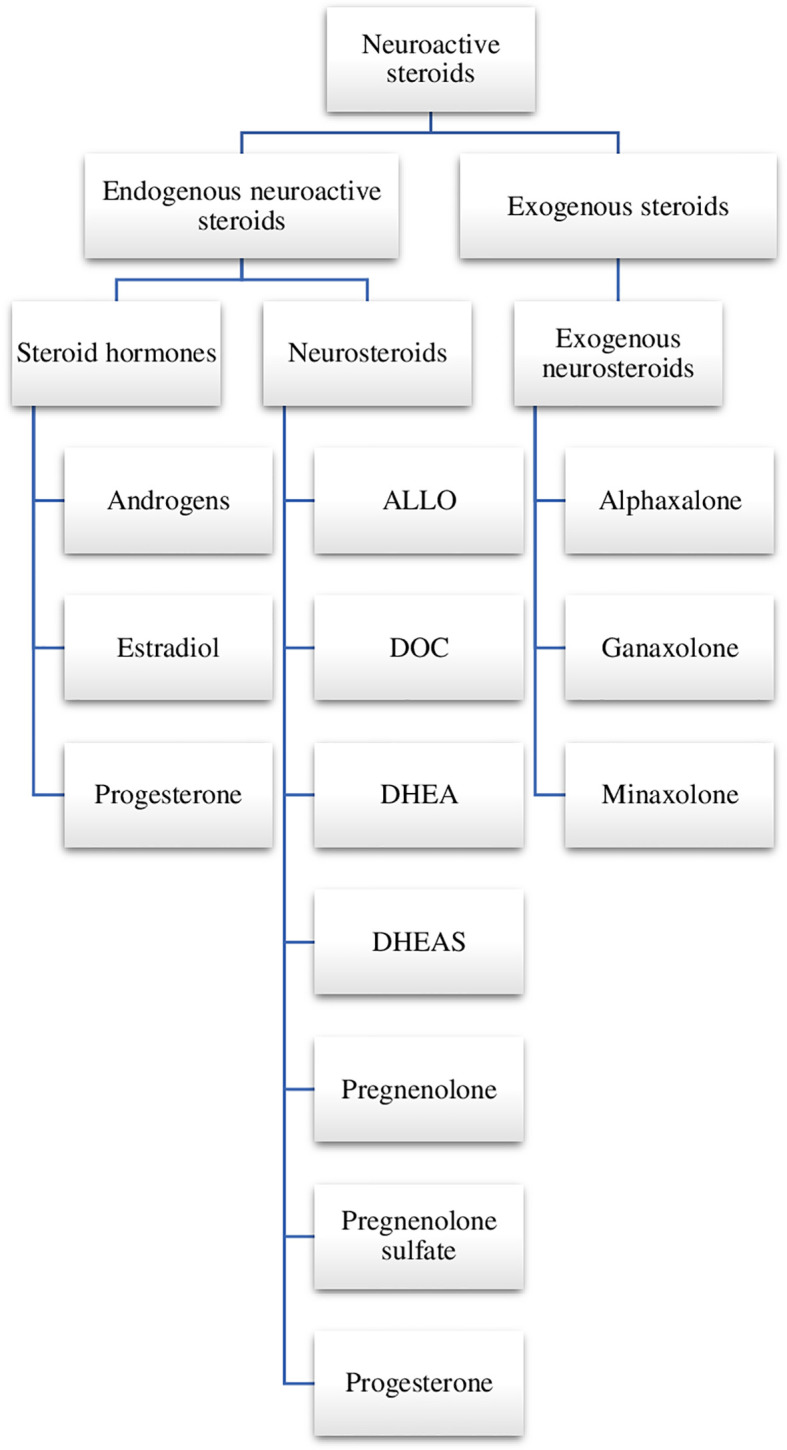
Still circa 25% to 30% of patients with epilepsy cannot be efficiently controlled with available antiepileptic drugs so newer pharmacological treatment options have been continuously searched for. In this context, a group of endogenous or exogenous neurosteroids allosterically positively modulating GABA-A receptors may offer a promising approach. Among endogenous neurosteroids synthesized in the brain, allopregnanolone or allotetrahydrodeoxycorticosterone have been documented to exert anticonvulsant activity in a number of experimental models of seizures-pentylenetetrazol-, bicuculline- pilocarpine-, or 6 Hz-induced convulsions in rodents. Neurosteroids can also inhibit fully kindled seizures and some of them have been reported to counteract maximal electroshock-induced convulsions. An exogenous neurosteroid, alphaxalone, significantly elevated the threshold for maximal electroconvulsions in mice but it did not potentiate the anticonvulsive action of a number of conventional antiepileptic drugs against maximal electroshock-induced seizures. Androsterone not only elevated the threshold but significantly enhanced the protective action of carbamazepine, gabapentin and phenobarbital against maximal electroshock in mice, as well. Ganaxolone (a 3beta-methylated analog of allopregnanolone) needs special consideration for two reasons. First, it performed better than conventional antiepileptic drugs, diazepam or valproate, in suppressing convulsive and lethal effects of pentylenetetrazol in pentylenetetrazol-kindled mice. Second, ganaxolone has been evaluated in the randomized, double-blind, placebo-controlled phase 2 trial in patients with intractable partial seizures, taking maximally 3 antiepileptic drugs. The initial results indicate that add-on therapy with ganaxolone resulted in reduced seizure frequency with adverse effect being mainly mild to moderate. Possibly, ganaxolone may be also considered against catamenial seizures. Some positive effects of ganaxolone as an adjuvant were also observed in children with refractory seizures and its use may also prove efficient for the management of neonatal seizures associated with hypoxic injury. Neurosteroids positively modulating GABA-A receptor complex exert anticonvulsive activity in many experimental models of seizures. Their interactions with antiepileptic drugs seem ambiguous in mice. Initial clinical data indicate that ganaxolone may provide a better seizure control in patients with drug-resistant epilepsy.
尽管目前约有 25%至 30%的癫痫患者无法通过现有抗癫痫药物得到有效控制,但人们一直在不断寻找新的药理学治疗方法。在这种情况下,一组内源性或外源性神经甾体,通过变构方式正向调节 GABA-A 受体,可能提供一种有前景的治疗方法。在大脑中合成的内源性神经甾体中,已发现别孕烯醇酮或别四氢脱氧皮质酮在许多实验性癫痫发作模型中发挥抗惊厥作用,如戊四氮、荷包牡丹碱、匹鲁卡品或 6Hz 诱导的啮齿动物惊厥。神经甾体还可以抑制完全点燃的癫痫发作,一些神经甾体已被报道可对抗最大电休克诱导的惊厥。一种外源性神经甾体,阿尔法羟孕酮,可显著提高最大电休克诱导惊厥的阈值,但它不能增强多种传统抗癫痫药物对最大电休克诱导惊厥的抗惊厥作用。雄酮不仅提高了阈值,而且显著增强了卡马西平、加巴喷丁和苯巴比妥对最大电休克的保护作用。3β-甲基化的别孕烯醇酮类似物, ganaxolone 需要特别考虑,原因有二。首先,它在抑制戊四氮点燃的小鼠戊四氮致惊厥和致死作用方面优于传统抗癫痫药物,地西泮或丙戊酸。其次,ganaxolone 已在随机、双盲、安慰剂对照的 2 期临床试验中进行了评估,用于治疗难治性部分性癫痫发作,患者最多使用 3 种抗癫痫药物。初步结果表明,ganaxolone 的附加治疗可降低癫痫发作频率,不良反应主要为轻度至中度。可能,ganaxolone 也可用于治疗月经性癫痫发作。在难治性癫痫发作的儿童中也观察到 ganaxolone 作为辅助治疗的一些积极效果,其使用也可能对与缺氧损伤相关的新生儿癫痫发作的管理有效。正向调节 GABA-A 受体复合物的神经甾体在许多实验性癫痫发作模型中具有抗惊厥作用。它们在小鼠中的与抗癫痫药物的相互作用似乎并不明确。初步临床数据表明,ganaxolone 可能为耐药性癫痫患者提供更好的癫痫控制。