Department of Biotechnology, PSG College of Technology, Coimbatore, Tamil Nadu, India.
PLoS One. 2020 Oct 29;15(10):e0225487. doi: 10.1371/journal.pone.0225487. eCollection 2020.
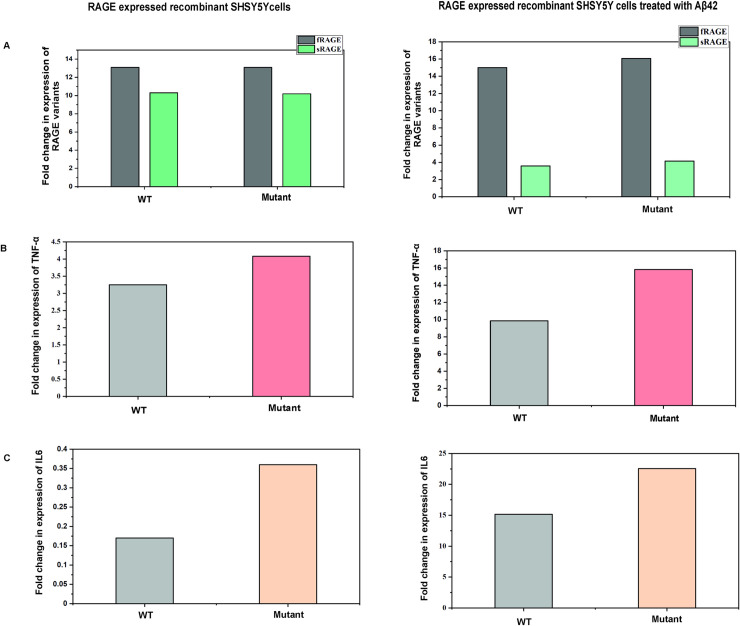
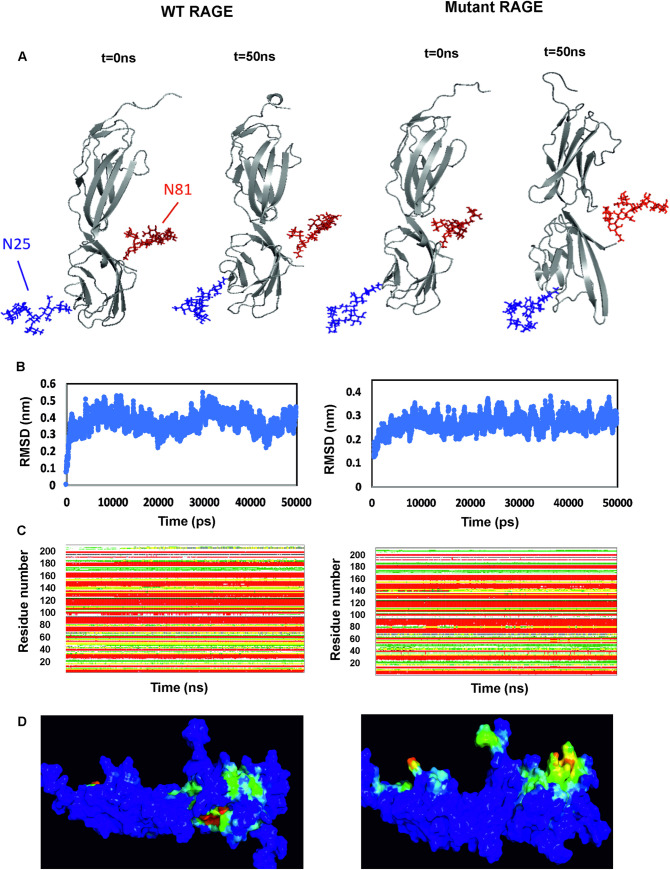
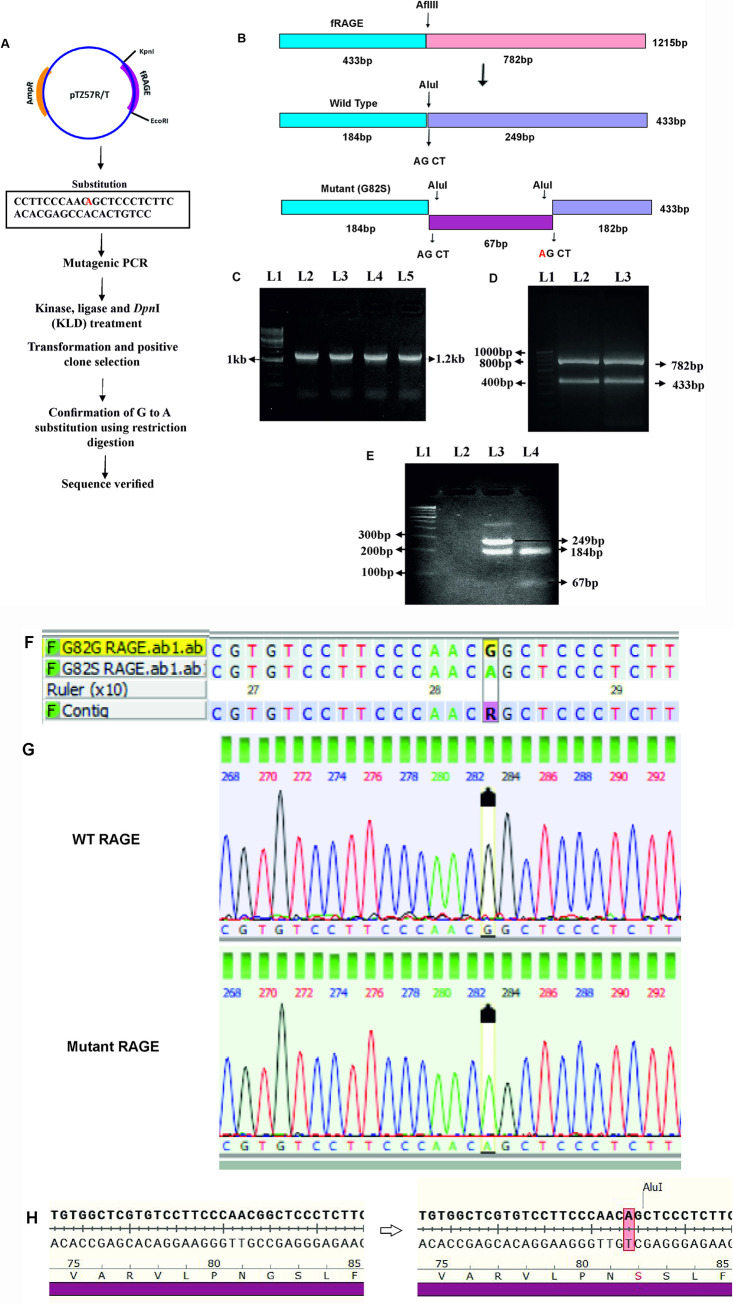
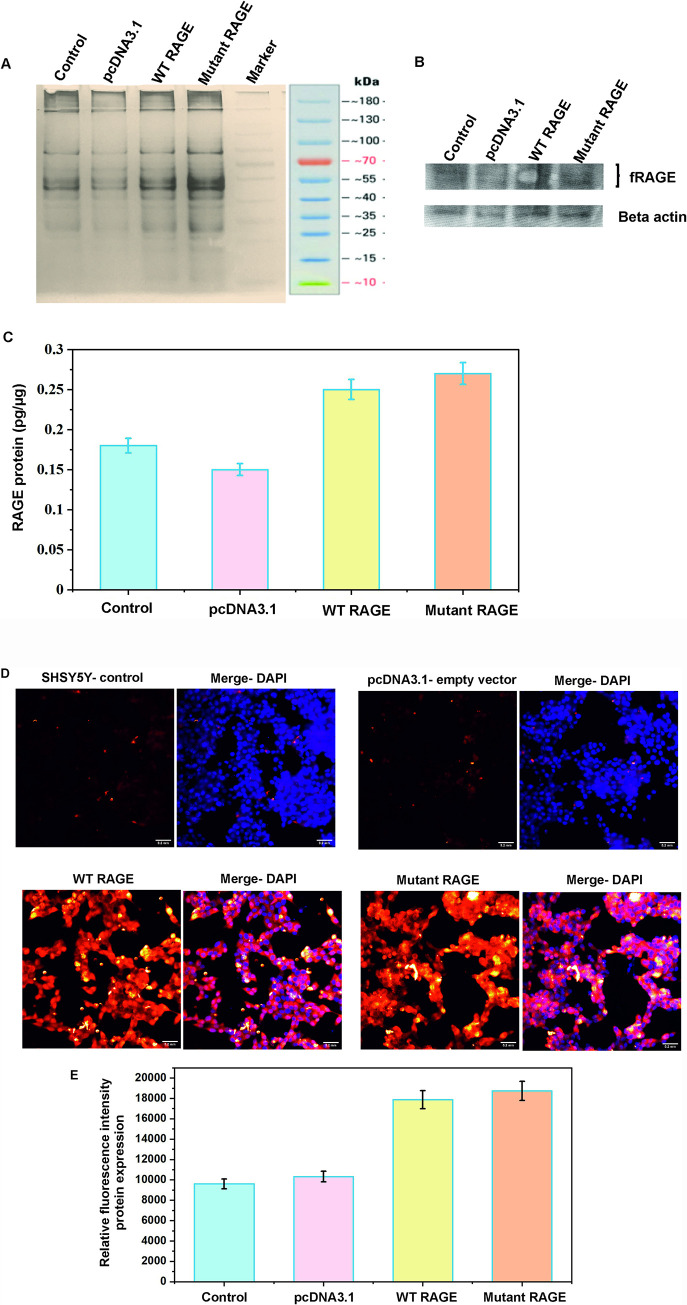
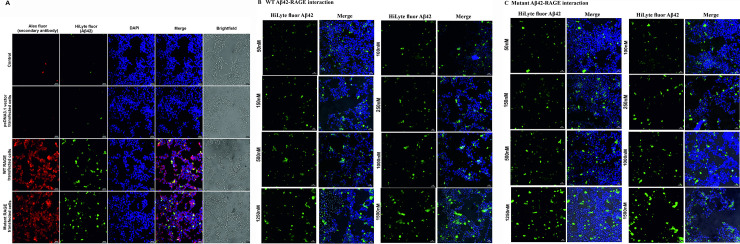
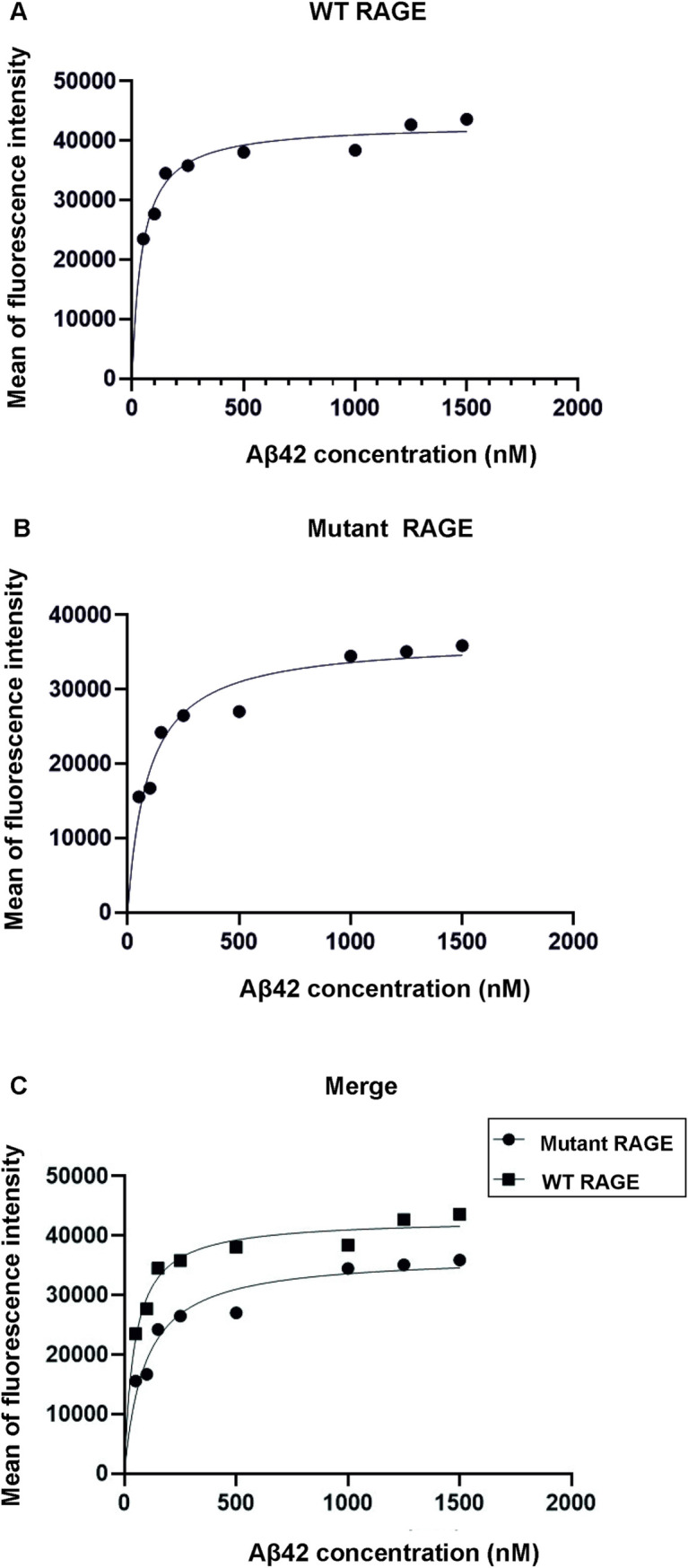
Receptor for advanced glycation end products (RAGE) has been implicated in the pathophysiology of Alzheimers disease(AD) due to its ability to bind amyloid-beta (Aβ42) and mediate inflammatory response. G82S RAGE polymorphism is associated with AD but the molecular mechanism for this association is not understood. Our previous in silico study indicated a higher binding affinity for mutated G82S RAGE, which could be caused due to changes in N linked glycosylation at residue N81. To confirm this hypothesis, in the present study molecular dynamics (MD) simulations were used to simulate the wild type (WT) and G82S glycosylated structures of RAGE to identify the global structural changes and to find the binding efficiency with Aβ42 peptide. Binding pocket analysis of the MD trajectory showed that cavity/binding pocket in mutant G82S glycosylated RAGE variants is more exposed and accessible to external ligands compared to WT RAGE, which can enhance the affinity of RAGE for Aβ. To validate the above concept, an in vitro binding study was carried using SHSY5Y cell line expressing recombinant WT and mutated RAGE variant individually to which HiLyte Fluor labeled Aβ42 was incubated at different concentrations. Saturated binding kinetics method was adopted to determine the Kd values for Aβ42 binding to RAGE. The Kd value for Aβ42- WT and Aβ42-mutant RAGE binding were 92±40 nM (95% CI-52 to 152nM; R2-0.92) and 45±20 nM (95% CI -29 to 64nM; R2-0.93), respectively. The Kd value of <100nM observed for both variants implicates RAGE as a high-affinity receptor for Aβ42 and mutant RAGE has higher affinity compared to WT. The alteration in binding affinity is responsible for activation of the inflammatory pathway as implicated by enhanced expression of TNFα and IL6 in mutant RAGE expressing cell line which gives a mechanistic view for the G82S RAGE association with AD.
晚期糖基化终产物受体(RAGE)能够与淀粉样蛋白-β(Aβ42)结合并介导炎症反应,因此其与阿尔茨海默病(AD)的病理生理学有关。G82S RAGE 多态性与 AD 相关,但这种关联的分子机制尚不清楚。我们之前的计算机研究表明,突变的 G82S RAGE 具有更高的结合亲和力,这可能是由于残基 N81 的 N 连接糖基化发生变化所致。为了证实这一假设,本研究采用分子动力学(MD)模拟来模拟野生型(WT)和 G82S 糖基化 RAGE 结构,以确定全局结构变化,并找到与 Aβ42 肽的结合效率。MD 轨迹的结合口袋分析表明,与 WT RAGE 相比,突变的 G82S 糖基化 RAGE 变体的空腔/结合口袋更加暴露和易于与外部配体结合,从而增强了 RAGE 与 Aβ 的亲和力。为了验证上述概念,我们使用表达重组 WT 和突变 RAGE 变体的 SHSY5Y 细胞系进行了体外结合研究,分别将高亮度荧光标记的 Aβ42 孵育在不同浓度下。采用饱和结合动力学方法确定 Aβ42 与 RAGE 结合的 Kd 值。Aβ42-WT 和 Aβ42-突变 RAGE 结合的 Kd 值分别为 92±40 nM(95%置信区间-52 至 152 nM;R2-0.92)和 45±20 nM(95%置信区间-29 至 64 nM;R2-0.93)。两种变体的 Kd 值均<100 nM,表明 RAGE 是 Aβ42 的高亲和力受体,而突变 RAGE 的亲和力高于 WT。结合亲和力的改变负责激活炎症途径,这正如在表达突变 RAGE 的细胞系中 TNFα 和 IL6 的表达增强所表明的那样,这为 G82S RAGE 与 AD 的关联提供了一种机制观点。