Döring Jan Henje, Saffari Afshin, Bast Thomas, Brockmann Knut, Ehrhardt Laura, Fazeli Walid, Janzarik Wibke G, Kluger Gerhard, Muhle Hiltrud, Møller Rikke S, Platzer Konrad, Santos Joana Larupa, Bache Iben, Bertsche Astrid, Bonfert Michaela, Borggräfe Ingo, Broser Philip J, Datta Alexandre N, Hammer Trine Bjørg, Hartmann Hans, Hasse-Wittmer Anette, Henneke Marco, Kühne Hermann, Lemke Johannes R, Maier Oliver, Matzker Eva, Merkenschlager Andreas, Opp Joachim, Patzer Steffi, Rostasy Kevin, Stark Birgit, Strzelczyk Adam, von Stülpnagel Celina, Weber Yvonne, Wolff Markus, Zirn Birgit, Hoffmann Georg Friedrich, Kölker Stefan, Syrbe Steffen
Division of Paediatric Epileptology, Centre for Paediatric and Adolescent Medicine, University Hospital Heidelberg, 69120 Heidelberg, Germany.
Division of Paediatric Neurology and Metabolic Medicince, Centre for Paediatric and Adolescent Medicine, University Hospital, 69120 Heidelberg, Germany.
Biomedicines. 2020 Oct 28;8(11):456. doi: 10.3390/biomedicines8110456.
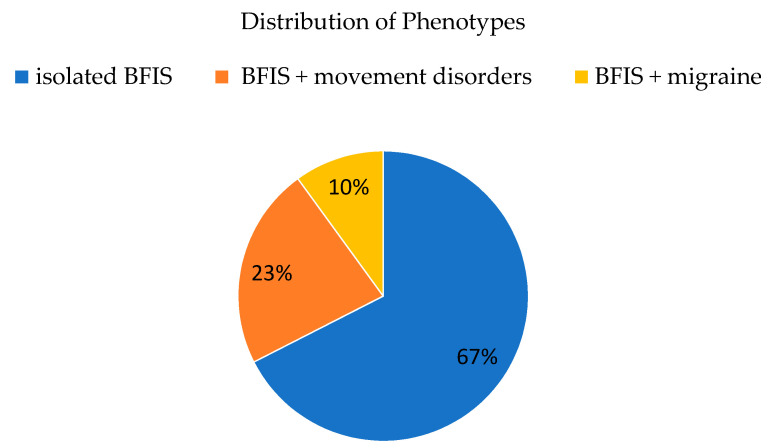
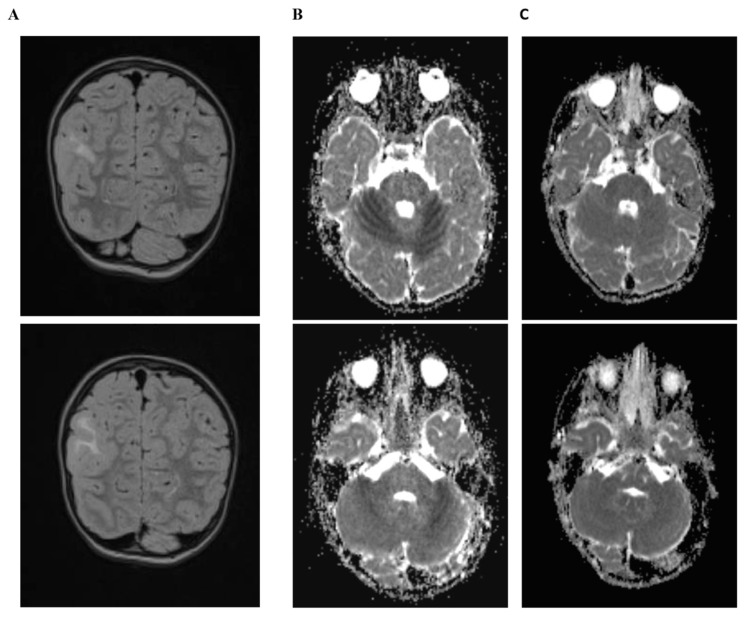
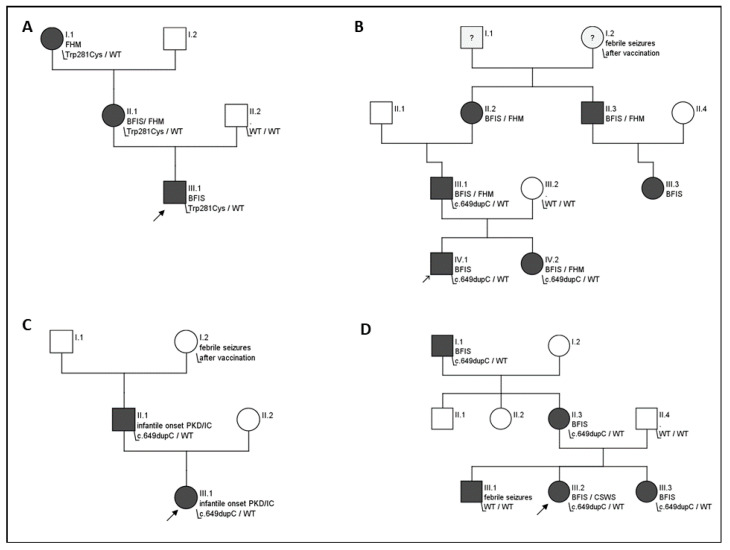
Pathogenic variants in , encoding the proline-rich transmembrane protein 2, have been associated with an evolving spectrum of paroxysmal neurologic disorders. Based on a cohort of children with PRRT2-related infantile epilepsy, this study aimed at delineating the broad clinical spectrum of PRRT2-associated phenotypes in these children and their relatives. Only a few recent larger cohort studies are on record and findings from single reports were not confirmed so far. We collected detailed genetic and phenotypic data of 40 previously unreported patients from 36 families. All patients had benign infantile epilepsy and harbored pathogenic variants in (core cohort). Clinical data of 62 family members were included, comprising a cohort of 102 individuals (extended cohort) with PRRT2-associated neurological disease. Additional phenotypes in the cohort of patients with benign sporadic and familial infantile epilepsy consist of movement disorders with paroxysmal kinesigenic dyskinesia in six patients, infantile-onset movement disorders in 2 of 40 individuals, and episodic ataxia after mild head trauma in one girl with bi-allelic variants in . The same girl displayed a focal cortical dysplasia upon brain imaging. Familial hemiplegic migraine and migraine with aura were reported in nine families. A single individual developed epilepsy with continuous spikes and waves during sleep. In addition to known variants, we report the novel variant c.843G>T, p.(Trp281Cys) that co-segregated with benign infantile epilepsy and migraine in one family. Our study highlights the variability of clinical presentations of patients harboring pathogenic variants and expands the associated phenotypic spectrum.
编码富含脯氨酸跨膜蛋白2的基因中的致病性变异,与一系列不断演变的阵发性神经系统疾病有关。基于一组患有PRRT2相关婴儿癫痫的儿童,本研究旨在描绘这些儿童及其亲属中PRRT2相关表型的广泛临床谱。目前仅有少数近期的大型队列研究记录在案,且单篇报告的研究结果尚未得到证实。我们收集了来自36个家庭的40例既往未报告患者的详细遗传和表型数据。所有患者均患有良性婴儿癫痫,且在该基因(核心队列)中携带致病性变异。纳入了62名家庭成员的临床数据,包括一组102名患有PRRT2相关神经系统疾病的个体(扩展队列)。在患有良性散发性和家族性婴儿癫痫的患者队列中,其他表型包括6例患者出现伴有发作性运动诱发性运动障碍的运动障碍、40例个体中有2例出现婴儿期起病的运动障碍,以及1名携带该基因双等位基因变异的女孩在轻度头部外伤后出现发作性共济失调。同一女孩脑部成像显示有局灶性皮质发育异常。9个家庭报告了家族性偏瘫性偏头痛和有先兆偏头痛。1名个体出现睡眠期持续棘慢波癫痫。除了已知变异外,我们还报告了新变异c.843G>T,p.(Trp281Cys),该变异在一个家庭中与良性婴儿癫痫和偏头痛共分离。我们的研究突出了携带致病性该基因变异患者临床表现的变异性,并扩展了相关表型谱。