Adadey Samuel Mawuli, Wonkam-Tingang Edmond, Twumasi Aboagye Elvis, Nayo-Gyan Daniel Wonder, Boatemaa Ansong Maame, Quaye Osbourne, Awandare Gordon A, Wonkam Ambroise
West African Centre for Cell Biology of Infectious Pathogens (WACCBIP), University of Ghana, P.O. Box LG 54, Legon, Accra GA184, Greater Accra Region, Ghana.
Department of Biochemistry, Cell and Molecular Biology, University of Ghana, P.O. Box LG 54, Legon Accra GA184, Greater Accra Region, Ghana.
Life (Basel). 2020 Oct 28;10(11):258. doi: 10.3390/life10110258.
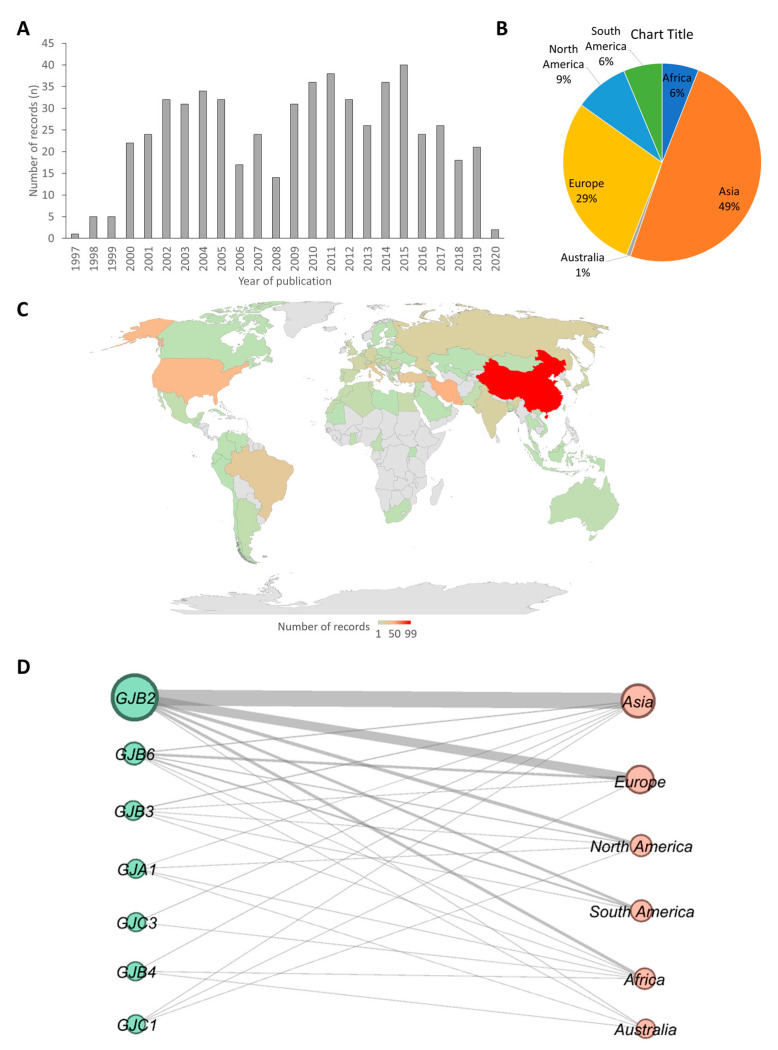
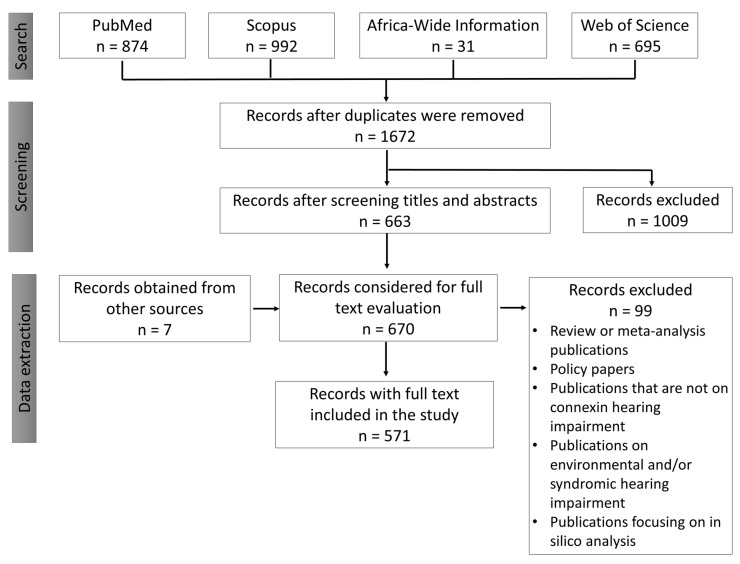
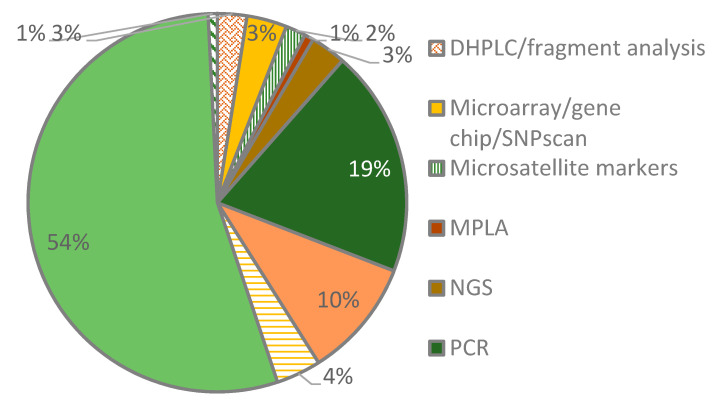
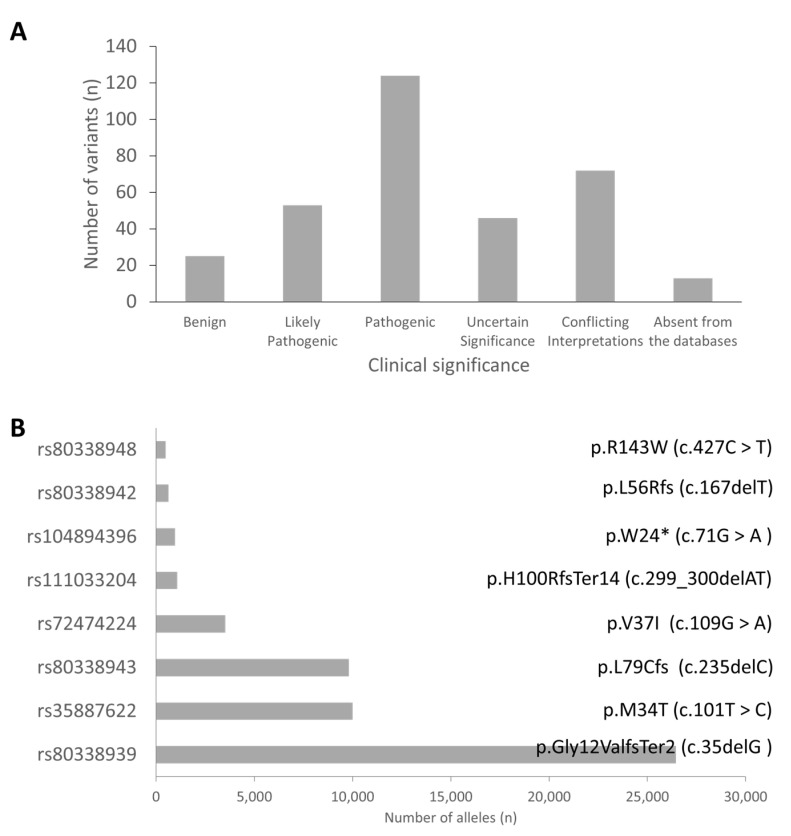
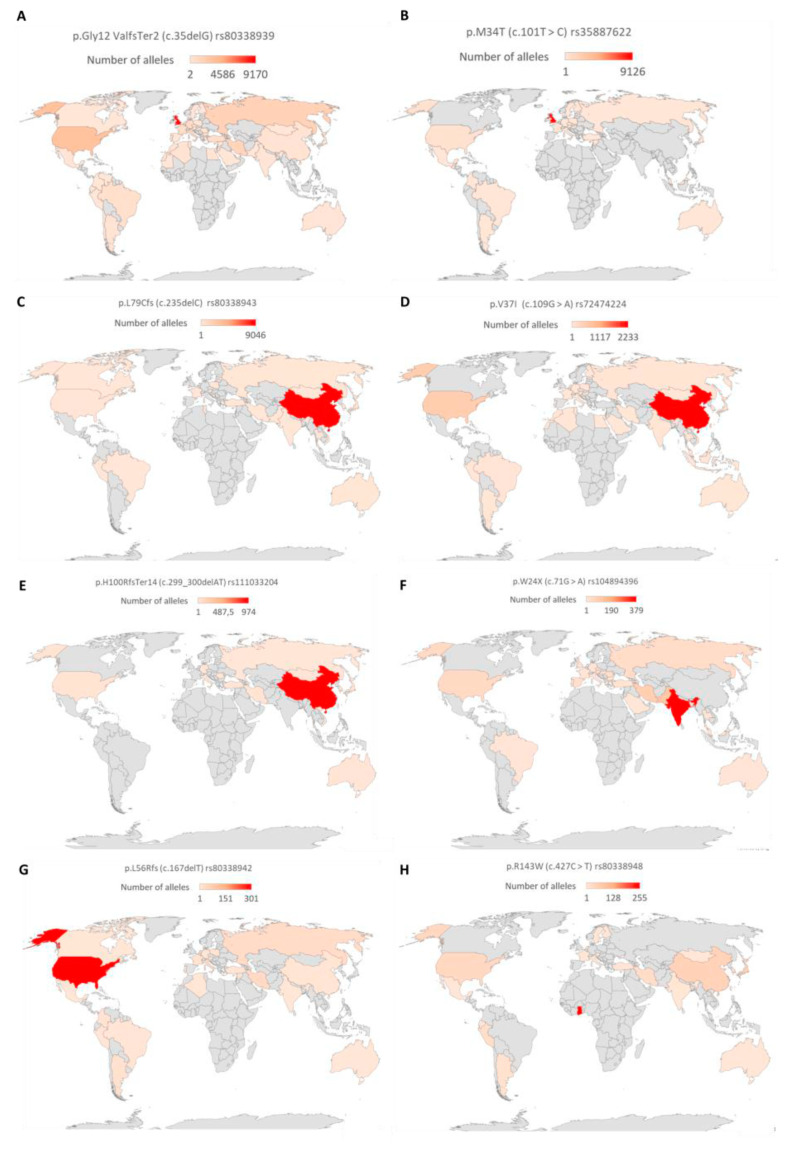
Mutations in connexins are the most common causes of hearing impairment (HI) in many populations. Our aim was to review the global burden of pathogenic and likely pathogenic (PLP) variants in connexin genes associated with HI. We conducted a systematic review of the literature based on targeted inclusion/exclusion criteria of publications from 1997 to 2020. The databases used were PubMed, Scopus, Africa-Wide Information, and Web of Science. The protocol was registered on PROSPERO, the International Prospective Register of Systematic Reviews, with the registration number "CRD42020169697". The data extracted were analyzed using Microsoft Excel and SPSS version 25 (IBM, Armonk, New York, United States). A total of 571 independent studies were retrieved and considered for data extraction with the majority of studies (47.8% ( = 289)) done in Asia. Targeted sequencing was found to be the most common technique used in investigating connexin gene mutations. We identified seven connexin genes that were associated with HI, and (520/571 publications) was the most studied among the seven. Excluding PLP in , , and the other connexin gene variants (thus , , , and variants) had conflicting association with HI. Biallelic PLP variants were the most common and widespread variants associated with non-syndromic hearing impairment (NSHI) in different global populations but absent in most African populations. The most common alleles found to be predominant in specific populations include; p.Gly12ValfsTer2 in Europeans, North Africans, Brazilians, and Americans; p.V37I and p.L79Cfs in Asians; p.W24X in Indians; p.L56Rfs in Americans; and the founder mutation p.R143W in Africans from Ghana, or with putative Ghanaian ancestry. The present review suggests that only and are recognized and validated HI genes. The findings call for an extensive investigation of the other connexin genes in many populations to elucidate their contributions to HI, in order to improve gene-disease pair curations, globally.
连接蛋白突变是许多人群中听力障碍(HI)最常见的病因。我们的目的是综述与HI相关的连接蛋白基因中致病和可能致病(PLP)变异的全球负担。我们根据1997年至2020年出版物的目标纳入/排除标准对文献进行了系统综述。使用的数据库有PubMed、Scopus、非洲全信息数据库和科学网。该方案已在国际前瞻性系统综述注册库PROSPERO上注册,注册号为“CRD42020169697”。提取的数据使用Microsoft Excel和SPSS 25版(IBM,美国纽约州阿蒙克)进行分析。共检索到571项独立研究并考虑进行数据提取,其中大多数研究(47.8%(=289))在亚洲进行。靶向测序是研究连接蛋白基因突变最常用的技术。我们鉴定出7个与HI相关的连接蛋白基因,其中(520/571篇出版物)是这7个基因中研究最多的。排除、和中的PLP后,其他连接蛋白基因变异(即、、和变异)与HI的关联存在冲突。双等位基因PLP变异是不同全球人群中与非综合征性听力障碍(NSHI)相关的最常见和分布最广的变异,但在大多数非洲人群中不存在。在特定人群中发现占主导地位的最常见等位基因包括:欧洲人、北非人、巴西人和美国人中的p.Gly12ValfsTer2;亚洲人中的p.V37I和p.L79Cfs;印度人中的p.W24X;美国人中的p.L56Rfs;以及来自加纳或有假定加纳血统的非洲人中的奠基者突变p.R143W。本综述表明,只有和是公认且经过验证的HI基因。这些发现呼吁对许多人群中的其他连接蛋白基因进行广泛研究,以阐明它们对HI的贡献,从而在全球范围内改善基因-疾病配对的管理。