Notsu Kosuke, Wiratsudakul Anuwat, Mitoma Shuya, El Daous Hala, Kaneko Chiho, El-Khaiat Heba M, Norimine Junzo, Sekiguchi Satoshi
Graduate School of Medicine and Veterinary Medicine, University of Miyazaki, Miyazaki 889-1692, Japan.
Department of Clinical Sciences and Public Health, Faculty of Veterinary Science, Mahidol University,Nakhon Pathom 73170, Thailand.
Pathogens. 2020 Oct 28;9(11):903. doi: 10.3390/pathogens9110903.
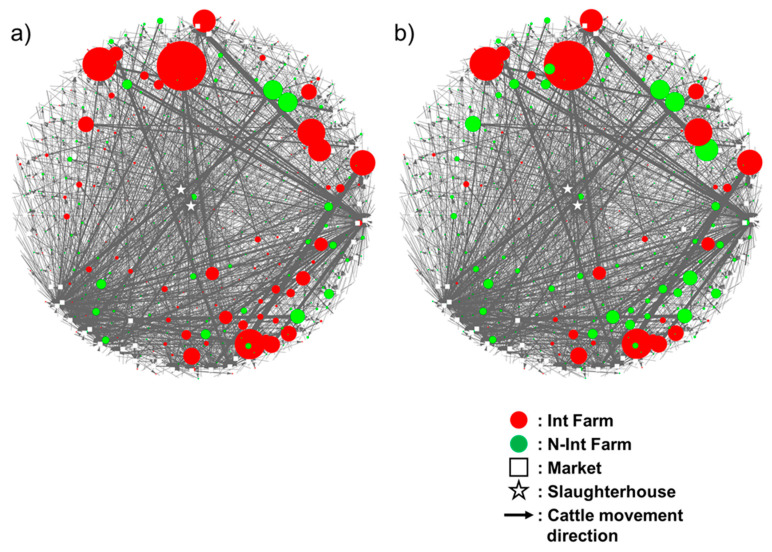
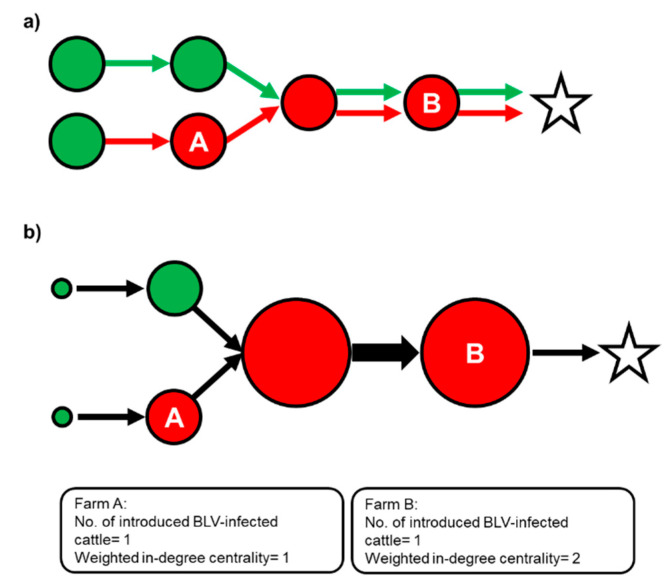
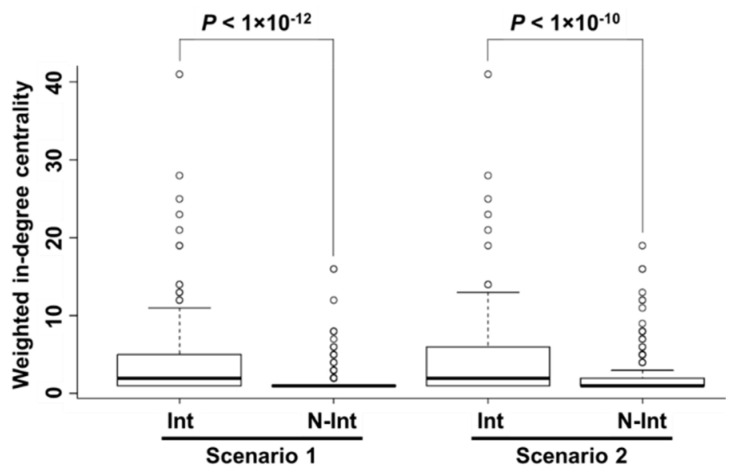
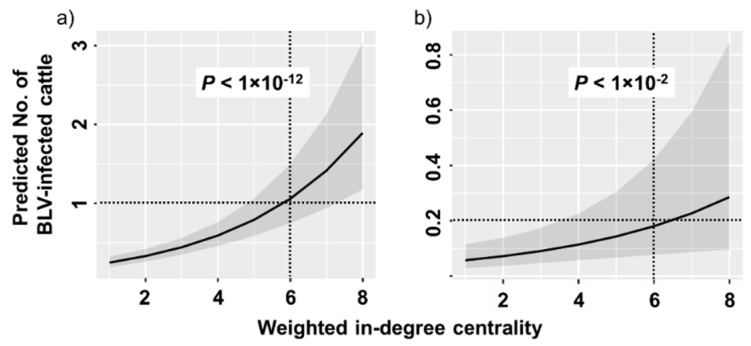
The cattle industry is suffering economic losses caused by bovine leukemia virus (BLV) and enzootic bovine leukosis (EBL), the clinical condition associated with BLV infection. This pathogen spreads easily without detection by farmers and veterinarians due to the lack of obvious clinical signs. Cattle movement strongly contributes to the inter-farm transmission of BLV. This study quantified the farm-level risk of BLV introduction using a cattle movement analysis. A generalized linear mixed model predicting the proportion of BLV-infected cattle was constructed based on weighted in-degree centrality. Our results suggest a positive association between weighted in-degree centrality and the estimated number of introduced BLV-infected cattle. Remarkably, the introduction of approximately six cattle allowed at least one BLV-infected animal to be added to the farm in the worst-case scenario. These data suggest a high risk of BLV infection on farms with a high number of cattle being introduced. Our findings indicate the need to strengthen BLV control strategies, especially along the chain of cattle movement.
养牛业正遭受由牛白血病病毒(BLV)和地方流行性牛白血病(EBL,与BLV感染相关的临床病症)造成的经济损失。由于缺乏明显的临床症状,这种病原体很容易传播,而农民和兽医却难以察觉。牛的移动在很大程度上促成了BLV在农场间的传播。本研究通过牛移动分析对农场层面引入BLV的风险进行了量化。基于加权入度中心性构建了一个预测BLV感染牛比例的广义线性混合模型。我们的结果表明加权入度中心性与引入的BLV感染牛的估计数量之间存在正相关。值得注意的是,在最坏的情况下,引入大约六头牛就会使农场至少新增一头感染BLV的动物。这些数据表明,引入大量牛的农场存在很高的BLV感染风险。我们的研究结果表明需要加强BLV控制策略,特别是在牛移动链上。