Department of Midwifery, College of Health Sciences, Debre Tabor University, Debre Tabor, Ethiopia.
Department of Public Health, College of Health Sciences, Debre Tabor University, Debre Tabor, Ethiopia.
Ital J Pediatr. 2020 Oct 30;46(1):162. doi: 10.1186/s13052-020-00921-5.
Every year, 1.3 million young people reported to die from preventable causes of death. Parent-adolescent communication on sexuality is critical in informing youth about risk and protective behaviors which in turn decrease the likelihood of involvement in risky sexual behaviors. This systematic review and meta-analysis was intended to assess the prevalence of parent-adolescent communication on sexual and reproductive health (SRH) issues and its associated factors in Ethiopia.
PubMed, EMBASE, HINARI, Google Scholar, and University repositories were used to search studies. Article search was conducted from May 20 to June 9, 2020. Critical appraisal of studies was conducted using Newcastle-Ottawa Quality Assessment Scale (NOS). Data analysis was conducted using Stata 11 software following the abstraction of data using a format prepared on Microsoft excel. The heterogeneity of studies was tested using Cochran (Q test) and I test statistics. Similarly, funnel plot and Egger's regression asymmetry were used to assess publication bias. Subgroup analysis was conducted based on study Regions and sample size.
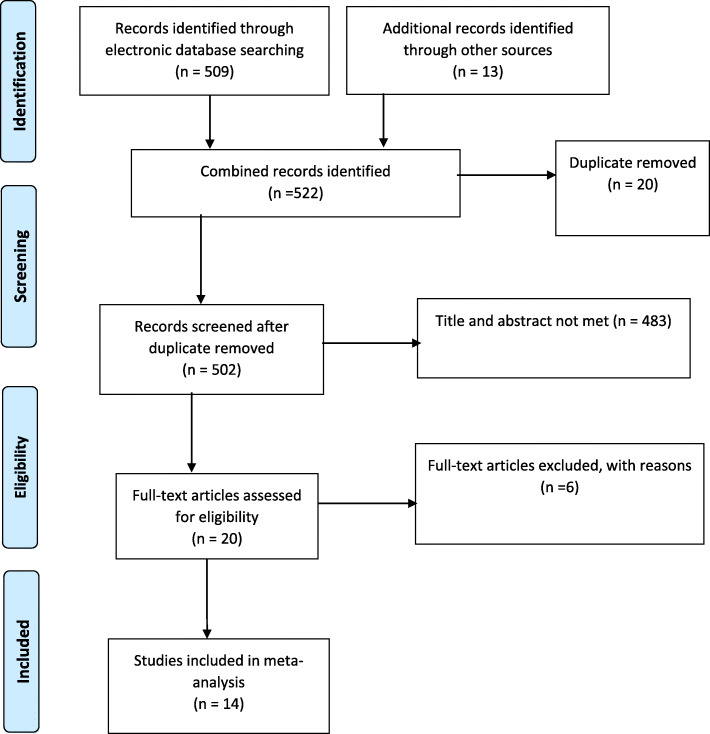
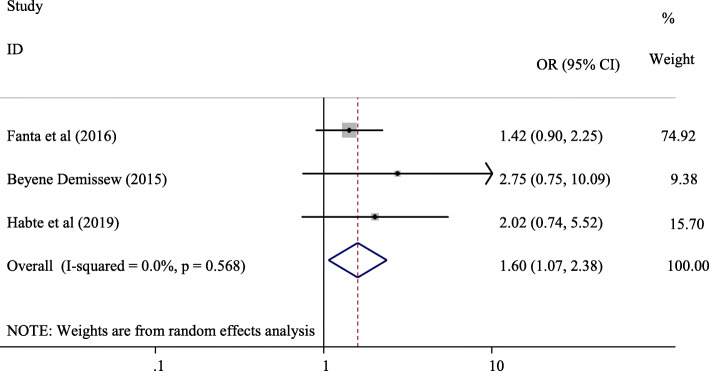
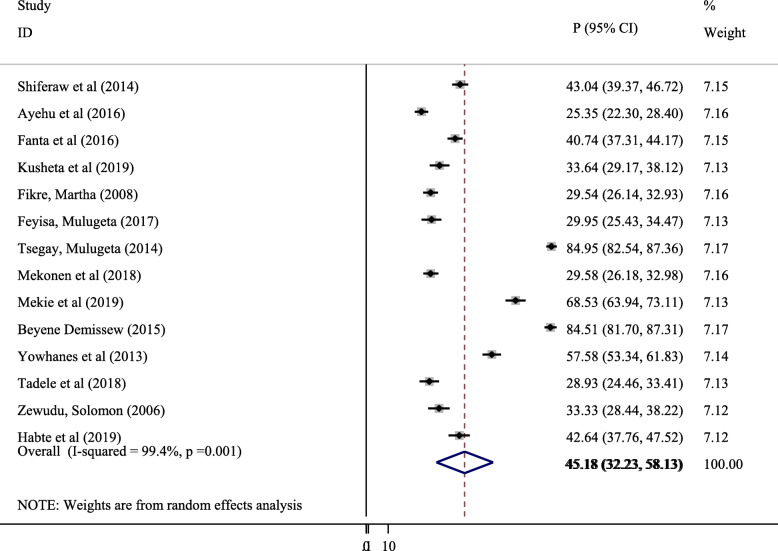
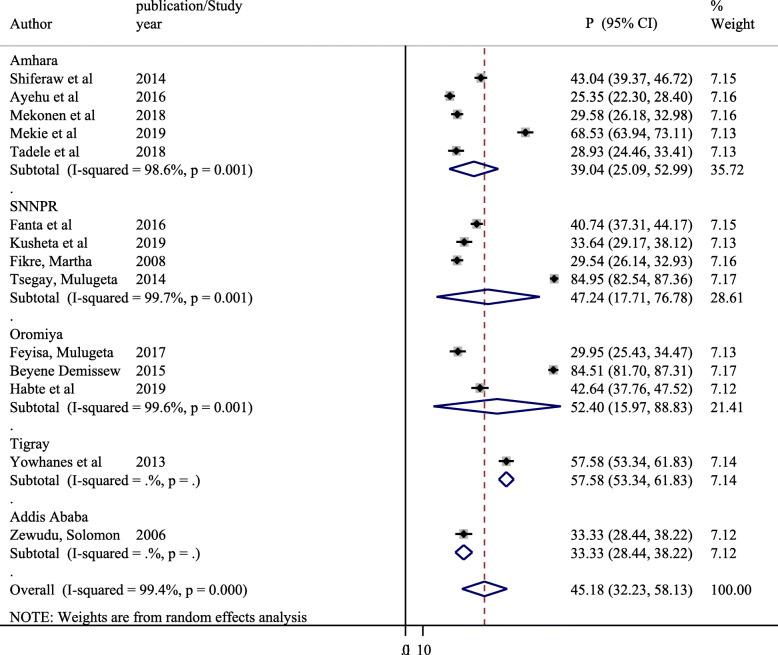
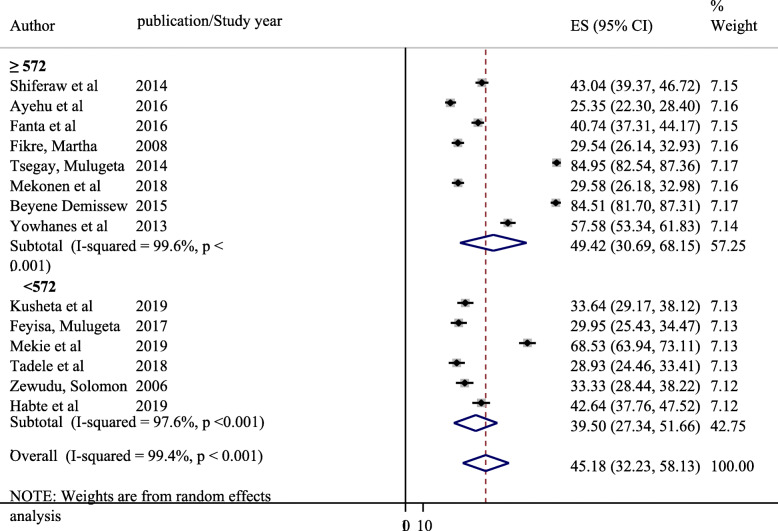
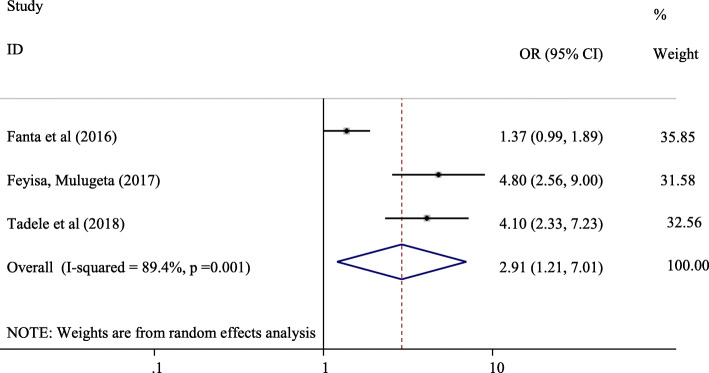
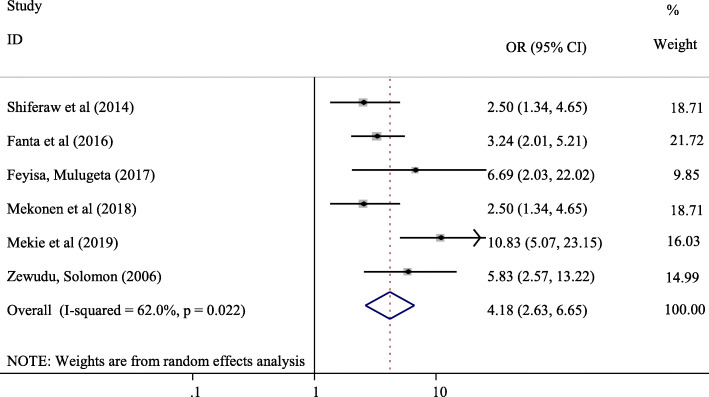
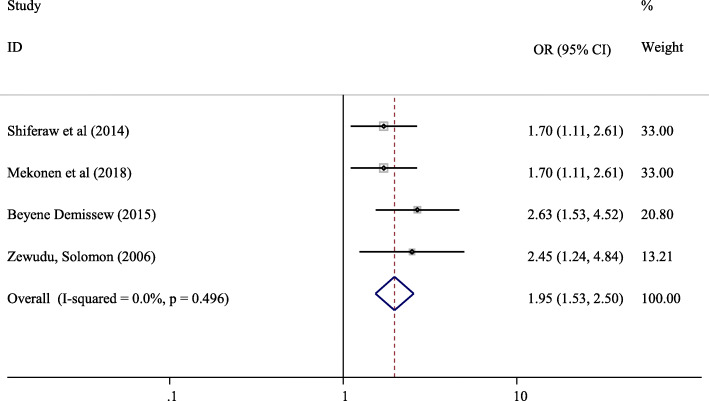
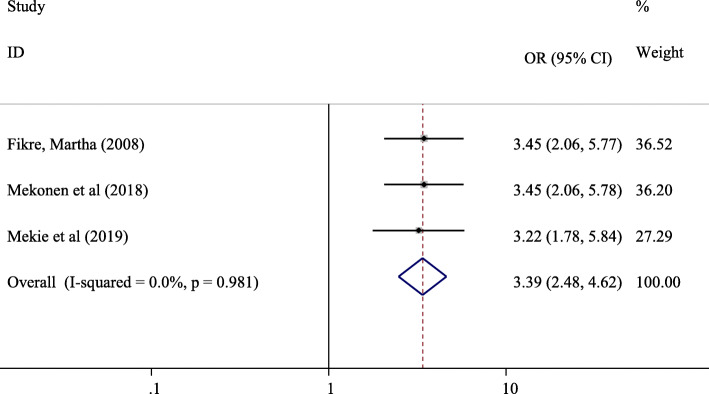
Fourteen studies with sample of 8018 adolescents were included in this systematic review and meta-analysis. The pooled prevalence of parent-adolescent communication on SRH issues in Ethiopia was found to be 45.18% (95%, CI, 32.23, 58.13%). Adolescents' knowledge of reproductive health matters (OR = 2.91, 95% CI:1.21, 7.01), believe on importance of discussion on SRH issues (OR = 4.18, 95% CI: 2.63, 6.65), had history of sexual exposure (OR = 1.95, 95% CI: 1.53, 2.50), parents openness to discuss SRH issues (OR = 3.39, 95% CI: (2.48, 4.62), and being female (OR = 1.60, 95% CI:1.07, 2.38) were the positive predictors of parent-adolescent communications on SRH issues.
The prevalence of parent-adolescent communication on SRH issues was found to be low. Knowledge of adolescents about reproductive health matters, believe on the importance of discussion on reproductive health issues, history of sexual exposure, parents' openness to discuss SRH issues, and being female were found to be the positive predictors of parent-adolescent communication on SRH issues in Ethiopia. The finding our study indicated that evidence based education about reproductive health matters could significant to improve adolescent parent communication on SRH issues.
每年,有 130 万年轻人死于可预防的死因。父母与青少年就性行为进行沟通对于告知青少年风险和保护行为至关重要,这反过来又降低了他们参与危险性行为的可能性。本系统评价和荟萃分析旨在评估埃塞俄比亚父母与青少年就性和生殖健康 (SRH) 问题进行沟通的流行率及其相关因素。
使用 PubMed、EMBASE、HINARI、Google Scholar 和大学资源库搜索研究。文章搜索于 2020 年 5 月 20 日至 6 月 9 日进行。使用纽卡斯尔-渥太华质量评估量表 (NOS) 对研究进行批判性评估。使用 Stata 11 软件分析数据,使用在 Microsoft excel 上准备的格式提取数据。使用 Cochran(Q 检验)和 I 检验统计量测试研究的异质性。同样,使用漏斗图和 Egger 回归不对称性评估发表偏倚。根据研究区域和样本量进行亚组分析。
本系统评价和荟萃分析共纳入 14 项研究,样本量为 8018 名青少年。发现埃塞俄比亚父母与青少年就 SRH 问题进行沟通的总体流行率为 45.18%(95%CI,32.23,58.13%)。青少年对生殖健康问题的知识(OR=2.91,95%CI:1.21,7.01)、对讨论 SRH 问题的重要性的信念(OR=4.18,95%CI:2.63,6.65)、性暴露史(OR=1.95,95%CI:1.53,2.50)、父母对讨论 SRH 问题的开放性(OR=3.39,95%CI:(2.48,4.62)和女性(OR=1.60,95%CI:1.07,2.38)是父母与青少年就 SRH 问题进行沟通的积极预测因素。
发现埃塞俄比亚父母与青少年就 SRH 问题进行沟通的流行率较低。青少年对生殖健康问题的知识、对讨论生殖健康问题重要性的信念、性暴露史、父母对讨论 SRH 问题的开放性以及女性是父母与青少年就 SRH 问题进行沟通的积极预测因素。我们的研究结果表明,关于生殖健康问题的循证教育可以显著提高青少年与父母就 SRH 问题进行沟通。