Department of Internal Medicine, Kırşehir Training and Research Hospital, Kırşehir, Turkey
Department of General Surgery, Faculty of Medicine, Ahi Evran University, Kırşehir, Turkey
Turk J Med Sci. 2021 Feb 26;51(1):238-245. doi: 10.3906/sag-1912-60.
BACKGROUND/AIM: Increased susceptibility to infections is a serious problem in diabetics. Impairment in the energy metabolism of the immune system is the main source of the problem. Early diagnosis of the impairment in energy metabolism is crucial. Our study aimed to investigate the energy metabolism in leukocytes in patient groups such as prediabetics and patients newly diagnosed with type 2 diabetes mellitus.
Our study included 21 newly diagnosed type 2 diabetic patients (NDDP), 30 prediabetic patients, and 22 adult volunteers. 75 g oral glucose tolerance test (OGTT) was applied to all patients included in the study. Blood samples were taken after 9-16 h of fasting and fasting blood glucose (FBG), postprandial blood glucose (PBG) levels, total cholesterol (TC), triglyceride (TG), high- density lipoprotein (HDL), fasting serum insulin, and hemoglobin A1c (HbA1c) levels were evaluated. After the cells were completely lysed, citrate levels from the released mononuclear leukocyte cells (MNC) content were manually studied, and lactate levels were applied to the autoanalyzer with the lactate kit. Lactate and citrate results were calculated as μg/mL. Statistical comparisons were done using Chi-square test, Mann-Whitney U test and student’s t test, and P < 0.05 values were accepted as significant.
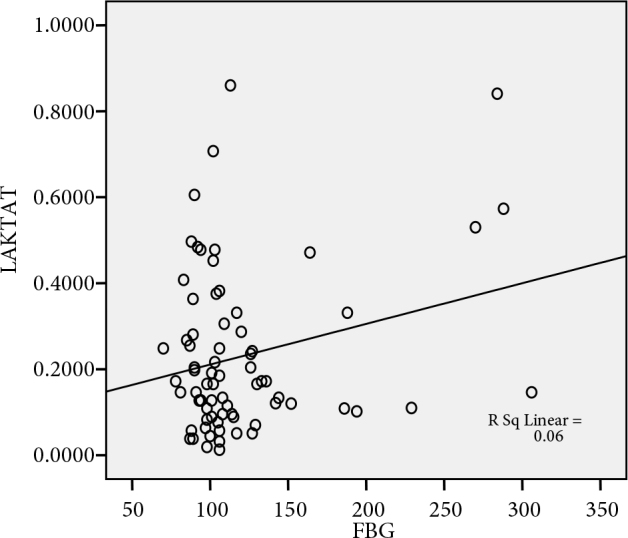
A significant difference was found between the controls and the other groups (newly diagnosed diabetic patients (NDDP), impaired fasting glucose (IFG), and impaired glucose tolerance (IGT)) in terms of FBG levels (P < 0.001, P < 0.001 and P < 0.001, respectively). IFG and IGT patients had significantly higher PBG levels compared to the control group (P = 0.009 and P < 0.001, respectively). There was a significant difference between the IFG and IGT patients in terms of insulin levels (P = 0.019). There was a significant relationship between FBG levels and lactate production only in the NDDP group (r = 0.610, P = 0.003)
The metabolic effects of hyperglycemia on leukocytes is in direction of anaerobic glycolysis. The increased anaerobic pathway is closely related to blood glucose levels and insulin resistance.
背景/目的:糖尿病患者易感染是一个严重的问题。免疫系统的能量代谢受损是主要问题所在。早期诊断能量代谢受损至关重要。我们的研究旨在研究糖尿病前期和 2 型糖尿病新诊断患者等患者群体的白细胞能量代谢。
我们的研究包括 21 名新诊断的 2 型糖尿病患者(NDDP)、30 名糖尿病前期患者和 22 名成年志愿者。所有患者均进行 75g 口服葡萄糖耐量试验(OGTT)。空腹 9-16 小时后采血,检测空腹血糖(FBG)、餐后血糖(PBG)、总胆固醇(TC)、甘油三酯(TG)、高密度脂蛋白(HDL)、空腹血清胰岛素和糖化血红蛋白(HbA1c)水平。细胞完全裂解后,手动研究释放单核白细胞(MNC)内容物中的柠檬酸盐水平,并应用乳酸试剂盒在自动分析仪上检测乳酸水平。乳酸和柠檬酸盐结果以μg/mL 计算。使用卡方检验、Mann-Whitney U 检验和学生 t 检验进行统计比较,P<0.05 被认为具有统计学意义。
FBG 水平在对照组和其他组(新诊断的糖尿病患者(NDDP)、空腹血糖受损(IFG)和糖耐量受损(IGT))之间存在显著差异(P<0.001、P<0.001 和 P<0.001,分别)。IFG 和 IGT 患者的 PBG 水平明显高于对照组(P=0.009 和 P<0.001,分别)。IFG 和 IGT 患者的胰岛素水平存在显著差异(P=0.019)。仅在 NDDP 组中,FBG 水平与乳酸生成之间存在显著相关性(r=0.610,P=0.003)
高血糖对白细胞的代谢影响是朝着无氧糖酵解的方向发展。增加的无氧途径与血糖水平和胰岛素抵抗密切相关。