Division of Urology, Albany Medical Center, Albany NY.
Division of Urology, Albany Medical Center, Albany NY.
Urol Oncol. 2021 May;39(5):258-267. doi: 10.1016/j.urolonc.2020.10.013. Epub 2020 Oct 28.
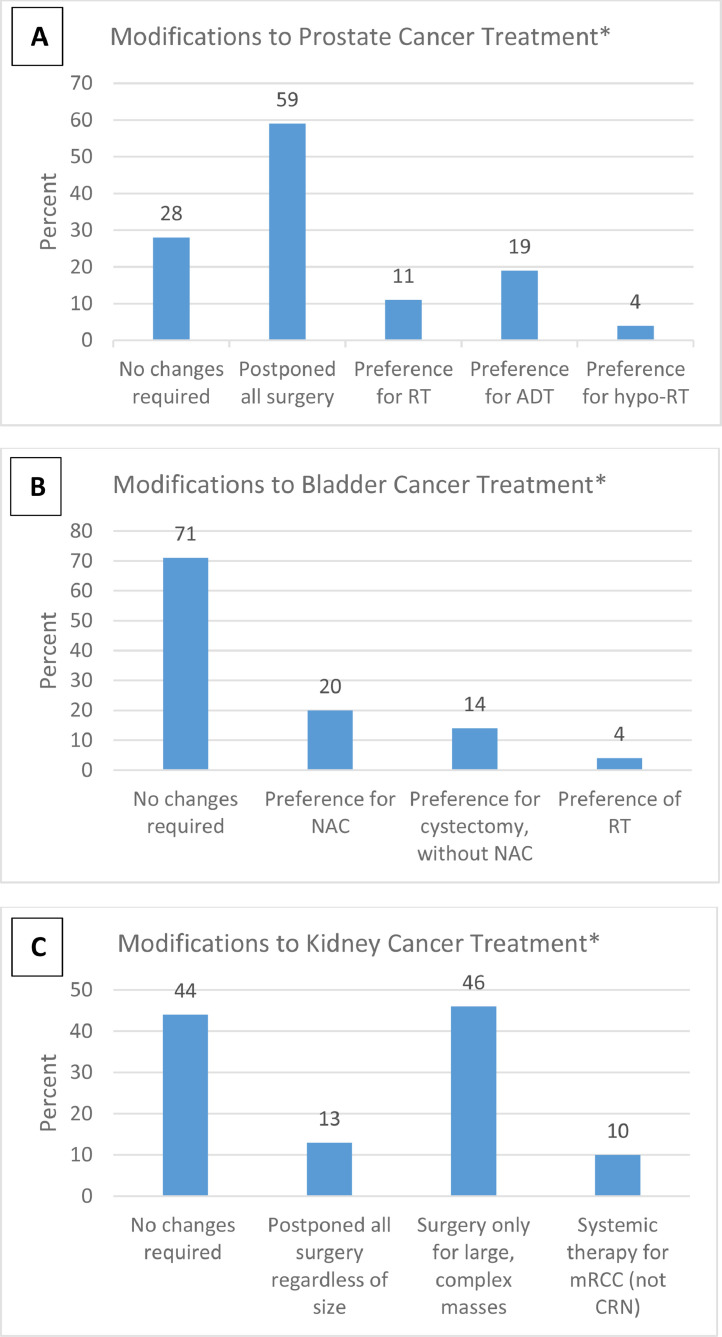
The COVID-19 pandemic-related constraints on healthcare access have raised concerns about adverse outcomes from delayed treatment, including the risk of cancer progression and other complications. Further, concerns were raised about a potentially significant backlog of patients in need of cancer care due to the pandemic-related delays in healthcare, further exacerbating any potential adverse outcomes. Delayed access to surgery is particularly relevant to urologic oncology since one-third of new cancers in men (20% overall) arise from the genitourinary (GU) tract and surgery is often the primary treatment. Herein, we summarize the prepandemic literature on deferred surgery for GU cancers and risk of disease progression. The aforementioned data on delayed surgery were gathered in the context of systemic delays present in certain healthcare systems, or occasionally, due to planned deferral in suboptimal surgical candidates. These data provide indirect, but sufficient insight to develop triage schemas for prioritization of uro-oncological cases. Herein, we outline the extent to which the pandemic-related triage guidelines had influenced urologic practice in various regions. To study the adverse outcomes in the pandemic-era, a survey of urologic oncologists was conducted regarding modifications in their initial management of urologic cancers and any delay-related adverse outcomes. While the adverse effects directly from COVID-19 related delays will become apparent in the coming years, the results showing short-term outcomes are quite instructive. Since cancer care was assigned a higher priority at most centers, this strategy may have avoided significant delays in care and limited the anticipated negative impact of pandemic-related constraints.
由于 COVID-19 大流行导致医疗保健服务受限,人们开始担忧治疗延误会导致不良后果,包括癌症进展和其他并发症的风险。此外,由于大流行导致医疗保健服务延误,预计会有大量癌症患者积压,这可能会进一步加剧潜在的不良后果,这也引发了人们的担忧。手术延迟对泌尿外科肿瘤学尤为重要,因为男性新发癌症中有三分之一(总体占 20%)来自泌尿生殖系统(GU),手术通常是主要治疗方法。在此,我们总结了大流行前关于 GU 癌症和疾病进展风险的延迟手术文献。上述关于手术延迟的数据是在某些医疗保健系统中存在系统性延迟的背景下收集的,或者偶尔是由于非最佳手术候选者的计划延迟。这些数据为制定泌尿外科病例的优先排序分诊方案提供了间接但足够的见解。在此,我们概述了与大流行相关的分诊指南在不同地区对泌尿外科实践的影响程度。为了研究大流行时期的不良后果,我们对泌尿外科肿瘤学家进行了一项调查,了解他们对泌尿外科癌症初始治疗的修改以及任何与延迟相关的不良后果。虽然与 COVID-19 相关的延迟直接造成的不良影响将在未来几年显现,但短期结果的研究结果非常有启发性。由于大多数中心都将癌症护理列为优先事项,因此这种策略可能避免了护理的重大延误,并限制了大流行相关限制的预期负面影响。