Pheiffer Carmen, Willmer Tarryn, Dias Stephanie, Abrahams Yoonus, Louw Johan, Goedecke Julia H
Biomedical Research and Innovation Platform, South African Medical Research Council, Cape Town, South Africa.
Division of Medical Physiology, Faculty of Medicine and Health Sciences, University of Stellenbosch, Stellenbosch, South Africa.
Front Genet. 2020 Sep 29;11:967. doi: 10.3389/fgene.2020.00967. eCollection 2020.
Metabolic risk varies according to body mass index (BMI), body fat distribution and ethnicity. In recent years, epigenetics, which reflect gene-environment interactions have attracted considerable interest as mechanisms that may mediate differences in metabolic risk. The aim of this study was to investigate DNA methylation differences in abdominal and gluteal subcutaneous adipose tissues of normal-weight and obese black and white South African women.
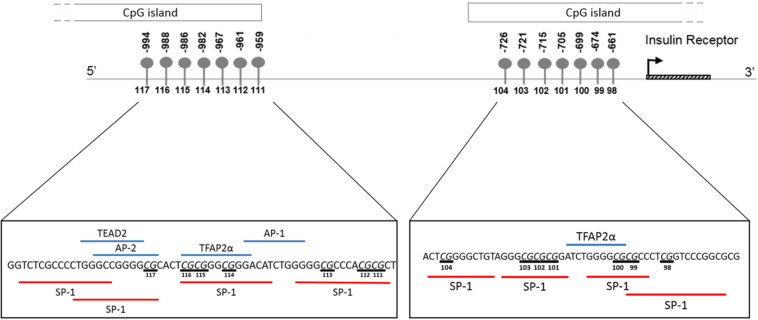
Body composition was assessed using dual-energy x-ray absorptiometry and computerized tomography, and insulin sensitivity was measured using a frequently sampled intravenous glucose tolerance test in 54 normal-weight (BMI 18-25 kg/m) and obese (BMI ≥ 30 kg/m) women. Global and insulin receptor () DNA methylation was quantified in abdominal (ASAT) and gluteal (GSAT) subcutaneous adipose depots, using the Imprint methylation enzyme-linked immunosorbent assay and pyrosequencing. gene expression was measured using quantitative real-time PCR.
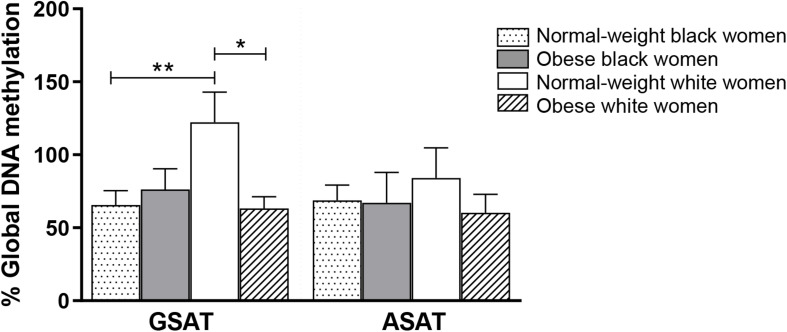
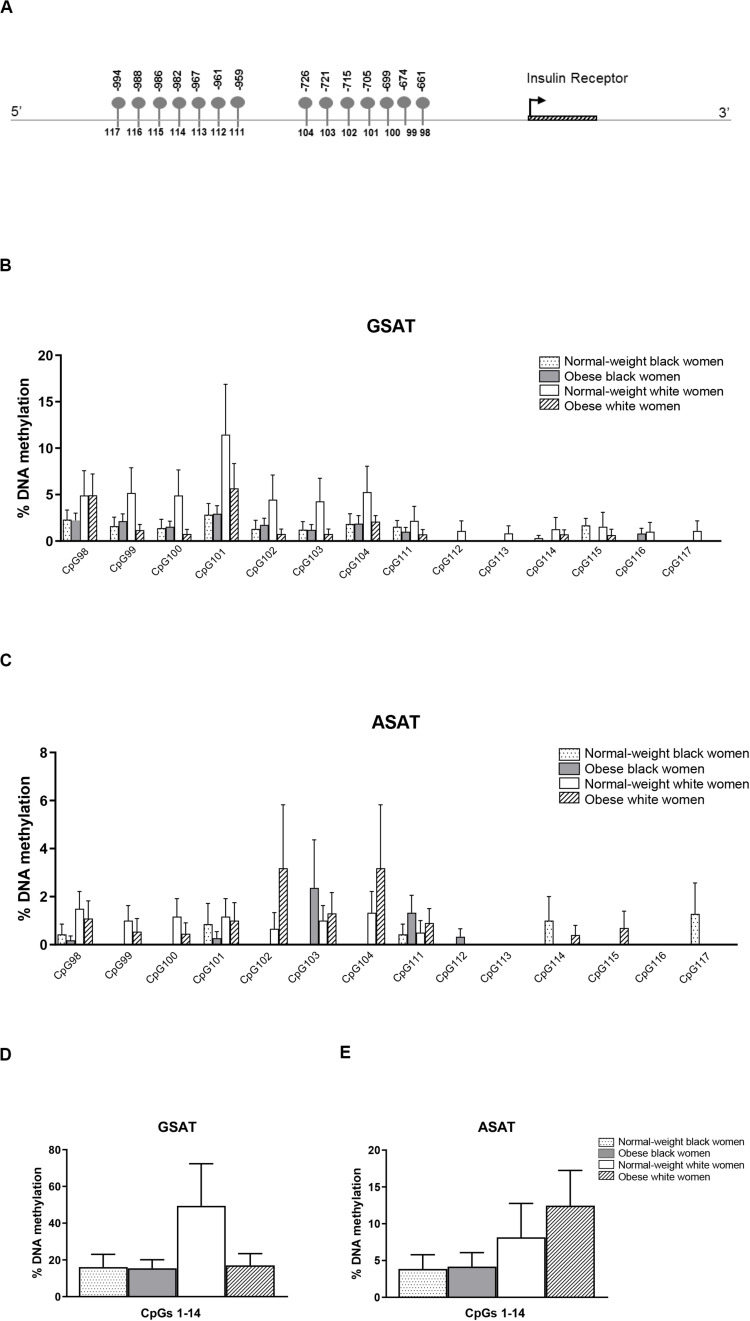
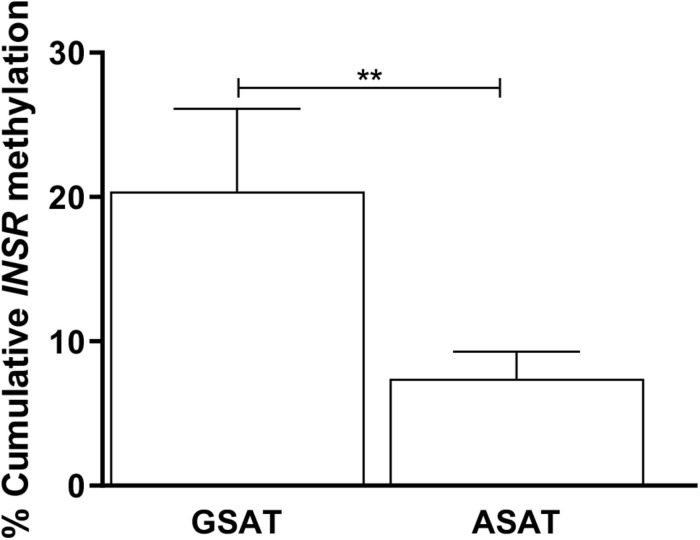
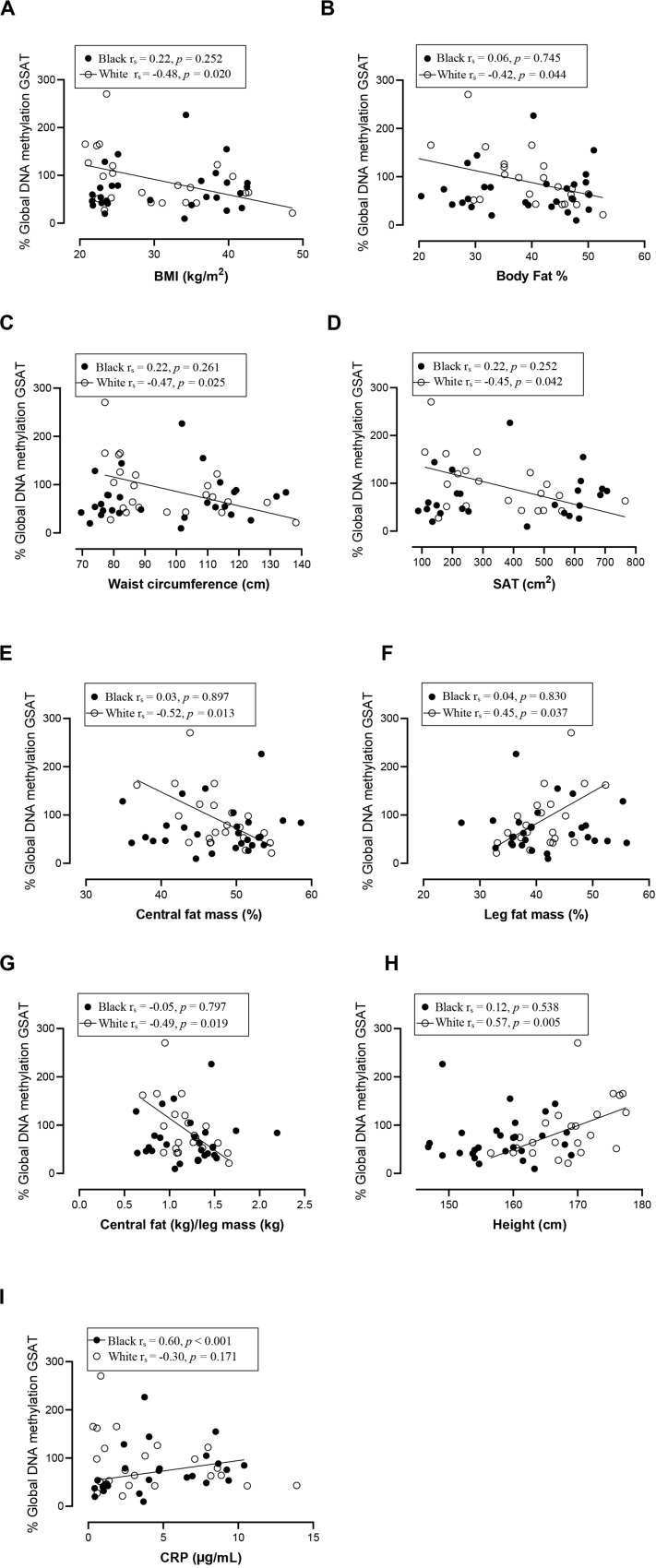
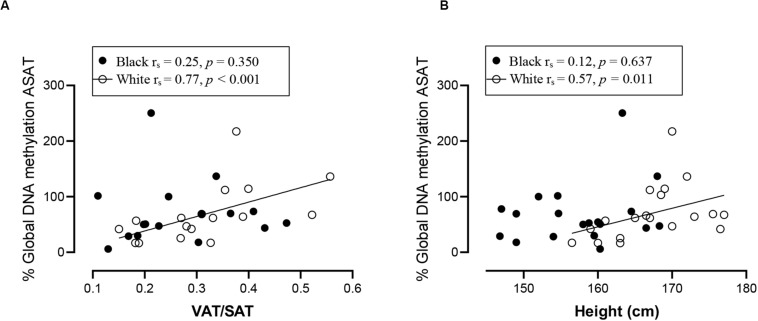
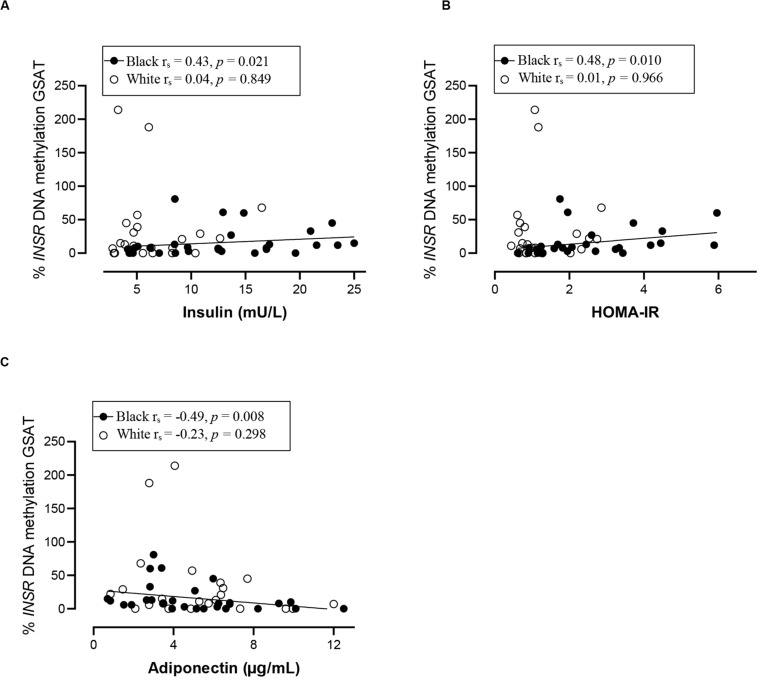
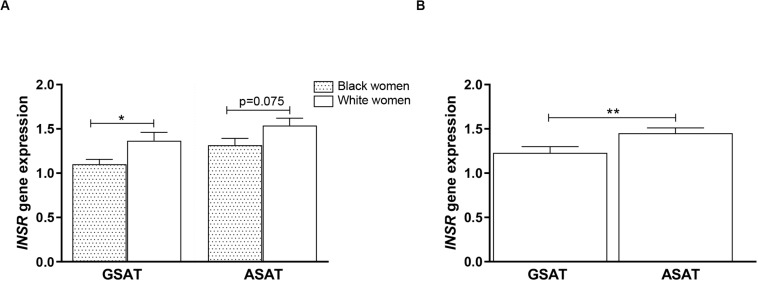
Global DNA methylation in GSAT varied according to BMI and ethnicity, with higher levels observed in normal-weight white compared to normal-weight black ( = 0.030) and obese white ( = 0.012) women. Pyrosequencing of 14 CpG sites within the promoter also showed BMI, adipose depot and ethnic differences, although inter-individual variability prevented attainment of statistical significance. Both global and methylation were correlated with body fat distribution, insulin resistance and systemic inflammation, which were dependent on ethnicity and the adipose depot. Adipose depot and ethnic differences in gene expression were observed.
We show small, but significant global and promoter DNA methylation differences in GSAT and ASAT of normal-weight and obese black and white South African women. DNA methylation in ASAT was associated with centralization of body fat in white women, whereas in black women DNA methylation in GSAT was associated with insulin resistance and systemic inflammation. Our findings suggest that GSAT rather than ASAT may be a determinant of metabolic risk in black women and provide novel evidence that altered DNA methylation within adipose depots may contribute to ethnic differences in body fat distribution and cardiometabolic risk.
代谢风险因体重指数(BMI)、体脂分布和种族而异。近年来,反映基因 - 环境相互作用的表观遗传学作为可能介导代谢风险差异的机制引起了相当大的关注。本研究的目的是调查南非正常体重和肥胖的黑人和白人女性腹部和臀部皮下脂肪组织中的DNA甲基化差异。
使用双能X线吸收法和计算机断层扫描评估身体成分,并在54名正常体重(BMI 18 - 25 kg/m)和肥胖(BMI≥30 kg/m)女性中使用频繁采样的静脉葡萄糖耐量试验测量胰岛素敏感性。使用印记甲基化酶联免疫吸附测定法和焦磷酸测序法对腹部(ASAT)和臀部(GSAT)皮下脂肪库中的整体和胰岛素受体()DNA甲基化进行定量。使用定量实时PCR测量基因表达。
GSAT中的整体DNA甲基化因BMI和种族而异,与正常体重的黑人女性( = 0.030)和肥胖的白人女性( = 0.012)相比,正常体重的白人女性中观察到更高水平。启动子内14个CpG位点的焦磷酸测序也显示出BMI、脂肪库和种族差异,尽管个体间的变异性妨碍了达到统计学显著性。整体和甲基化均与体脂分布、胰岛素抵抗和全身炎症相关,这取决于种族和脂肪库。观察到基因表达存在脂肪库和种族差异。
我们显示,南非正常体重和肥胖的黑人和白人女性的GSAT和ASAT中存在虽小但显著的整体和启动子DNA甲基化差异。ASAT中的DNA甲基化与白人女性的体脂集中相关,而在黑人女性中,GSAT中的DNA甲基化与胰岛素抵抗和全身炎症相关。我们的研究结果表明,GSAT而非ASAT可能是黑人女性代谢风险的决定因素,并提供了新的证据,即脂肪库内DNA甲基化的改变可能导致体脂分布和心脏代谢风险的种族差异。