Acharya Souvagini, Dash Rajat Kumar, Das Aurobinda, Hota Madhusmita, Mohapatra Chittaranjan, Dash Sarita
Dept of ENT, VIMSAR Burla, Sambalpur, Odisha India.
DHH, Sambalpur, India.
Indian J Otolaryngol Head Neck Surg. 2022 Oct;74(Suppl 2):2764-2769. doi: 10.1007/s12070-020-02239-4. Epub 2020 Oct 23.
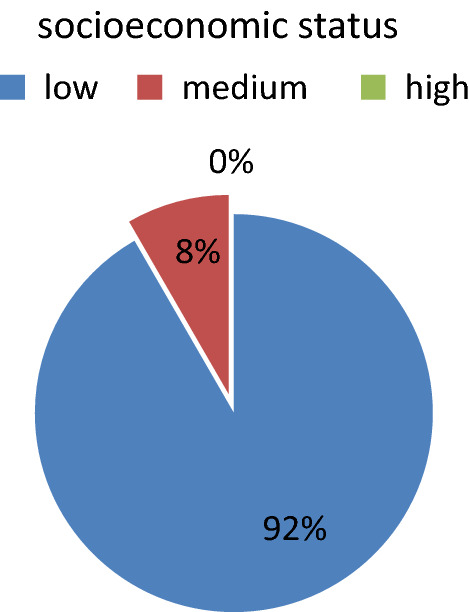
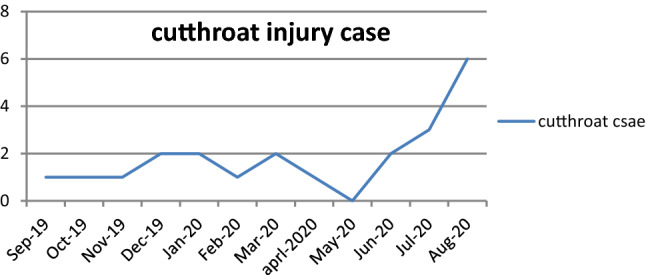
To find out incidence, prevalence, various modes and pattern of cutthroat injury during COVID-19 pandemic and compare with prior non pandemic period. To find out the various factor influencing the suicidal cutthroat and establish the temporal association of suicidal cutthroat with COVID-19 pandemic. It is a retrospective study of cutthroat patients who were managed in ENT Dept. VIMSAR, Burla, Sambalur, Odisha, India from 1st September 2019 to 31st August 2020. Source of information are casualty, IPD and OT registers and online data. Total cases were divided into group-A (prior to COVID-19 pandemic) and group-B (during COVID-19 pandemic) and analysed. Total 24 cutthroat injury cases were treated over 1 year in department of ENT, VIMSAR, Burla, which was 0.054% of total cases attended at casualty and 2.371% of total IPD patients treated. In GROUP-A, total 10 cases with M:F = 9:1,suicidal 4 cases (40%), homicidal 6 cases (60%), and no accidental cases were recorded. While in GROUP-B, total 14 case with M:F = 14:0, suicidal 9 cases (64.28%), homicidal 3 cases (21.42%) and accidental 2 (14.28%) cases were recorded. In our study majority of cases were male with M:F = 23:1. Common age group belongs to 20-30 years with LSES and farmer by occupation. Zone II injury had incidence of 70.83%. Homicide cases proportionally high during non-COVID period while suicide cases high during COVID-19 pandemic. Association of COVID-19 pandemic with suicidal cut throat injury is seems to be significant. Among predisposing risk factors for suicidal, depression during COVID-19 pandemic had seen in 53.84% of total suicidal cases. Incidence and prevalence of Cut throat injury is comparatively high in western odisha which again increases during months of July and August parallel to COVID-19 pandemic. The common mode of cutthroat injury is homicidal, which suddenly changes to suicidal during COVID-19 pandemic. More vulnerable groups were young unemployed male, farmers and labours. Cutthroat injury cases definitely increases during COVID-19 pandemic with most common mode of injury being suicidal attempt, which may be due to economical and psychological imbalances, due to loss of job and fear and social stigma for COVID-19 diseases.
为了查明新冠疫情期间刎颈伤的发病率、患病率、各种方式和模式,并与之前的非疫情时期进行比较。为了找出影响自杀性刎颈的各种因素,并确定自杀性刎颈与新冠疫情的时间关联。这是一项对2019年9月1日至2020年8月31日在印度奥里萨邦桑巴卢尔布尔拉市维姆萨尔医学科学研究所耳鼻喉科接受治疗的刎颈伤患者的回顾性研究。信息来源为急诊、住院患者和手术室登记册以及在线数据。将所有病例分为A组(新冠疫情之前)和B组(新冠疫情期间)并进行分析。维姆萨尔医学科学研究所耳鼻喉科在1年中共治疗了24例刎颈伤病例,占急诊总就诊病例的0.054%,占住院患者治疗总数的2.371%。在A组中,共有10例,男女性别比为9:1,自杀4例(40%),他杀6例(60%),未记录到意外病例。而在B组中,共有14例,男女性别比为14:0,自杀9例(64.28%),他杀3例(21.42%),意外2例(14.28%)。在我们的研究中,大多数病例为男性,男女性别比为23:1。常见年龄组为20至30岁,职业为低社会经济地位者和农民。II区损伤的发生率为70.83%。在非新冠时期他杀病例比例较高,而在新冠疫情期间自杀病例较多。新冠疫情与自杀性刎颈伤之间的关联似乎很显著。在自杀的诱发风险因素中,53.84%的自杀病例在新冠疫情期间出现了抑郁症状。奥里萨邦西部刎颈伤的发病率和患病率相对较高,在7月和8月与新冠疫情平行期间再次上升。刎颈伤的常见方式是他杀,在新冠疫情期间突然转变为自杀。更易受影响的群体是年轻失业男性、农民和劳工。在新冠疫情期间刎颈伤病例肯定增加,最常见的损伤方式是自杀未遂,这可能是由于经济和心理失衡,因失业以及对新冠疾病的恐惧和社会污名化所致。