Fujimoto Ayataka, Okanishi Tohru, Sato Keishiro, Enoki Hideo
Comprehensive Epilepsy Center, Seirei-Hamamatsu General Hospital, Hamamatsu, 430-8558, Japan.
Heliyon. 2020 Oct 22;6(10):e05324. doi: 10.1016/j.heliyon.2020.e05324. eCollection 2020 Oct.
Long-term outcomes associated with vagus nerve stimulation (VNS) therapy for progressive myoclonic epilepsy (PME) have not been studied. The purpose of this study was to report long-term outcomes of VNS therapy in two patients with PME.
We performed VNS therapy for two patients with PME. We reviewed the conditions of epileptic seizures, status epilepticus (SE), myoclonus, and Karnofsky performance state (KPS) scale scores at baseline and after 10 years.
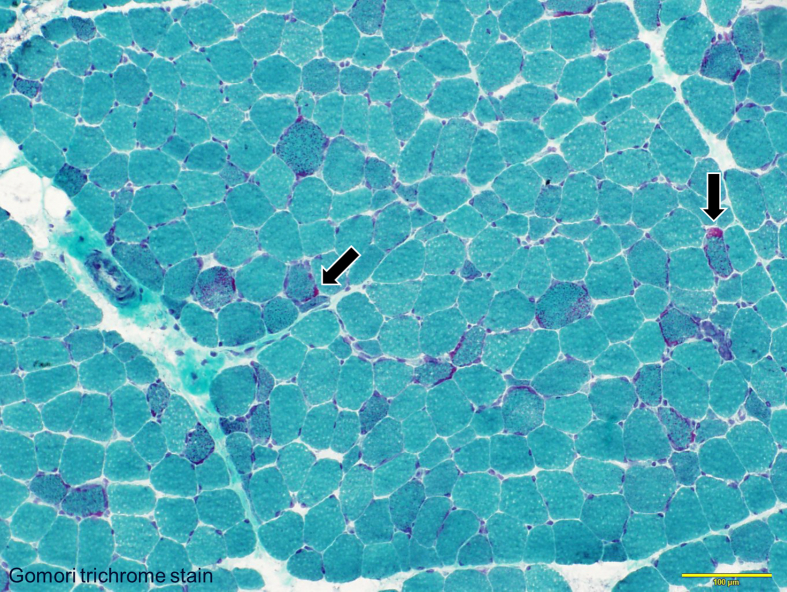
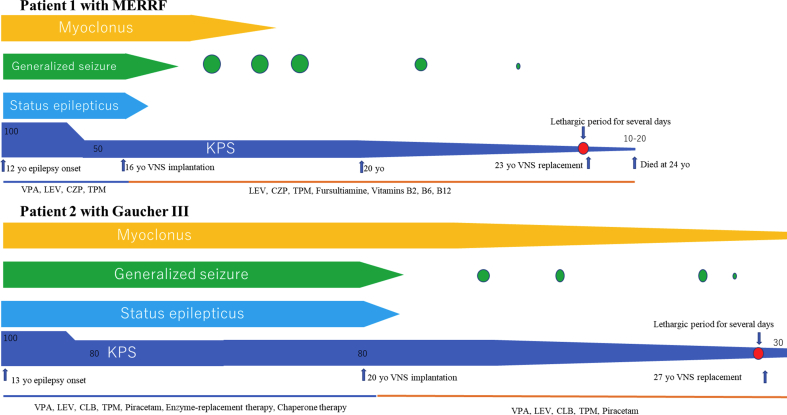
A 16-year-old boy with myoclonic epilepsy with ragged-red fibers (MERRF) underwent VNS therapy. Baseline KPS scale score was 50, seizure frequency was weekly, and SE occurred yearly. At 23 years old, KPS scale score was 10. He had remained SE-free and frequency of epileptic seizures had markedly reduced. At 24 years old, he died due to pneumonia. A woman with Gaucher's disease type III underwent VNS therapy at 20 years old. Baseline KPS scale score was 80, seizure frequency was daily, and SE occurred monthly. At 30 years old, KPS scale was 30. She remained SE-free, but still experienced epileptic seizures yearly. Both patients became lethargic during VNS-off periods, with symptoms improving to baseline levels when VNS was resumed.
Long-term outcomes with VNS showed good epileptic seizure control and freedom from SE. VNS might help maintain level of consciousness.
尚未对迷走神经刺激(VNS)疗法治疗进行性肌阵挛癫痫(PME)的长期疗效进行研究。本研究的目的是报告VNS疗法治疗两名PME患者的长期疗效。
我们对两名PME患者实施了VNS疗法。我们回顾了两名患者在基线时以及10年后的癫痫发作情况、癫痫持续状态(SE)、肌阵挛和卡氏功能状态(KPS)量表评分。
一名16岁患有肌阵挛性癫痫伴破碎红纤维(MERRF)的男孩接受了VNS疗法。基线KPS量表评分为50,癫痫发作频率为每周一次,SE每年发作一次。23岁时,KPS量表评分为10。他一直未发生SE,癫痫发作频率显著降低。24岁时,他因肺炎去世。一名III型戈谢病女性在20岁时接受了VNS疗法。基线KPS量表评分为80,癫痫发作频率为每天一次,SE每月发作一次。30岁时,KPS量表评分为30。她一直未发生SE,但仍每年有癫痫发作。两名患者在VNS关闭期间均变得嗜睡,恢复VNS后症状改善至基线水平。
VNS的长期疗效显示出良好的癫痫发作控制且无SE。VNS可能有助于维持意识水平。